
 Priyanka Tiwari
 Share
Share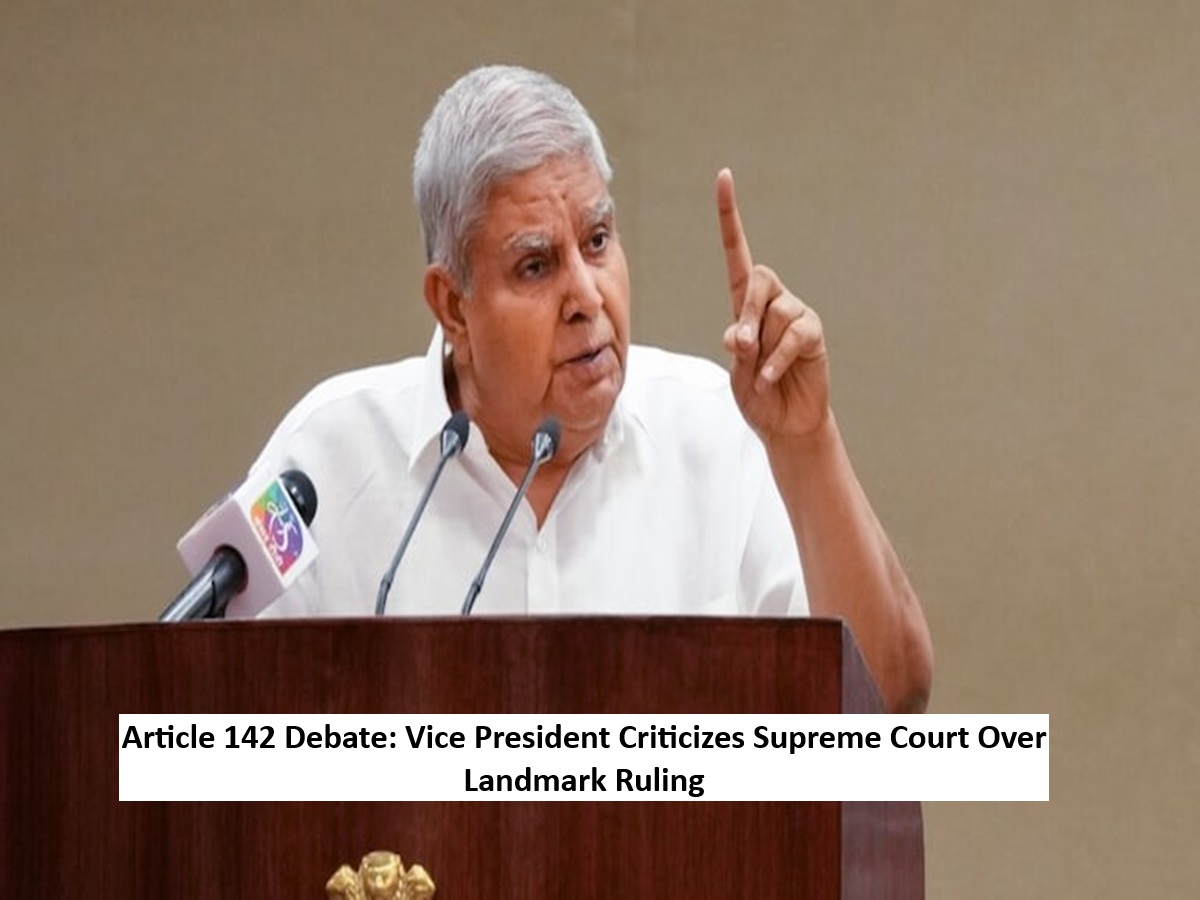
A recent Supreme Court decision requiring the President of India to act on state bills within three months has reignited debates over judicial overreach. The court's move, under Article 142 of the Constitution, has drawn strong objections from Vice President Jagdeep Dhankhar, who criticized the judiciary for stepping beyond its constitutional limits.
Dhankhar Slams Judiciary's Expanding Role
During an address, Vice President Dhankhar expressed discontent, accusing the judiciary of acting like a “super Parliament.” He labeled Article 142 a “nuclear missile against democratic forces” and questioned the accountability of the judiciary. Dhankhar criticized the Supreme Court for its order declaring 10 Tamil Nadu bills as deemed assented due to delays by the Governor.
He also called out the judiciary over recent controversies, including a cash recovery case involving a Delhi High Court judge. Dhankhar emphasized the need for transparency and public accountability in such matters.
What is Article 142?
Article 142 of the Indian Constitution gives the Supreme Court broad powers to deliver “complete justice” in any case.
Article 142(1): Allows the court to issue enforceable orders or decrees across India, even beyond existing laws.
Article 142(2): Provides authority to summon individuals, demand evidence, or act against contempt, unless regulated by Parliament.
These provisions allow the Supreme Court to deliver decisions not confined by statutory limitations.
How the Supreme Court Has Used Article 142
The court has invoked Article 142 in several major cases:
April 2024: Overturned the Chandigarh mayoral election due to ballot tampering and directly appointed AAP's Kuldeep Kumar as Mayor.
Ayodhya Verdict (2019): Allocated land for a mosque to balance the award of the disputed site to the Ram temple trust.
These examples show how Article 142 enables decisions that go beyond standard legal boundaries in pursuit of justice.
Ongoing Debate Over Judicial Overreach
Vice President Dhankhar’s remarks revive concerns about separation of powers in India’s democracy. While the judiciary defends Article 142 as a tool for justice, critics argue it risks upsetting the constitutional balance between the legislature, executive, and judiciary.
Read More: PM Modi and Kharge’s Viral Moment: A Rare Handshake and Laughter at Ambedkar Tribute Event