Priyanka Tiwari
 Share
Share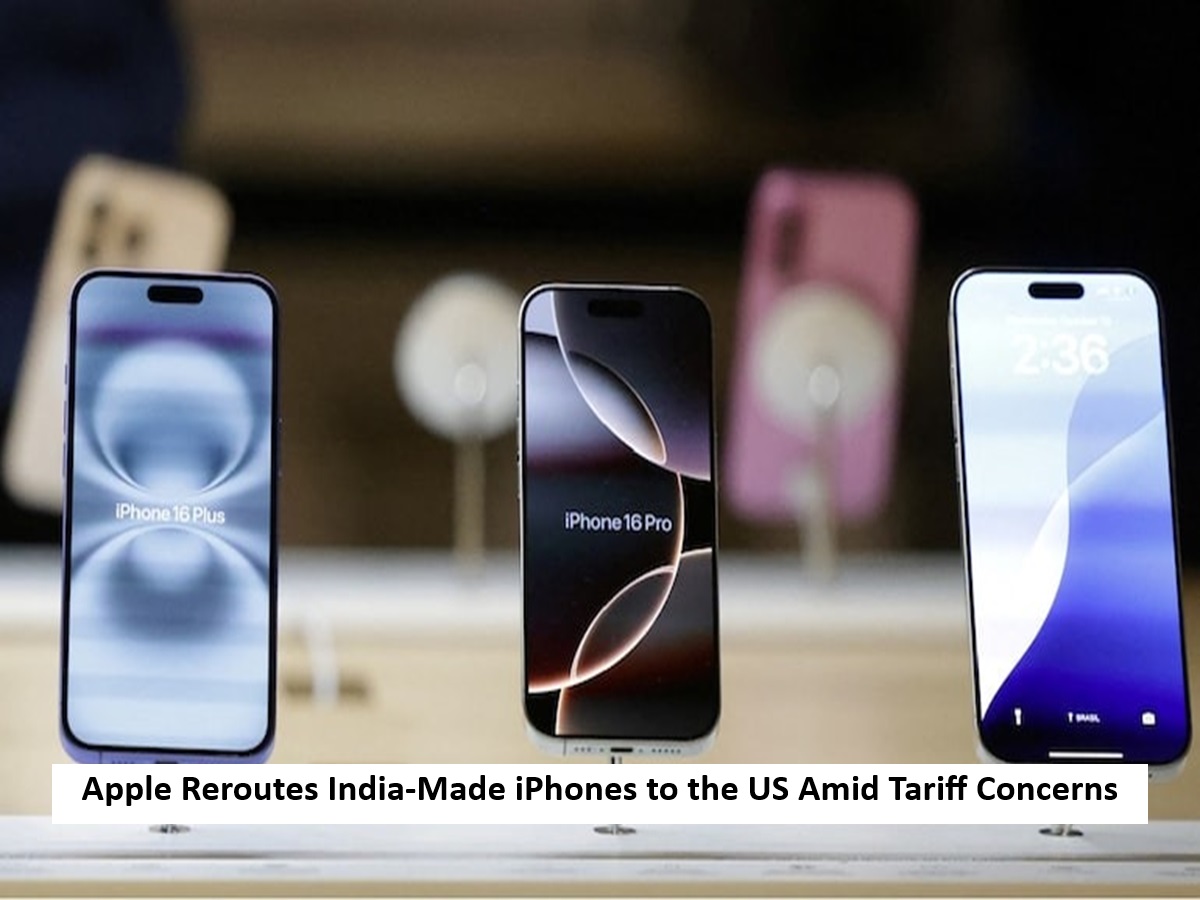
Suspense crime, Digital Desk : Apple is reallocating a large portion of India’s manufactured iPhones to the United States during the June Quarter, trying to lessen its reliance on China’s production. This follows the increasing U.S. tariffs on Chinese goods and aims to streamline cost efficiencies in the supply chain, as noted by several analysts and industry contacts.
Counterpoint research director Tarun Pathak has also confirmed this shift, stating “The U.S. will now receive more iPhones marked 'Made in India' rather than 'Made in China.’” This trend was also indicated by Apple CEO Tim Cook during the company’s earnings call.
India’s Increasing Contribution Towards Apple’s Supply Chains
In 2024, India's share in Apple’s global iPhone manufacturing is expected to reach 40–45 million units, which constitutes around 18–20% of Apple’s total production output. Of these, 14–15 million will be allocated to the US market, 13 million to other countries, while 12 million will be sold within India.
To respond to heightened demand from the U.S, Apple will pull back units designated for Europe, the UK, Japan, and Turkey and make those changes to the model distributions as planned.
Influencing Tariff Strategies Adjusts Supply Planning
Analysts think the shipping changes are linked to potential new U.S. tariffs, like the $145 customs fee on some things from China. “Even if not enacted right away, Apple is preparing for the worst-case scenario,” remarked Abhilash Kumar of TechInsights.
Cook stated that during the March quarter, more than fifty percent of IPHONES sold in the US were manufactured in India and suggests that this will increase in the coming quarters.
Indian Manufacturing Growth
Apple's Indian collaborators are increasing their capabilities due to higher expected demand from exports:
Tata Electronics: Running a new plant in Hosur for the assembly of iPhones of earlier generations.
Foxconn: Constructing a second plant worth $2.8 Billion in Bangladore which is projected to become Apple's second biggest plant outside China.
All these moves are in aid of helping Apple to diversify its supply chain structure in India.
Comparison of Costs: India and China vs USA
While the cost benchmarks provided in India are still slightly above those of China, the difference is decreasing:
India: The margins offered by the suppliers add to the supplied materials provided from Texas at $554, which means that the retail price ere increased by $22, to $1008 instead of $986 offered in China.
U.S.: New tariffs will push the MSRP of iPhones to $1,285 with the BOM set at $707, marking a 30% increase over cost when produced stateside because of additional labor and components.
J. P. Morgan's estimates suggest that Indian manufacturing, unlike the U.S., has a number of advantages from a cost perspective, albeit having a slight disadvantage compared to China.
Vietnam Gains Importance for Apple’s Non-iPhone Products
In an effort to diversify supply chains beyond just China and India, Tim Cook remarked that the majority of iPads, MacBooks, and Apple Watches, as well as AirPods sold in the United States, will be manufactured in Vietnam.
Looking ahead, analysts project slow growth and uncertainty.
Alongside the tariffs, Cook highlighted that there’s little strategy planning done after the June quarter, saying it’s more of a planning approach because of the ever-changing tariff situation. Apple warned investors of absorbing an additional $900 million in costs in the June quarter under current tariffs.
In contrast, there's a noticeably lower 26% trade tariff for India, which, combined with the possibility of a bilateral trade deal with the U.S., puts India in a stronger position for Apple’s global supply chain strategy.
Read More: India Gears Up for BS-VII: Stricter Rules for CNG Vehicles and EV Batteries on the Horizon