Priyanka Tiwari
 Share
Share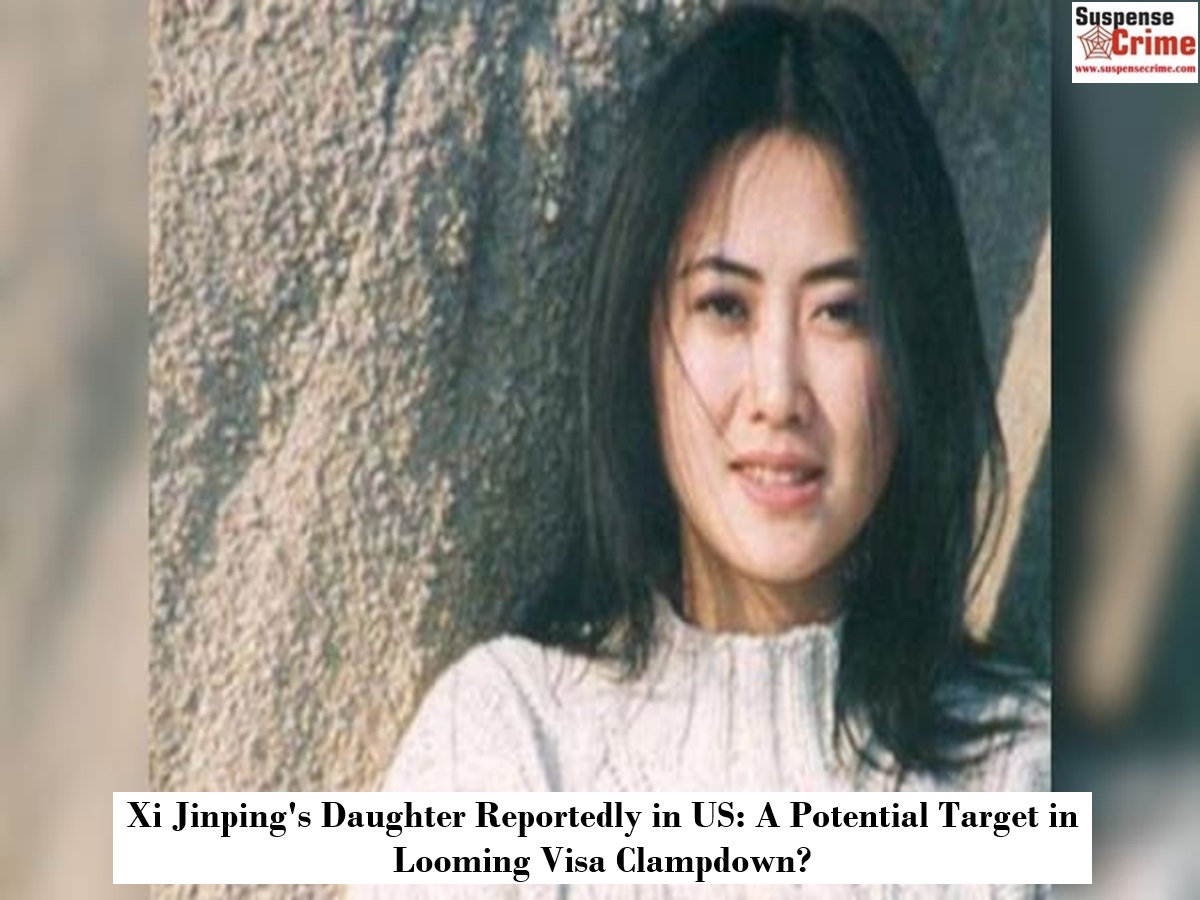
Suspense crime, Digital Desk : The private life of Chinese President Xi Jinping's daughter, Xi Mingze, has once again come under the spotlight, with reports suggesting she continues to reside in the United States. This has sparked speculation about whether she could become an unintended, or even intended, target if Washington moves forward with proposed visa restrictions aimed at members of the Chinese Communist Party (CCP) and their families.
Known for maintaining an extremely low public profile, Xi Mingze is believed to have previously studied at Harvard University under an assumed name. While her current exact whereabouts and activities remain largely unconfirmed, the prevailing reports place her within the US, potentially in Massachusetts, mirroring previous information about her American education.
The speculation arises amidst increasing discussions within the US administration about potential visa crackdowns. These measures are reportedly being considered as a response to China's human rights record, particularly concerning the treatment of Uyghurs in Xinjiang and the crackdown on dissent in Hong Kong, as well as broader national security concerns. Such restrictions could theoretically impact individuals linked to the CCP, and as the daughter of its paramount leader, Xi Mingze could fall into a sensitive category.
We did it you guys.
— Laura Loomer (@LauraLoomer) May 29, 2025
The media is finally talking about how Xi JinPing’s daughter went to Harvard.
When is she getting deported?
She lives in Massachusetts where she’s protected by PLA guards.
Maybe I should confront her on video.
Communists don’t belong in our country.
I…
The presence of "princelings" – children of high-ranking Chinese officials – studying or living in the US is not a new phenomenon. Historically, even Deng Xiaoping's granddaughter lived and studied in America. These individuals often lead discreet lives, but their connections can become focal points during periods of heightened geopolitical tension.
While directly targeting the daughter of a head of state for visa reasons would be a significant and potentially inflammatory diplomatic move, the question is being raised in some circles. It remains unclear if current considerations for visa restrictions would extend to family members in such a direct way, especially those not actively involved in political affairs, or if her personal profile would offer some insulation. However, in the current frosty climate of US-China relations, few possibilities are entirely off the table when it comes to diplomatic leverage and symbolic actions.
Ultimately, whether Xi Mingze would be affected by any new visa policies remains purely speculative at this stage. However, her reported presence in the US serves as a stark reminder of the complex, interwoven, and often personal dimensions underlying the broader geopolitical strategies and tensions between Washington and Beijing.
Read More: High-Stakes Drama at Sea Pakistani Oil Tanker Shalamar Defies US Blockade in Strait of Hormuz
_891152136_100x75.jpg)
_934999377_100x75.jpg)
_297632329_100x75.jpg)
_1971369341_100x75.jpg)