


Two Overcrowded Vessels Capsize Off Myanmar Coast, Over 500 Rohingya Refugees Feared Dead At Sea
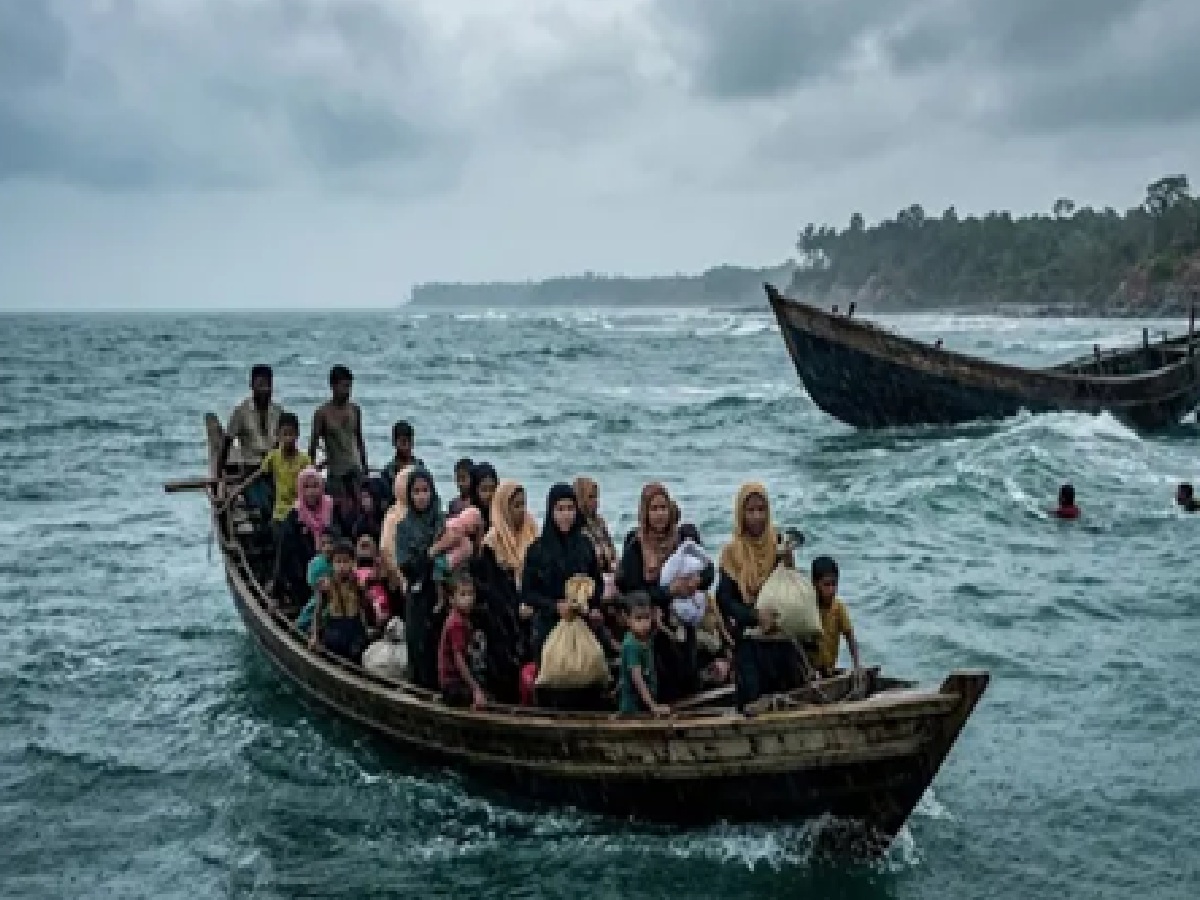
A humanitarian catastrophe of staggering proportions has struck the international waters of Southeast Asia, leaving over 500 Rohingya refugees feared dead. According to high-level joint briefings released by prominent United Nations humanitarian wings, two severely overcrowded wooden transit vessels completely capsized and foundered amidst violent monsoon weather off the coast of Myanmar. The unfolding crisis has sent shockwaves through global human rights organizations, raising massive alarms over the worsening security dynamics driving displaced populations to undertake increasingly fatal maritime voyages.
Disappeared In Stormy Waters: UN Migration Agencies Trace Chronology Of The Sinking
The International Organization for Migration (IOM) alongside the United Nations High Commissioner for Refugees (UNHCR) issued an urgent joint dynamic press statement detailing the timeline of the dual maritime disasters. Official logs indicate that both vessels originally departed from the volatile coastlines of Myanmar’s western Rakhine State during the final week of June. The initial transit craft, packed with approximately 250 individuals, lost all radio and visual contact immediately after clearing coastal shelf waters and remained missing for days. The secondary vessel, heavily laden with an estimated 280 passengers, reportedly encountered structural failure and foundered on July 8 near the turbulent waters of the Ayeyarwady delta region. While formal state recovery operations face logistical delays, both international agencies expressed deep anguish over the projected heavy casualty metrics.
Defying Extreme Monsoon Perils: Escalating Domestic Violence Overrules Marine Risks
Historically, displaced communities within the Rakhine province meticulously avoid undertaking open-ocean transits throughout the active peak monsoon season due to the extreme hazards of intense tropical storms, high wave patterns, and unpredictable deep-sea currents. However, international field observers report that the recent flare-up of targeted systemic conflicts within regional Myanmar zones, combined with the rapidly deteriorating, disease-prone, and heavily congested living conditions inside cross-border refugee camps in Bangladesh, has fundamentally changed the risk calculations. Displaced families are actively choosing to brave life-threatening oceanic conditions rather than face certain peril on land.
The Pursuit of Survival: Star-Spangled Starvation Traps Fleets Headed For Malaysia
United Nations field investigators confirmed that a significant percentage of the manifest passengers on the ill-fated ships had intentionally migrated out of the highly restricted settlement camps located near the Bangladesh borders. Utilizing structurally compromised, unseaworthy wooden fishing trawlers, the refugees attempted to cross international maritime boundaries in a desperate search for security and labor opportunities in destination nations including Malaysia, Indonesia, and Thailand. This recent incident underscores a multi-year crisis that has claimed thousands of lives across the Andaman Sea, including vulnerable children, newborns, and pregnant women.
A Legacy of Persecution: Roots of The Historic 2017 Exodus Unresolved
The Rohingya community represents a distinct ethnic Muslim minority residing predominantly within the borders of Myanmar’s Rakhine State, where they have faced systematic exclusion, state-level discrimination, and a total denial of basic civil liberties for multiple generations. The underlying humanitarian crisis reached its absolute zenith in 2017 following a sweeping military crackdown by domestic security apparatuses, which triggered a historic mass migration that forced more than 730,000 individuals to seek emergency asylum in neighboring Bangladesh. The ruling government and localized administrative factions refuse to grant official recognition or birth citizenship to the group, classifying them as unauthorized economic migrants. As of the current hour, official state-backed search and rescue initiatives remain largely non-operational due to ongoing regional instability, leaving specialized international teams to monitor the disaster zone via advanced satellite trackers.





_125698746_351x234.jpg)
_805577291_351x234.jpg)