










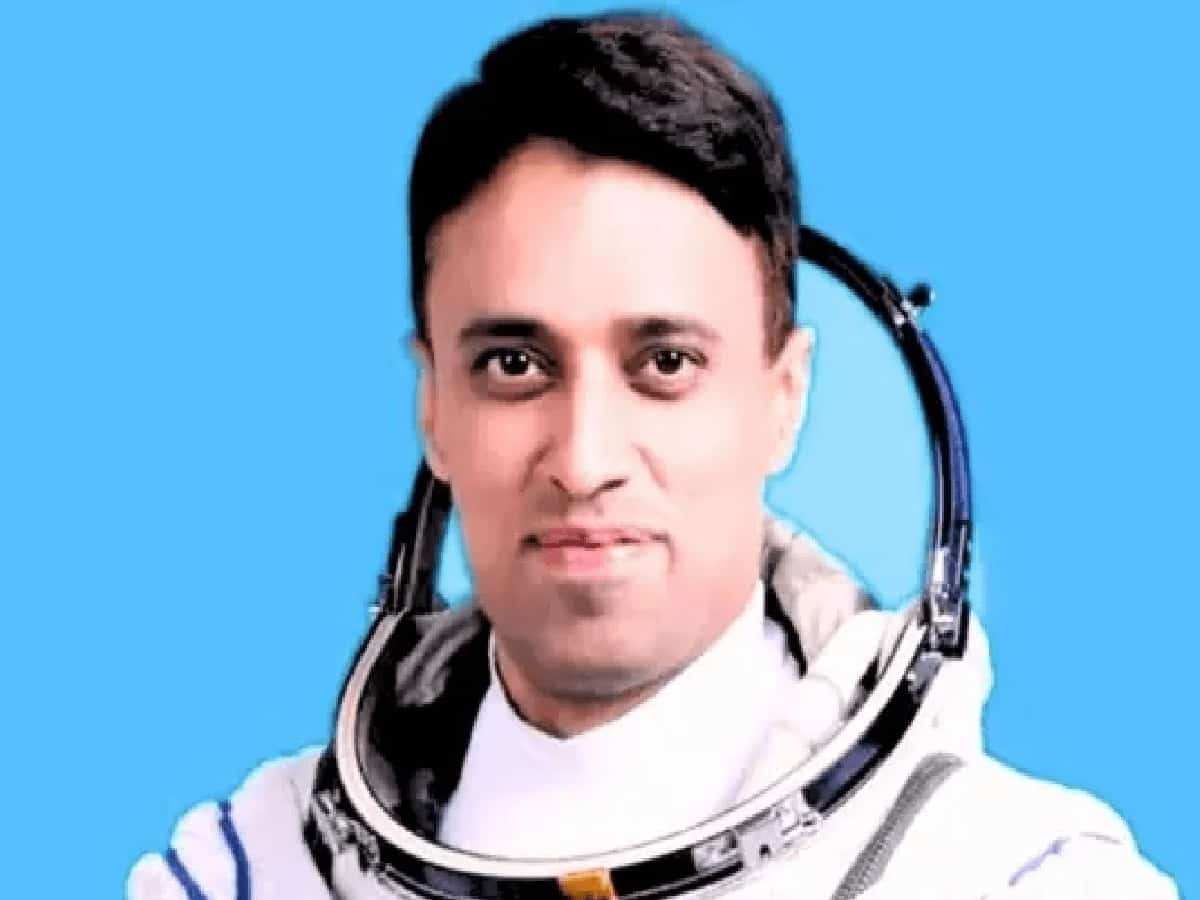
Who Is Zeeshan Ali, Pakistan's First Astronaut Aboard China's Tiangong
South Asia's space landscape witnessed a landmark moment on Wednesday, November 25, 2026, when Wing Commander Muhammad Zeeshan Ali of the Pakistan Air Force (PAF) lifted off aboard China's Shenzhou-24 spacecraft from the Jiuquan Satellite Launch Centre in northwest China and docked safely at the Tiangong Space Station. With this flight, the 40-year-old fighter pilot not only became Pakistan's first-ever astronaut in orbit—a milestone achieved 42 years after Wing Commander Rakesh Sharma became India's first astronaut in April 1984—but also made history as the first foreign national ever permitted to board China's self-built orbital space station. Selected as the mission's payload specialist ahead of fellow Pakistani finalist Khurram Dawood after months of intensive zero-gravity, technical, and Mandarin-language training in China, Zeeshan Ali is spending roughly seven days in low-Earth orbit alongside Chinese commander Major General Tang Hongbo and flight engineer Colonel Wu Yi, conducting four university-backed scientific experiments in biotechnology and food security. For science enthusiasts, defence observers, students, and space-news readers across northern India—including readers in Unnao and neighboring Uttar Pradesh hubs such as Lucknow (home to ISRO's ISTRAC ground telemetry network and Group Captain Shubhanshu Shukla), Kanpur (IIT Kanpur), Prayagraj, and Varanasi, where India's own indigenous Gaganyaan human spaceflight programme commands keen public interest—Zeeshan Ali's Chinese-assisted flight highlights the sharp contrast between India's homegrown orbital capability and Pakistan's reliance on Beijing's launch infrastructure.
Who Is Wing Commander Muhammad Zeeshan Ali—And How Was He Chosen Over Khurram Dawood?
Before trading his flight suit for a Chinese Sokol-style pressure suit, Muhammad Zeeshan Ali built a distinguished career as an operational fighter pilot in the Pakistan Air Force (PAF). Under a bilateral human-spaceflight agreement signed between China and Pakistan in February 2025, two Pakistani Air Force officers—Muhammad Zeeshan Ali and Khurram Dawood—shortlisted from a pool of candidates underwent rigorous physical, psychological, and technical conditioning in Beijing alongside Chinese taikonauts.
Ultimately, the China Manned Space Agency (CMSA) and the Pakistan Space and Upper Atmosphere Research Commission (SUPARCO) selected Zeeshan Ali as the primary payload specialist for Shenzhou-24, which blasted off atop a Long March 2F rocket at 8:18 AM Beijing Time (5:18 AM Pakistan Time / 5:48 AM IST) on November 25, 2026, docking with Tiangong roughly three-and-a-half hours later. Describing his preparation in media interviews prior to launch, Ali revealed that despite his fighter-jet background, mastering zero-gravity operations and memorizing Mandarin Chinese voice prompts, cockpit switches, emergency procedures, and technical software ranked among his toughest challenges—adding that he was carrying the aspirations of every Pakistani citizen into orbit.
Key Mission Details, Scientific Experiments, and Halal Space Arrangements
During his one-week stay aboard Tiangong, Zeeshan Ali is overseeing four Pakistani payloads selected by Chinese specialists out of more than 300 proposals submitted by Pakistani universities and research institutions via SUPARCO:
| Mission Parameter | Verified Shenzhou-24 & Tiangong Flight Details (Nov 25, 2026) |
| Astronaut & Role | Wing Commander Muhammad Zeeshan Ali (40), Pakistan Air Force fighter pilot, flying as Payload Specialist (first Pakistani in space; first foreign visitor to Tiangong). |
| Crew & Spacecraft | Launched on Shenzhou-24 atop a Long March 2F rocket from Jiuquan with Chinese commander Tang Hongbo (third spaceflight) and flight engineer Wu Yi. |
| Duration & Return Plan | ~7 days aboard Tiangong; Zeeshan Ali will return to Earth with two outgoing Chinese crew members, while a third Chinese crew member remains aboard Tiangong for an extended one-year long-duration mission studying human physiology in microgravity. |
| Scientific Experiments | 4 SUPARCO-shortlisted experiments spanning biotechnology, microgravity agriculture/food security, climate-change studies, and space-medicine research. |
| Special Crew Provisions | Dedicated Halal space meals were specially prepared and packed for Zeeshan Ali's week-long orbital stay. |
Why Pakistan Relies on China for Human Spaceflight—and What Comes Next
Unlike India—which sent Rakesh Sharma to space in 1984, independently operates cryogenic launch vehicles, lunar and solar missions, and is preparing to launch Indian astronauts on its indigenous Gaganyaan spacecraft—Pakistan currently possesses neither human-rated rockets nor crewed capsules of its own, making partnership with China its sole pathway to human spaceflight.
For Beijing, which completed assembly of the Tiangong Space Station in 2022 as part of its broader roadmap to land Chinese astronauts on the Moon by 2030, hosting a Pakistani payload specialist showcases international cooperation and expands Tiangong's diplomatic footprint. Looking ahead, SUPARCO Chairman Muhammad Yousaf Khan announced at the launch viewing in Islamabad that Pakistan aims to build on this momentum by sending a Pakistani-built lunar rover aboard China's Chang'e-8 mission around 2028 and pursuing a broader lunar exploration target by 2035. Meanwhile, with Zeeshan Ali's flight, citizens from roughly 50 countries have now travelled into space—marking an emotional milestone for Pakistan's scientific community even as South Asia's space race enters a bold new chapter.






