


President Trump Rules Out Military Strike on Iran Elections Amid Ongoing Indirect Talks
_1107595906.jpg)
In a significant political and economic development on Thursday, October 8, 2026, US President Donald Trump announced that the United States will not launch military strikes against Iran prior to the upcoming midterm elections on November 3. The announcement came amid a sharp spike in energy markets, with global crude oil prices surging over 5 percent to cross the $103-per-barrel mark, pushing Brent crude as high as $103.73. While addressing the public on social media, President Trump confirmed that positive, indirect diplomatic negotiations are ongoing between Washington and Tehran, easing immediate fears of a full-scale military escalation in the volatile Middle East.
Crude Oil Prices Spike Past $103 as Markets React to Middle East Tensions
The dramatic fluctuations in global energy markets reflected deep investor anxiety over maritime security in the Persian Gulf:
Market Surge: Brent crude breached the crucial $103 threshold during Thursday's trading session as ongoing geopolitical friction impacted global supply expectations.
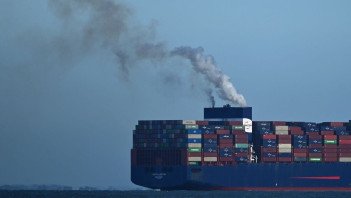
Continued Blockade and Oil Flow: According to reports via Reuters, President Trump stated on Truth Social that the US blockade targeting Iranian ports remains active, while oil continues to transit outward through the contested Strait of Hormuz.
Halting Pre-Election Strikes: Reassuring financial markets, Trump explicitly ruled out any pre-election military offensives before the November 3 polls, emphasizing that indirect talks aimed at ending hostilities and securing maritime navigation are yielding constructive dialogue.
Diplomatic Talks and Iran’s Proposal to Open the Strait of Hormuz
Parallel to political announcements, diplomatic channels involving international mediators have remained active:
Reviewing US Responses: Iranian Foreign Minister Abbas Araghchi confirmed that Tehran is currently reviewing the United States' official response to Iran's proposal to reopen the vital Strait of Hormuz within seven days.
Mediated Message Exchanges: Araghchi noted that indirect negotiations and message exchanges via mediators are proceeding, with Iran expected to formulate its official response shortly. If conditions outlined in the proposal are met, regular maritime traffic could resume within a week.
Contrasting Claims on Hormuz Navigation: While Iranian Revolutionary Guard adviser Mohammadreza Naqdi claimed complete Iranian control over the strait, US Central Command (CENTCOM) firmly rejected the assertion, stating that commercial and energy shipping continues unimpeded with approximately 20 million barrels of crude oil currently transiting through the waterway.
War Toll and Hazardous Maritime Operations for Tanker Crews
The broader conflict has inflicted heavy hardware losses and hazardous working conditions for civilian mariners:
US Military Losses: A Congressional Research Service report cited by AP revealed that at least 81 US military aircraft and drones have been damaged or destroyed in the ongoing conflict, including 45 MQ-9 Reaper drones, 12 F-15E Strike Eagles, an F-35A Lightning-2, and seven KC-135 Stratotankers.
Hazard Pay for Tanker Captains: Highlighting the extreme dangers of navigating the blockaded shipping lane, Al Jazeera reported that captains steering vessels through the Strait of Hormuz are commanding massive hazard pay, pulling monthly salaries of up to $100,000 alongside $50,000 bonuses per voyage, a dramatic leap from standard monthly earnings of roughly $15,000.
_557497607_351x234.jpg)

_1120843823_351x234.jpg)
_1740683993_351x234.jpg)
_1107595906_351x234.jpg)