Meloni Ally Slams Italian Leader Over India Remarks
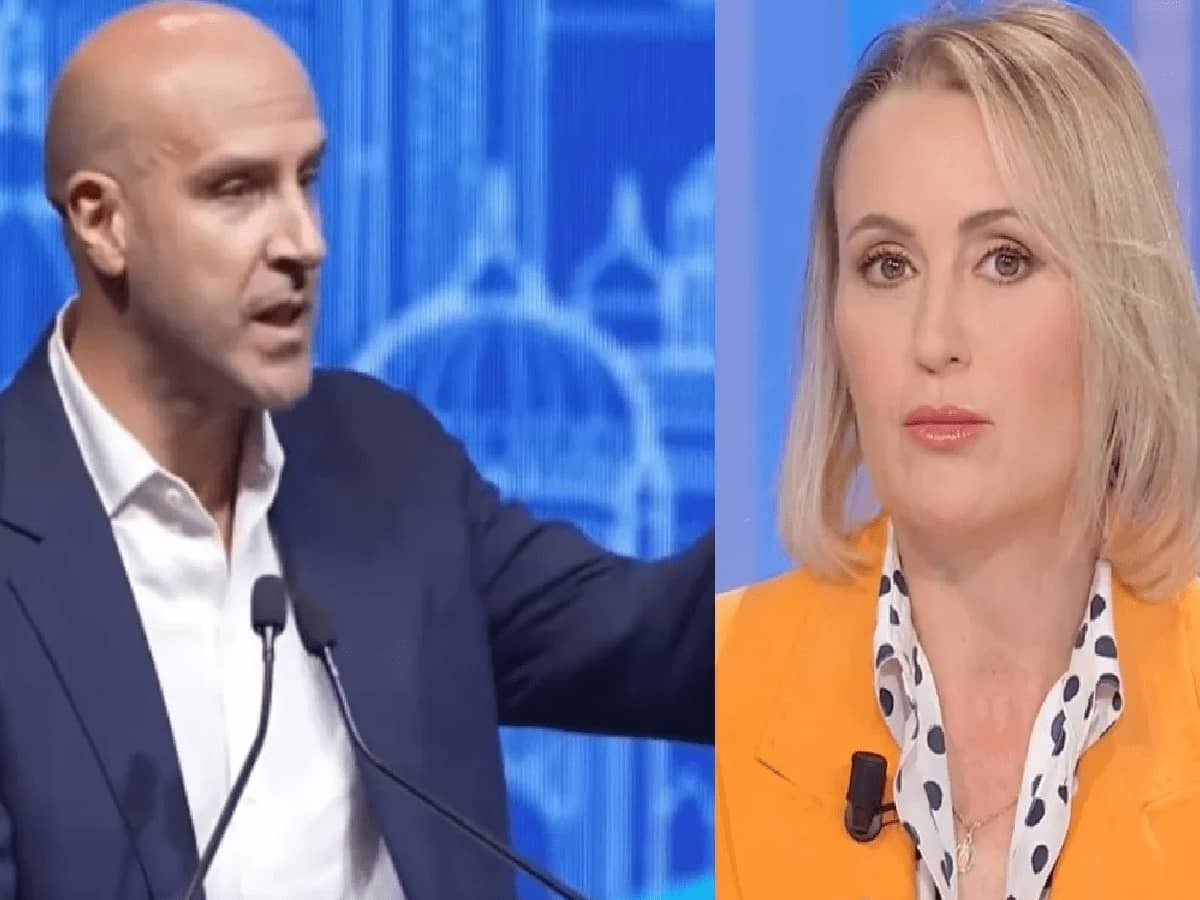
The high-profile diplomatic and political shockwaves set off by the Bharat Summit 2026 in Hyderabad continue to reverberate across international borders. While domestic political players have locked horns over comments made at the event, an unexpected rebuke has emerged from Rome. Deborah Bergamini, a prominent Italian Member of Parliament and leader of Forz Italia—a key coalition partner in Prime Minister Giorgia Meloni’s government—has launched a blistering critique against a fellow Italian politician for attempting to lecture the world’s largest democracy on governance and electoral integrity.
The controversy centers around remarks made by Giacomo Filibeck, Secretary-General of the Party of European Socialists (PES), who attended the Hyderabad summit and shared the stage with the Leader of the Opposition in the Lok Sabha, Rahul Gandhi. Filibeck’s sharp attacks on Prime Minister Narendra Modi's administration and his use of confrontational political rhetoric drew an immediate, uncompromising response from Rome, underscoring the deep respect European conservative leadership holds for India's constitutional sovereignty.
The Hyderabad Summit Trigger: What Did Giacomo Filibeck Say?
The diplomatic flashpoint occurred during the proceedings of the Bharat Summit 2026, held in Hyderabad on November 14, which brought together global delegates, thinkers, and political figures. Addressing the gathering alongside Indian opposition leaders, PES Secretary-General Giacomo Filibeck launched into an unspooled critique of India's democratic framework.
Claiming that Indian democracy was "under attack" and being "hijacked," Filibeck openly aligned himself with the Congress party’s campaign narratives. Going a step further, he used provocative local slogans, echoing phrases like "Vote Chor, Gaddi Chhod" (Vote thief, leave your seat) to target the ruling Bharatiya Janata Party (BJP). His intervention was swiftly criticized by Indian leaders for inviting external commentary into sovereign domestic political disputes, prompting international figures like Bergamini to set the record straight from a European legislative perspective.
Deborah Bergamini Defends India’s Democratic Sovereignty
Taking to social media to voice her disapproval, Italian lawmaker Deborah Bergamini did not mince words. She called out the impropriety of a European political operative using an international gathering to interfere in the domestic affairs of a friendly, sovereign nation.
"I believe that, in a democracy, everyone is free to put forward whatever arguments or accusations they choose—provided, of course, that they can substantiate them," Bergamini stated. However, she emphasized that political grievances concerning electoral rolls or administrative processes must be resolved through a nation's internal mechanisms.
Most importantly, Bergamini delivered a powerful counter-argument against Western paternalism, highlighting the sheer scale and resilience of Indian democracy: "Moreover, as Europeans, we find it inappropriate to lecture on democracy a nation that enables 970 million citizens to cast their votes. India possesses its own political institutions and judiciary; any disputes or grievances should be addressed in accordance with, and with respect for, the established rules of democracy."
Furthermore, Bergamini underscored that interfering in internal debates runs counter to the spirit of the Special Strategic Partnership shared between Italy and India, which is anchored in mutual respect, high-level political engagement, and deep bilateral cooperation across economic and technological sectors.
Domestic Backlash: Amit Shah and BJP Respond to Foreign Interference
Back in India, Filibeck’s remarks and his alignment with the opposition triggered an intense political counter-offensive from the ruling dispensation. Union Home Minister Amit Shah, speaking at a public engagement in Pune, launched a scathing attack on the opposition for seeking external validation and maligning India's global image out of electoral frustration.
Shah remarked that running down the nation and its democratically elected leadership on international platforms would never translate into domestic political success. Pointing to the nation's robust developmental trajectory, the Home Minister challenged critics to engage with the realities of rural India rather than staging political seminars abroad.
Reaffirming Mutual Respect in Global Politics
The swift intervention by Italian legislator Deborah Bergamini serves as a timely reminder of the boundaries that govern mature international diplomacy. As India continues to consolidate its position as an economic and democratic superpower, statements from international allies like Italy reinforce that true partnerships are built on mutual respect, non-interference, and the recognition of sovereign institutional strength.