US Rejects Claims That the Quad is Weakening
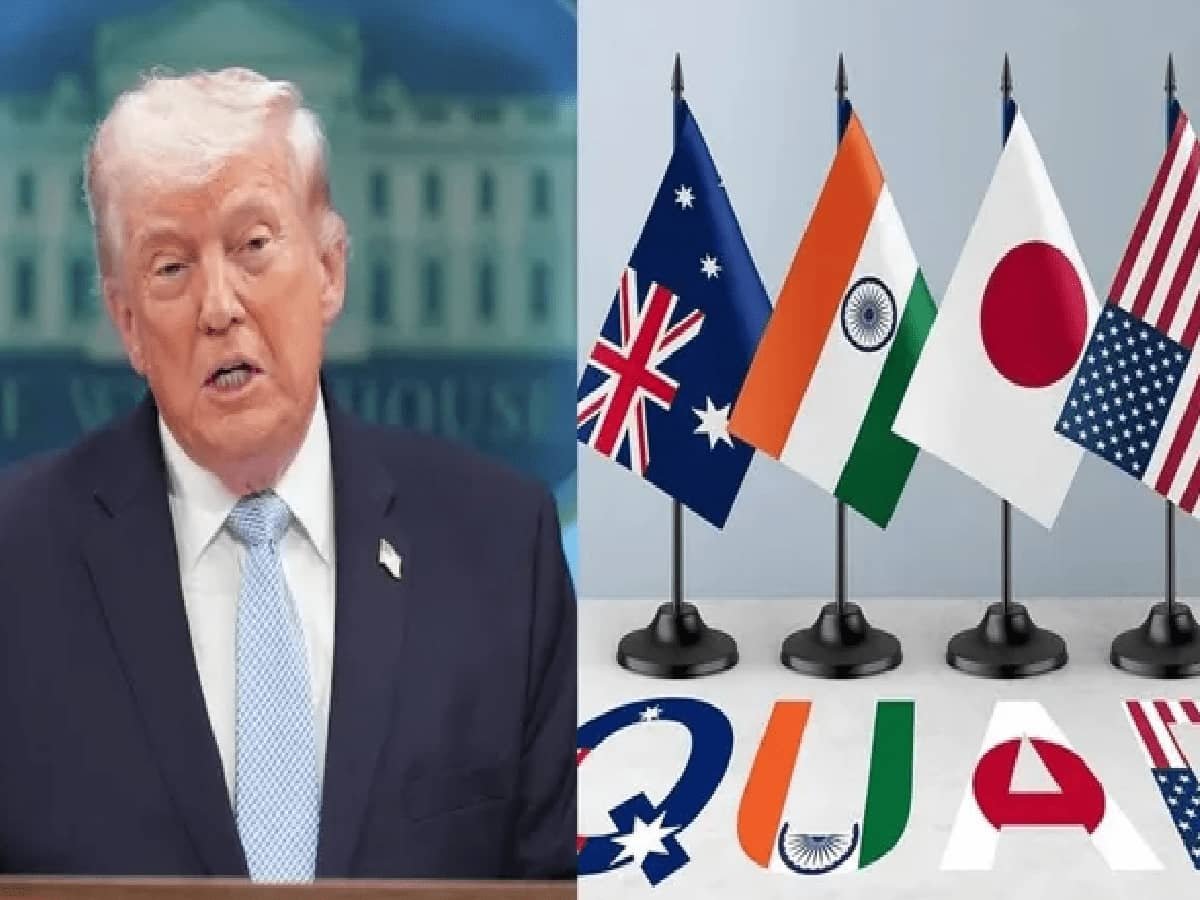
As geopolitical dynamics across the Indo-Pacific enter a critical juncture, the United States has launched a robust defense of one of its most vital regional partnerships. Ahead of the highly anticipated Quad leaders' summit in Manila, the capital of the Philippines, senior Washington officials have pushed back aggressively against recent media reports suggesting that the strategic alliance between Australia, India, Japan, and the United States is losing momentum under the Donald Trump administration.
Characterizing recent speculative claims as completely unfounded, the US diplomatic apparatus has signaled an ironclad commitment to deepening minilateral cooperation, reinforcing maritime security, and countering coercion across contested Asian waterways.
Dismissing Claims of the Quad on "Life Support"
The diplomatic pushback comes in direct response to a prominent report published by the news portal Politico, which cited an unnamed Washington-based Asian diplomat claiming that the Quad grouping was currently on "life support." The report fueled regional anxieties by suggesting that ongoing trade friction between New Delhi and Washington, coupled with shifting US presidential engagements involving Beijing, might sideline the alliance.
The US State Department reacted swiftly to dismantle these assertions. Dylan Johnson, US Assistant Secretary of State, slammed the report as "completely absurd and fake news."
To substantiate the administration's active commitment, Johnson pointed to intense, uninterrupted diplomatic engagement over the past two years: "Over the past two years, Secretary Rubio has met formally with the foreign ministers of the Quad countries five times, three of which have taken place in the last six months." Furthermore, Johnson emphasized that the foreign minister's very first official interaction after assuming office was conducted directly with Quad counterparts, supplemented by monthly sherpa-level consultations and rigorous operational planning.
Setting the Stage for the Manila Leaders' Summit
After a hiatus of two years since the last summit-level gathering, the top leaders of the Quad nations are set to convene on Tuesday in Manila, Philippines, timing their meeting alongside the broader ASEAN summit framework. While initial scheduling hurdles—including reluctance to host or travel—had cast shadows over a summit hosted by a Quad member state, the decision to convene in Manila ensures that the leaders' forum maintains its vital continuity.
The upcoming summit agenda is slated to address a comprehensive spectrum of regional and global challenges, focusing heavily on:
Maritime Security & Domain Awareness: Securing critical sea lanes and countering illegal, unreported, and unregulated (IUU) fishing across the Indo-Pacific.
Critical and Emerging Technologies: Fostering secure semiconductor supply chains, artificial intelligence governance, and telecommunications resilience.
Climate and Health Security: Coordinating green energy transitions, climate adaptation strategies, and regional health infrastructure partnerships.
Economic Security & Infrastructure: Building sustainable, transparent infrastructure financing alternatives to counter predatory debt-trap diplomacy.
Sending a Clear Message Amid South China Sea Tensions
The choice of Manila as the summit backdrop carries profound geopolitical symbolism. The meeting occurs at a time when regional tensions are running exceptionally high due to ongoing friction between host nation the Philippines and China regarding competing territorial claims and aggressive maritime posturing in the South China Sea.
By gathering in Southeast Asia, the Quad leaders aim to send an unambiguous message reaffirming their unwavering commitment to a free, open, and inclusive Indo-Pacific. The coalition’s foundational principles remain anchored in strict adherence to the rule of law, the United Nations Charter, and the absolute protection of sovereign territorial integrity.
Furthermore, the joint deliberations are expected to issue a strong, unified stance opposing any unilateral attempts to alter the geopolitical status quo in the East and South China Seas through military coercion, intimidation, or the unlawful use of force.
The Strategic Evolution of the Quad
Originally conceived as a strategic dialogue and revitalized over recent years, the Quad has successfully transitioned from a consultative forum into a practical, action-oriented minilateral powerhouse. Despite persistent skepticism from external adversaries regarding internal cohesion, the firm rebuttal from Washington and the scheduling of the Manila summit demonstrate that the alliance remains resilient, adaptable, and indispensable to maintaining peace and stability across the Indo-Pacific region.