Historic Trump-Xi-Putin Trilateral Set for APEC
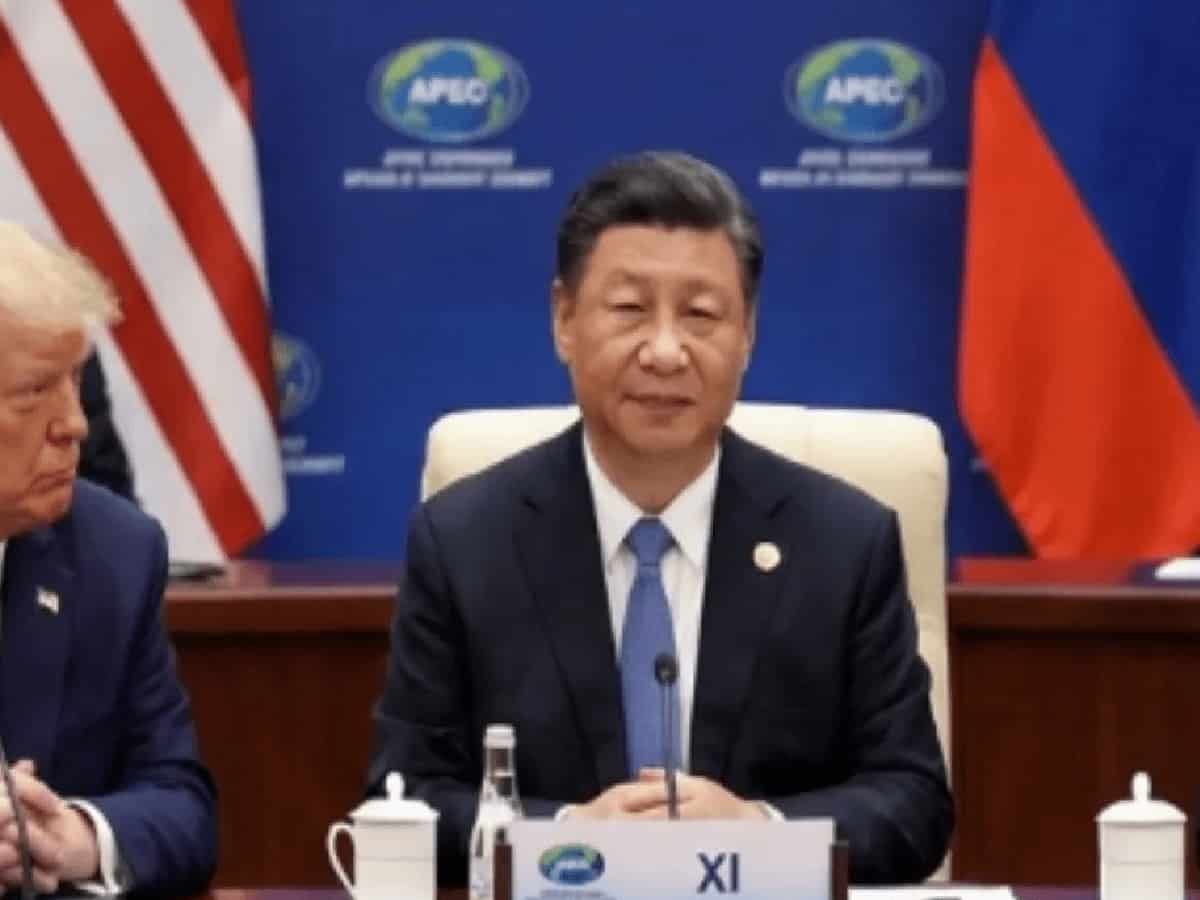
In what is being hailed as a landmark diplomatic development on the global stage, US President Donald Trump, Chinese President Xi Jinping, and Russian President Vladimir Putin are scheduled to hold their first-ever trilateral meeting. The high-stakes summit will take place in the southern Chinese tech hub of Shenzhen on the sidelines of the upcoming Asia-Pacific Economic Cooperation (APEC) Summit.
White House officials confirmed the historic gathering on Friday, outlining an ambitious itinerary that highlights shifting geopolitical dynamics, nuclear non-proliferation priorities, and intense regional diplomacy across Asia.
Nuclear Proliferation and Global Security Top the Agenda
According to administration officials, President Trump intends to use the unprecedented three-way dialogue to address the critical issue of nuclear weapons reduction. Highlighting the dangers of expanding arsenals—noting in particular that China's nuclear infrastructure is growing at a rapid pace—Washington aims to set the groundwork for future high-level arms control discussions.
"The President has made it clear that, among other topics, he will discuss the reduction of nuclear weapons in the world, whose proliferation President Trump believes is very dangerous," White House spokeswoman Olivia Wales told reporters during a media briefing.
While expectations for an immediate, binding multilateral treaty remain modest, US officials characterize the meeting as an essential entry point for direct leader-level communication among the three superpowers. Alongside nuclear security, Trump is also expected to raise broader geopolitical tensions, including the situation involving Iran. However, officials clarified that Russia's ongoing war in Ukraine will not form part of the trilateral agenda, keeping the focus tailored to shared strategic concerns.
Diplomatic Sequencing: Bilateral Talks With Xi Before the Trilateral Engagement
The trilateral summit in Shenzhen will be the culmination of a broader diplomatic swing through Asia. President Trump is scheduled to depart Washington on Monday, making an initial stop in Manila, Philippines, for the Association of Southeast Asian Nations (ASEAN) Summit. In Manila, he will engage in bilateral discussions with Philippine President Ferdinand Marcos Jr. centered on Indo-Pacific security, regional trade, and regional stability.
Upon arriving in Shenzhen for the APEC proceedings, Trump will first engage in a structured bilateral meeting and working lunch with Chinese President Xi Jinping. Only following these bilateral consultations will the two leaders join Russian President Vladimir Putin for the joint trilateral engagement. White House officials noted that no separate, one-on-one bilateral meeting between Trump and Putin is planned during the itinerary.
Billionaire entrepreneur and tech executive Elon Musk is set to accompany President Trump on portions of his Asian tour due to his extensive business ventures in the region, though administration officials confirmed he will not participate directly in the closed-door trilateral talks with Xi and Putin.
Managing Economic Boundaries and Export Controls
As preparations for the summit finalize, Washington has moved to compartmentalize peripheral controversies. Officials confirmed that recent discussions surrounding former Nvidia CEO Jensen Huang and trade compliance will not be injected into the presidential talks with Beijing. Furthermore, American export controls on sensitive semiconductor and artificial intelligence technologies remain non-negotiable national security matters and will not be tabled during the meetings.
As world leaders converge on Shenzhen next week, all eyes will be on this unprecedented three-way alignment. Whether the meeting yields immediate policy shifts or serves primarily as a symbolic reset for superpower relations, the Shenzhen trilateral marks a definitive turning point in contemporary international relations.