Black Sea Crisis: Ukraine Blunts Russian Cargo Lines With 116 Drone Strikes in Aggressive Azov Sea Blitz
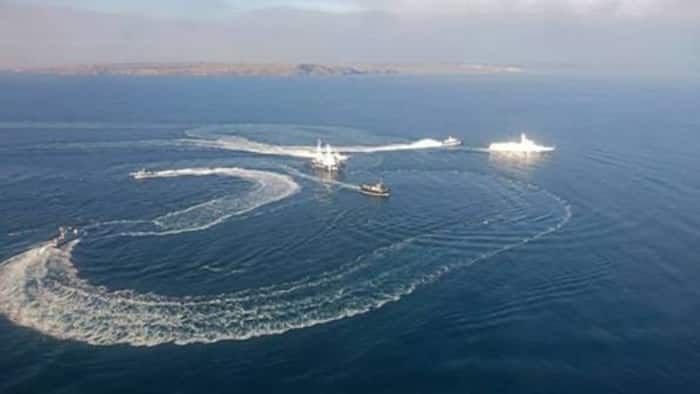
A massive wave of Ukrainian drone strikes targeting Russian cargo and logistics vessels has turned the Azov Sea into a highly volatile conflict zone. The intense scale of the naval offensive has drawn immediate comparisons to historic chokepoint blockades like the Strait of Hormuz, forcing the Kremlin to look for alternative merchant shipping corridors to keep its commercial agreements moving.
Chokepoint Lockout: Two Primary Channels Blocked
According to defence reports corroborated by CNN, the persistent attacks have successfully forced a halt to standard maritime trade across the Azov Sea—a vital basin bordered by Russia, Crimea, and Russian-controlled southern Ukrainian territories. To mitigate escalating vessel casualties, Russian authorities have completely suspended traffic through two key operational waterways:
The Don-Azov Channel: The vital engineering conduit connecting the Azov Sea to Russia's vast inland river transport networks.
The Kerch Strait: The high-security maritime passage serving as the single geographic link between the Azov Sea and the open waters of the Black Sea.
The closure of these strategic transit points has severely choked off the logistical lifeline feeding the Crimean Peninsula, immediately resulting in documented regional fuel shortages across several adjacent Russian administrative sectors.
Fleet Target Tracking: 116 Vessels Struck in 9 Days
The sheer scale of the operation was officially confirmed by the commander of Ukraine's newly established drone forces. In a comprehensive operational briefing, Ukrainian military officials detailed that specialised remote-controlled surface and aerial drones successfully intercepted and struck 116 distinct vessels over a short 9-day window. The target list heavily prioritised industrial oil tankers and large-scale bulk cargo carriers moving resources through the contested waters.
Kyiv has long maintained that Moscow systematically uses this maritime route to transport grain and other critical agricultural produce harvested from occupied agrarian territories to international buyers.
Moscow Responds: Commitments to African Nations Secure
Reacting swiftly to the shipping gridlock, Russian Foreign Minister Sergei Lavrov stated that the Ukrainian campaign specifically targets Russia's "shadow fleet" of merchant vessels in an attempt to cut off fuel deliveries to Crimea and disrupt bulk grain exports.
Kremlin Policy Directive: Despite the blockade, Foreign Minister Sergei Lavrov announced that President Vladimir Putin is actively deploying defensive measures to end the strikes. The Ministry of Agriculture insisted that the internal domestic food supply remains completely secure. Lavrov reiterated: “No matter what happens, we will continue to meet all our commitments to supply food to our African partners, both through commercial agreements and humanitarian assistance.”

_1006877930_351x234.jpg)
_421735380_351x234.jpg)
_250724134_351x234.jpg)