
 Priyanka Tiwari
 Share
Share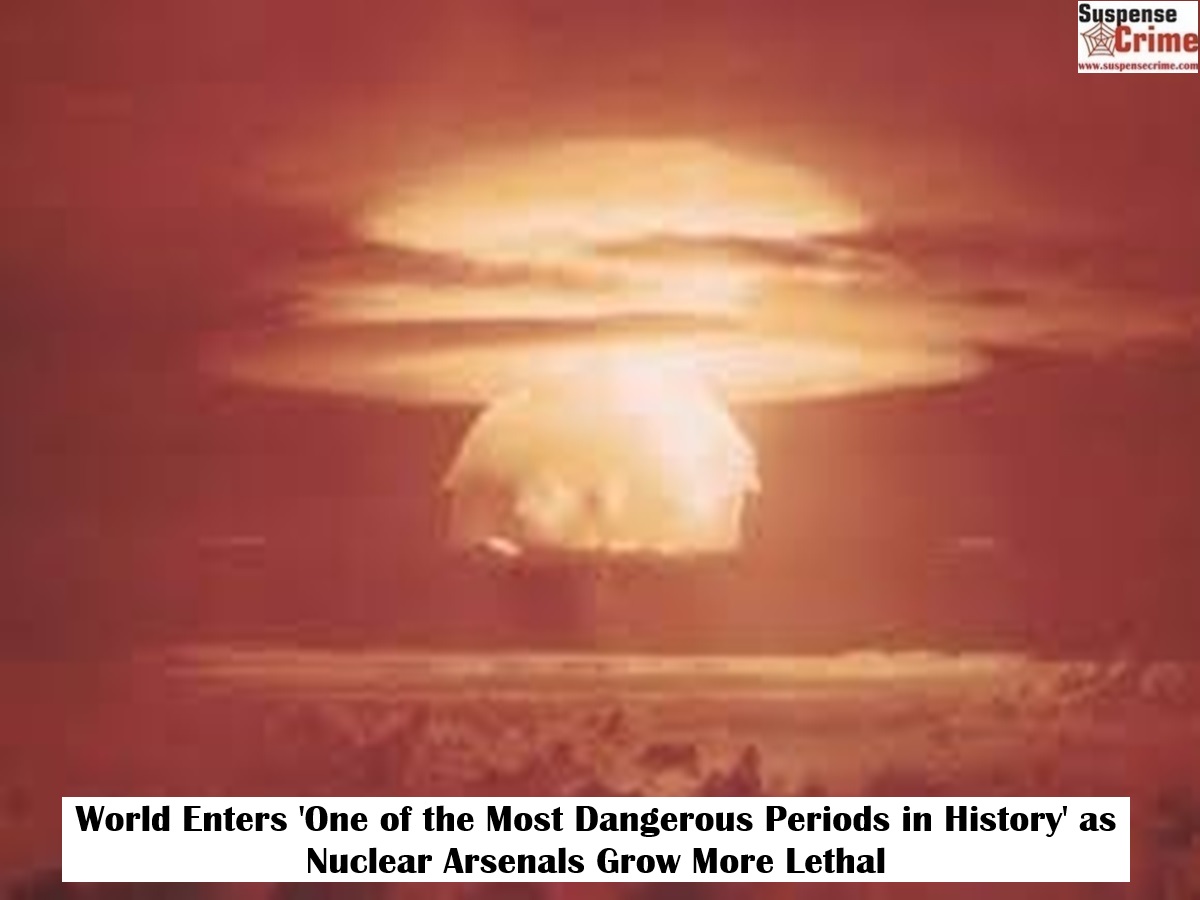
Suspense crime, Digital Desk : The world is spiraling into a perilous new era of nuclear instability, a leading global security watchdog has warned. According to a sobering new report from the Stockholm International Peace Research Institute (SIPRI), nuclear-armed nations are not only expanding their arsenals but are increasingly relying on these weapons for their security strategies, pushing the globe into "one of the most dangerous periods in human history."
While the total global count of nuclear weapons has slightly decreased due to the dismantling of old, retired warheads, a more alarming trend is emerging: the number of operational warheads—those fitted to missiles or aircraft and ready for use—is steadily climbing.
At the start of 2024, the world’s nine nuclear-armed states—the United States, Russia, the United Kingdom, France, China, India, Pakistan, North Korea, and Israel—possessed an estimated 12,121 nuclear warheads. Of these, about 9,585 were in military stockpiles for potential use. A frightening 3,904 of these warheads were deployed and on high operational alert, an increase from the previous year.
Holding nearly 90% of the world's nuclear firepower, the United States and Russia are at the center of this shift. Although both nations continued to dismantle their retired warheads, SIPRI noted a disturbing lack of transparency from both sides following Russia's full-scale invasion of Ukraine. The suspension of the New START treaty—the last remaining nuclear arms control pact limiting their strategic forces—has further eroded trust and stability.
Perhaps the most dramatic shift comes from China, which is expanding its nuclear arsenal faster than any other country. SIPRI estimates that China's stockpile grew from 410 warheads in January 2023 to 500 by January 2024, and it is expected to continue growing. For the first time ever, China is believed to have placed a small number of its warheads on high operational alert during peacetime.
"China is expanding its nuclear arsenal faster than any other country," said Hans M. Kristensen, a Senior Fellow at SIPRI. "But in nearly all of the nuclear-armed states there are either plans or a significant push to increase nuclear forces."
This nuclear buildup isn't happening in a vacuum. It is set against a backdrop of intense geopolitical conflict, including the wars in Ukraine and Gaza. These conflicts have severely damaged diplomatic channels, making international dialogue on arms control nearly impossible.
"We have not seen nuclear weapons playing such a prominent role in international relations since the Cold War," stated Wilfred Wan, Director of SIPRI’s Weapons of Mass Destruction Programme.
The report concludes with a stark warning. The post-Cold War period of gradual disarmament is over, replaced by a competitive and dangerous arms race. "It is hard to believe that we are now in one of the most dangerous periods in human history," said SIPRI Director Dan Smith. “It is time for the great powers to step back and reflect. Preferably together.”
_1570701464_100x75.jpg)
_1563449287_100x75.jpg)

_1025409548_100x75.jpg)
_1681775372_100x75.jfif)