

 Priyanka Tiwari
 Share
Share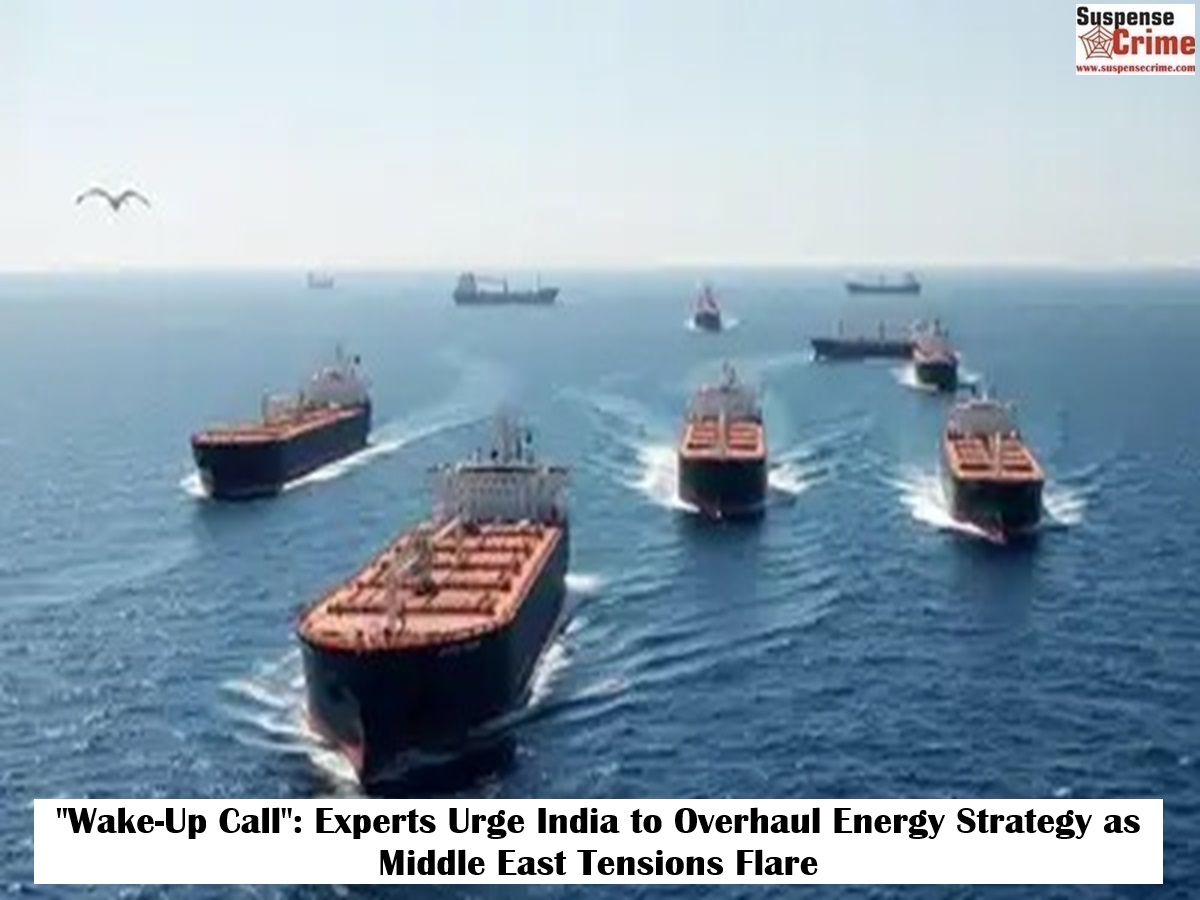
Suspense crime, Digital Desk : A leading Indian think tank has issued a stark warning, urging the government to conduct an immediate and thorough review of its energy security strategy. The Global Trade Research Initiative (GTRI) stated that escalating conflicts in the Middle East, including the Israel-Hamas war and Houthi attacks in the Red Sea, pose a significant and growing threat to India's energy supply and economic stability.
India, the world's third-largest energy consumer, is heavily dependent on foreign supplies, importing over 85% of its crude oil and around 40% of its natural gas. A substantial portion of these imports either originates from or transits through the highly volatile Middle East region, particularly via critical chokepoints like the Strait of Hormuz and the Suez Canal.
The GTRI report highlights that any disruption in these routes could have severe consequences. "The unfolding crisis in the Middle East, a region critical to global energy supply, serves as a wake-up call for India to bolster its energy security," the think tank noted.
The risks are multifaceted. Further escalation could lead to:
- Supply Disruptions: A blockade or conflict near key shipping lanes could halt or delay crucial oil and LNG shipments.
- Soaring Costs: Rerouting tankers around Africa's Cape of Good Hope, a measure already being taken by many shipping companies, adds significant time and cost to voyages, pushing up freight charges.
- Price Volatility: Geopolitical uncertainty inevitably leads to spikes in global crude oil prices, which directly impacts India's import bill, fuels domestic inflation, and puts pressure on the national budget.
To counter these vulnerabilities, the GTRI has proposed a multi-pronged strategy. The recommendations include urgently diversifying energy import sources beyond the Middle East, aggressively boosting domestic oil and gas production, and accelerating the transition to renewable energy sources like solar and wind to reduce fossil fuel dependence.
Furthermore, the think tank called for strengthening India's Strategic Petroleum Reserves to cushion against short-term shocks and developing detailed contingency plans for various risk scenarios, ensuring the nation is prepared for any potential crisis.


_132300150_100x75.jpg)
_430488585_100x75.jpg)
_1333714631_100x75.jpg)
_58079313_100x75.jpg)