










Sisuna Danda Ganga Mela: Rural Culture & Faith Shine on Kartik Purnima
Along the sandy banks of the Ganga at Sisuna Danda Ghat near Bahjoi in Uttar Pradesh's Sambhal district, Tuesday, November 24, 2026, unfolded as a moving portrait of intergenerational devotion and rural heritage on the auspicious occasion of Kartik Purnima. From dawn onward, families arrived on foot, tractor-trolleys, and rural transport carrying bedrolls and offerings, greeted by a brightly decorated ceremonial archway near the T-Point checkpoint that signaled entry into a sprawling riverside "tent city". Inside the fairgrounds—marking the 11th year of the organized Sisuna Danda Ganga Mela—fathers walked toward the ghats holding their young children's fingers and explaining the sacred significance of Ganga Snan, while younger adults gently escorted elderly parents by the hand toward the water's edge. Even though winter water levels along the river stretch had receded slightly, the spirit of devotion remained undimmed as pilgrims bathed safely within barricaded zones, lit earthen lamps (deepdaan), offered prayers, and shared prasad amid chants of "Har Har Gange". For readers, cultural observers, and families across northern India—including households in Lucknow and neighboring Uttar Pradesh cities such as Unnao, Kanpur, Prayagraj, and Varanasi, where Kartik Purnima fairs along riverfronts carry deep social and spiritual resonance—the gathering in Sambhal illustrates how regional river fairs keep rural values alive across generations.
Kashi-Style Ganga Aarti, Jhandi Yatra, and Three Days of Spiritual Celebration
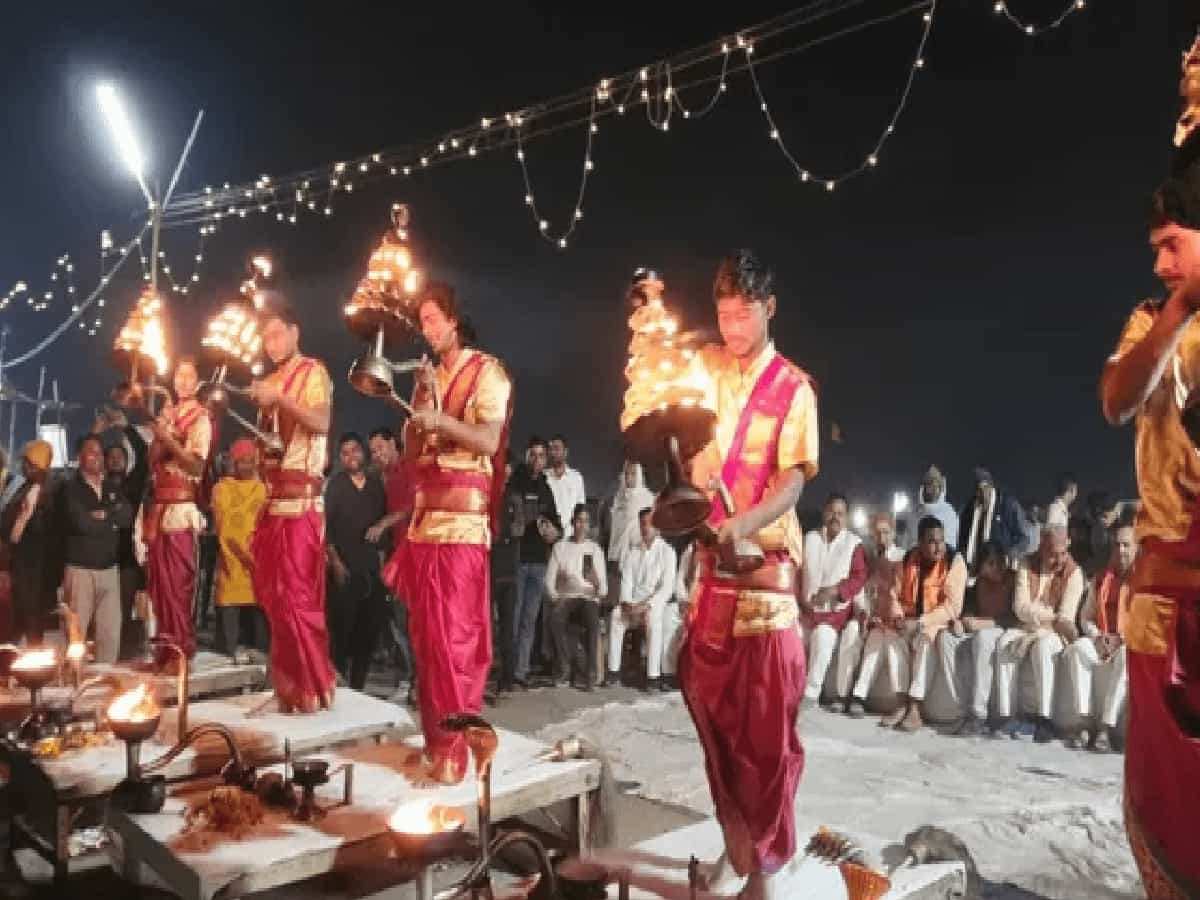
Organized under the stewardship of the Sambhal Zila Panchayat (headed by administrator Dr. Anamika Yadav) and district officials led by District Magistrate Ankit Khandelwal, the 2026 Sisuna Danda Ganga Mela began on Sunday, November 22, with a traditional Jhandi Yatra starting from Hari Baba Bandh Dham, followed by jhandi poojan, Vedic chanting, and dugdhabhishek (milk offering) to Mother Ganga. A centerpiece of the riverside observances has been the evening Ganga Aarti conducted by priests invited from Kashi (Varanasi)—recreating the cadence of Varanasi's iconic riverfront ritual on the sands of Sambhal alongside cultural evenings featuring Braj's Phoolon Ki Holi and a Kavi Sammelan ahead of Tuesday's main Kartik Purnima holy dip.
Beyond the Ghats: Rural Culture, Meena Bazaar, and Administrative Outreach
Once pilgrims step away from the bathing ghats, the fairground transforms into a vibrant showcase of western Uttar Pradesh's folk life and community commerce:
| Fairground Zone / Attraction | Experience & Community Highlights at Sisuna Danda Mela |
|---|---|
| Barricaded Bathing Ghats | Safe, supervised bathing zones equipped with watchtowers, divers, lighting, and sanitation for families arriving from Sambhal and neighboring districts. |
| Cultural Stage & Folk Programs | Live devotional music, traditional folk performances, poetry sessions, and spiritual discourses drawing multi-generational audiences. |
| Meena Bazaar & Chaat Alleys | Women browse household utensils, winter essentials, and handicrafts in Meena Bazaar, while children and youth crowd chaat-pakodi stalls and toy shops. |
| Government Exhibitions & Camp Offices | Departmental stalls and LED screens inform rural visitors about state welfare and agricultural schemes alongside round-the-clock administrative and medical camps. |
Preserving Family Roots and Passing Values to the Next Generation
More than an annual bathing ritual, the 11-year-old Sisuna Danda Ganga Mela functions as a living social bridge—bringing urban-working youth back to their ancestral villages, introducing young children to their first sight of the Ganga, and reinforcing shared cultural memory in an unhurried, collective setting. As lamps flicker along the riverbank and families gather over shared meals in the fair streets, faith flows seamlessly from grandparents to parents and down to the youngest hands held tightly at the ghat.






