










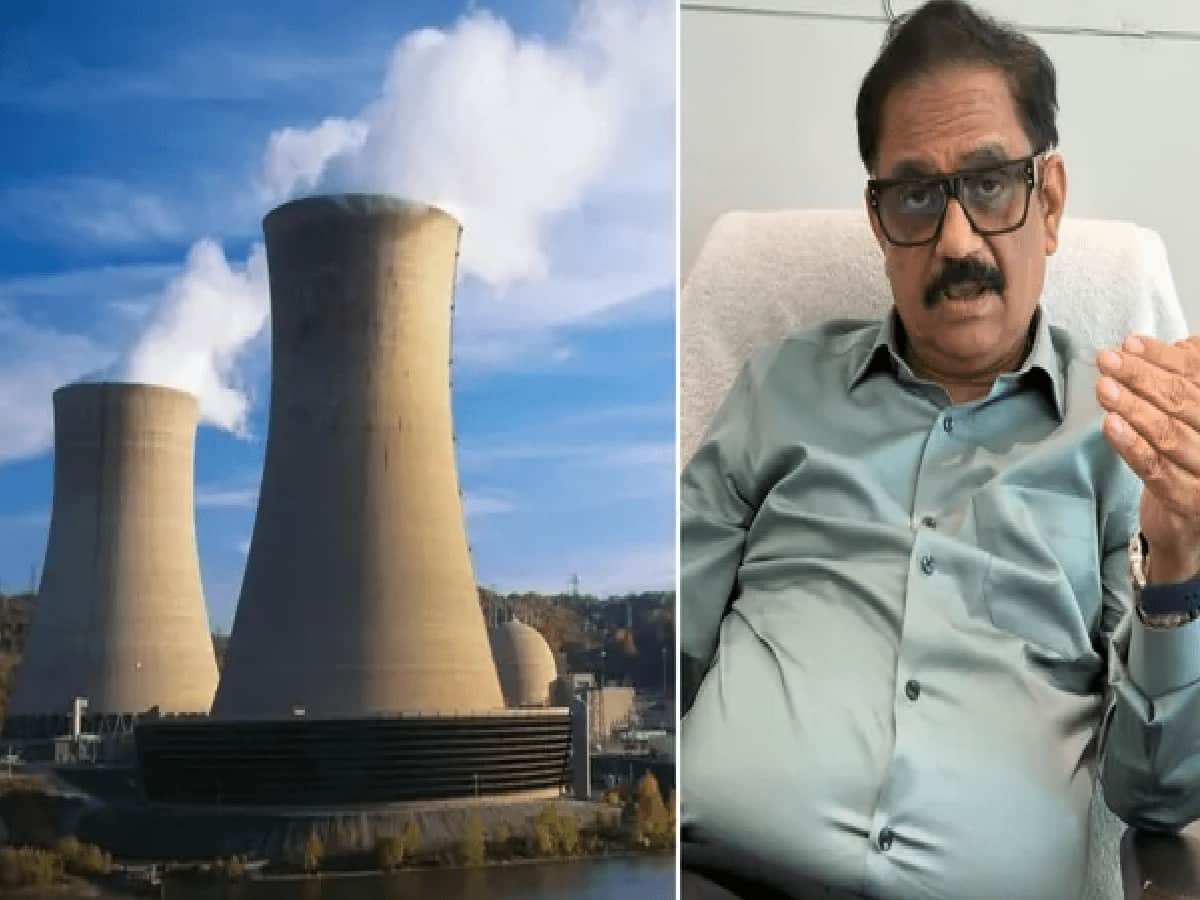
Adani Group Proposes 2 Nuclear Power Plants in UP; ₹1.80 Lakh Cr Plan
Uttar Pradesh is poised for a historic transformation across its clean-energy, heavy-industrial, and defence-manufacturing landscape as the Adani Group formally proposes establishing two nuclear power plants in the state with an estimated combined investment of ₹1.80 lakh crore. Disclosed in Lucknow on Wednesday, November 25, 2026, by Anand Singh Bisen, Senior Vice President of the Adani Group and a distinguished alumnus of Lucknow University who was in the state capital to attend the university's convocation ceremony, the mega-proposal marks one of the largest private-sector energy commitments ever tabled before the Uttar Pradesh government. According to Bisen, each nuclear power station will entail an estimated capital outlay of approximately ₹90,000 crore, and the conglomerate has formally requested suitable land parcels from the state administration—with reliable, abundant water availability serving as the primary criterion for site selection. Beyond nuclear power, Bisen outlined two additional multi-thousand-crore industrial initiatives taking shape in Uttar Pradesh: preparations to invest around ₹1 lakh crore in a large-scale coal gasification complex capable of producing clean fuels, ammonia, nitrogen, and fertilizers, and a ₹3,000 crore expansion in Kanpur's defence-manufacturing ecosystem to build a dedicated propellant manufacturing plant. For industrial stakeholders, engineering graduates, MSME suppliers, and citizens across northern India—particularly in Lucknow, Kanpur, and neighboring Unnao (which sits directly along the bustling Lucknow–Kanpur industrial and defence corridor), as well as Prayagraj and Varanasi—these interconnected investments signal thousands of direct and indirect jobs and a decisive leap in state power security.
Breakdown of Adani Group's Multi-Sector Investment Blueprint for Uttar Pradesh
Following recent policy reforms enabling private-sector participation in India's civil nuclear programme toward the national goal of 100 gigawatts (GW) of nuclear capacity by 2047, Adani Group's Uttar Pradesh roadmap spans baseload clean power, import-substituting chemical feedstocks, and indigenous defence ordnance:
| Project / Sector in Uttar Pradesh | Proposed Investment | Location & Key Operational Details |
|---|---|---|
| Two Nuclear Power Plants (Clean Baseload Energy) | ~₹1.80 Lakh Crore total (approx. ₹90,000 crore per plant) | Formal proposal submitted to the Uttar Pradesh government; land allocation requested with proximity to abundant water sources prioritized for reactor cooling. |
| Coal Gasification Project (Clean Fuel & Chemicals) | ~₹1.00 Lakh Crore | Preparations underway to convert domestic coal into synthetic fuel, ammonia, nitrogen, and chemical fertilizers, cutting India's reliance on costly imports. |
| Defence Propellant & Ammunition Expansion (Aerospace & Defence) | ~₹3,000 Crore (propellant facility) | Located in Kanpur (expanding Adani Defence & Aerospace's existing ammunition complex); will manufacture military propellants and scale up from small-arms ammunition to medium- and long-range munitions. |
Kanpur Defence Corridor Set for ₹3,000 Crore Propellant Plant and Long-Range Ammunition Push
A cornerstone of the announcement centers on Kanpur, a flagship node of the Uttar Pradesh Defence Industrial Corridor. Adani Defence & Aerospace already operates an advanced ammunition manufacturing complex in Kanpur that currently produces small-arms ammunition for India's armed forces and security agencies.
Under the next phase of expansion detailed by Anand Singh Bisen, the group is preparing to invest approximately ₹3,000 crore to set up a dedicated propellant manufacturing plant in Kanpur. This facility will produce high-grade propellants required across multiple categories of defence ordnance, while parallel upgrades at the Kanpur complex prepare production lines for medium- and long-range ammunition—strengthening domestic supply chains and creating specialized technical employment across the Kanpur–Unnao–Lucknow belt.
How the ₹1 Lakh Crore Coal Gasification Project Will Curb Import Dependence
Alongside nuclear power and defence manufacturing, the Adani Group's proposed ₹1 lakh crore coal gasification venture promises to unlock cleaner industrial value from domestic coal reserves. Rather than burning coal directly in conventional boilers, surface coal gasification chemically converts coal into synthesis gas (syngas) to manufacture clean industrial fuels, ammonia, nitrogen, and agricultural fertilizers.
As Bisen emphasized, scaling up domestic production of ammonia, nitrogen, and fertilizers inside Uttar Pradesh—India's most populous agrarian state—will substantially reduce the country's dependence on imported feedstocks while insulating farmers and downstream chemical industries from global price shocks. Once the state government completes land identification for the two water-linked nuclear sites and clearances progress for the coal gasification and Kanpur propellant facilities, Uttar Pradesh will stand firmly at the forefront of India's industrial and energy transition.






