Priyanka Tiwari
 Share
Share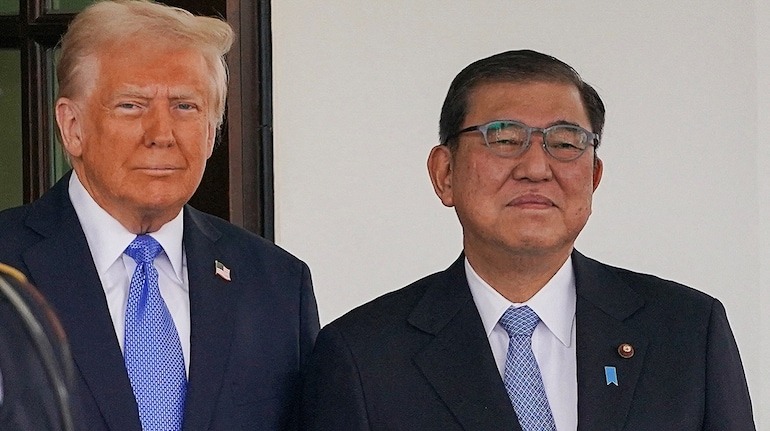
The phenomenon of Trump has resurfaced out of nowhere like lightning, which makes US allies in Europe worried. Even though the center of attention is not solely Europe, his campaign has focused on the US supporters in the Indo-Pacific region, like Japan, who are being asked to provide diplomatic and economic favors. That demand for Japan's reciprocity is rather strange considering the two gentleman’s bilateral meeting in February where they specifically aimed to achieve “a new golden era for US-Japan relations.” Since that meeting, there has been some unclear indicators of reality, which means that things are not great despite the accompanying official statement of friendliness.
Separating Reality from Rhetoric
Despite the fact that the diplomatic rhetoric surrounding Ishiba’s successful visit to the US is incorporated in the joint statement, the reality has been different since the meeting. In his second term, bilateral trade with Japan has become one of the sore issues. It is worth mentioning that tariffs of 25 percent on imports of Japanese steel were announced just a week after their meeting by the US administration. Alongside trade tensions, some major foreign investments have also attracted sharper fire, notably the Nippon Steel investment that was pegged at USD 14.9 billion. Trump’s unilateral steer bold proclamation that Nippon was abandoning its plans to buy was a blatant attempt to cover the issue up. The reality, however, is that in defiance of opposition, the company’s determination to go ahead with the deal indicates that the issue is one that will linger on for quite some time.
Moreover, considering security matters, Trump’s remarks challenging Japan’s status as a reliable partner and his assessment of the existing bilateral security agreement have raised some eyebrows. He remarked, ‘I love Japan. We have a great relationship with Japan … but they don’t have to protect us,’ bluntly suggesting Japan is a welfare state. Apart from this critique, Elbridge Colby’s, Trump’s putative Undersecretary of National Defense for Policy, had further strained relations by proposing that Japan should raise its military spending to three percent of its GDP. The Japanese Prime Minister countered this proposal saying, ‘[Japan] decides on its defence budget, not on the instruction of any other nation.’ What is clear is that Japan has lost the cachet it enjoyed during Trump’s previous term – if not, grudgingly, the affection.
Over and above the bilateral problems, the Trump administration created quite a stir concerning their relations with the US due to the handling of other important matters, protectionism in the form of tariffs and the invasion of Ukraine by Russia. Japan worries that the return of Trumpian Mercantilism and Transactional diplomacy means the US is relinquishing its position as the standard bearer of the free world and international trade along with its security obligations, is no longer a priority. Allies of the US believe the US withdrawing further endangers the prospects of China and Russia dominating the geopolitical and geo-economics spectrum even more.
There is increasing concern as to whether the incipient Trump led world would increasingly cater to and give power to states that constantly try to revise policies and borders such as Russia and China. To add to this concern, Trump's attitude toward the current order and the region’s and Ukraine’s security, as well as rationale for Russia’s border violations does not help matters. A combination of these factors surely raises the mistrust some US allies like Japan feel toward their US relations. With the growing militarization of China, older already Taiwan Strait conflict and Trump's disregard for Ukraine plus his rationale gives fuel to the fire.
Japan-US Relationship in the Trump Era
South Korea, Australia, and the Philippines joined Japan in deepening the Indo-Pacific network under the Biden administration. On the other hand, Japan under Trump was mostly focused on demanding loyalty and balance from its partners as opposed to continuing with the initiatives put in place by the previous administration. This leads one to ask whether Japan is confident that the United States still intends to maintain the liberal international order that it promoted for so long. Even other US partners, like Taiwan, the Philippines, South Korea, and Australia, seem to be losing faith in the legitimacy of security guarantees and seem to be advocating for a more realistic approach. It is evident that perception of the United States is changing among allies which compel every country to change its foreign policy, including dealing with China.
As an illustration, Japan has again begun restoring its frozen connections with China under Ishiba rule. For example, a Japanese delegation visited after a six-year break for the ninth meeting of the China-Japan Ruling Party exchange mechanism in 2018. It was hosted by the Chinese communist party and Hiroshi Moriyama, the LDP Secretary General, and Makoto Nishida, Secretary General of Komeito, were leading the delegation. Subsequently, Japanese Prime Minister Ishiba Shigeru voiced his intention to visit China which indicated a reconciliatory stance towards China.
The US and Japan Relations Under Trump
Even with China's gradual reconciliation, the US remains a favored partner. The advantages of both Japan and the US partnering greatly exceed the drawbacks concerning trade and defense. The majority of Japanese businesses still view the United States as their main market for exports, leading them to invest more into various industries. Among citizens, the United States is still perceived as a reliable friend. According to the Foreign Ministry Survey of Japan, 52.1 percent of the respondents consider cooperation with the US on economics vital. Japan's Trade minister coming over to the United States demonstrates that Tokyo is willing to work with Washington to settle issues, even with some trade disputes.
Nevertheless, Japan is simultaneously adopting a more proactive stance to fill the gap created by the US in the region. It is taking greater initiative in cooperating with other countries that share its concern about the effects on the self-serving international order, which it considers to be of utmost importance for its national interests. These countries include both European and Indo-Pacific nations. Japan’s two main objectives are to defend free global trade and to provide both humanitarian and military assistance to Ukraine. This all demonstrates how the trust in the US is declining, which may not have consequences in the short-term but greatly damage the impression of the US in the long-term.
For the time being, Japan remains committed to advocating for a rules-based order and free trade regime. It will also look to deepen its security partnership with the US while expanding relations with other countries, China included.
Read More: LPG Delivery Alert: No Cylinder Without DAC New Mandatory Rules Every Consumer Must Know