
 Priyanka Tiwari
 Share
Share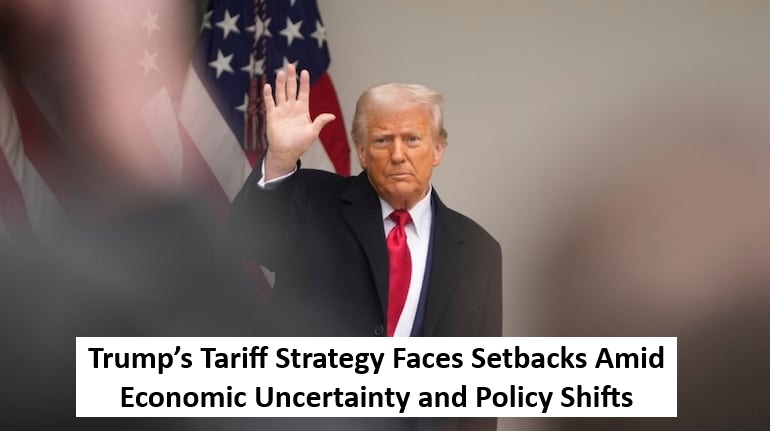
President Trump’s efforts to shift the U.S. economy toward a high-tariff, manufacturing-heavy model are facing resistance due to inconsistencies in messaging and execution. While he envisioned a “Golden Age of Global Trade” through aggressive tariffs, businesses remain cautious, unsure if the measures are permanent or temporary negotiation tactics.
Rising Tariffs Labelled a Costly Economic Remedy
In early April, Trump implemented a sweeping 10-point increase in tariffs, pushing U.S. average import duties to their highest point in over eight decades. Although these tariffs are intended to restructure trade, analysts warn they may become permanent fixtures, pressuring consumers through higher costs and triggering retaliatory actions from trade partners.
Business Investment Slows Amid Mixed Signals
The lack of clarity from the administration has discouraged businesses from investing in new U.S.-based manufacturing. Shifting operations involves significant expenses—rebuilding factories, acquiring machinery, and recruiting skilled labor in a tight market. Rapid tariff implementations without legislative backing have further added to business uncertainty.
Labor Shortages and Cost Challenges Loom
Efforts to reindustrialize also face challenges from a declining pool of low-skilled labor, partly due to immigration restrictions. Moreover, many goods either cost significantly more to produce domestically or cannot be produced at all, leading to limited gains in employment and availability of consumer goods.
Sector-Specific Gains Overshadowed by Broader Disruptions
Certain sectors, such as the auto industry, may experience short-term benefits due to existing capacity. However, modern automation reduces the number of new jobs created, limiting the employment boost the administration anticipated. In the meantime, both businesses and consumers face inflation and supply disruptions.
Mixed Messages and Economic Volatility Undermine Confidence
Contradictory statements from administration officials, such as assertions that tariffs are not a negotiation tool followed by sudden deal rejections, have added confusion. This lack of coherence has led to increased market volatility, with investor confidence shaken and the VIX index reaching peak levels not seen since the pandemic.
Public and Political Pushback Mounts
Surveys reveal growing dissatisfaction with Trump’s trade policies, with 60% of Americans disapproving of his approach. Even within the Republican Party, lawmakers are urging a return to structured negotiations, highlighting the political divide over trade strategy.
Long-Term Investment Uncertainty Persists
Economists warn that the unilateral nature of Trump’s tariff actions means they can be reversed just as easily by future presidents. This instability introduces a "risk premium" for long-term planning, making businesses reluctant to invest in uncertain policy environments.
Read More: High-Stakes Drama at Sea Pakistani Oil Tanker Shalamar Defies US Blockade in Strait of Hormuz
_891152136_100x75.jpg)
_934999377_100x75.jpg)
_297632329_100x75.jpg)
_1971369341_100x75.jpg)