
 Priyanka Tiwari
 Share
Share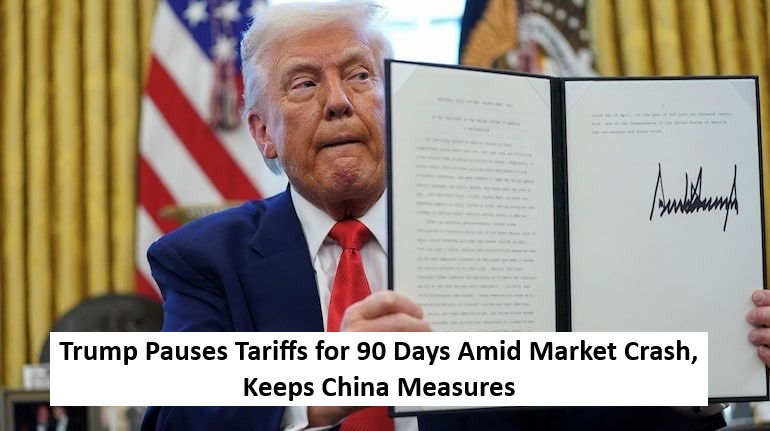
On April 9, U.S. President Donald Trump unexpectedly announced a 90-day suspension of reciprocal tariffs for all nations—except China. This decision came just hours after the tariffs went into effect, creating widespread speculation about the abrupt policy reversal.
Market Collapse Sparks Concerns
Trump’s initial tariff announcement on April 2 caused a major downturn in the U.S. stock market. The Dow Jones Industrial Average dropped over 1,200 points, continuing a historic three-day losing streak. On April 4, the Dow plunged another 2,231 points. The S&P 500 lost 10% over two sessions, marking its worst decline since the COVID-19 market crash in 2020. The Nasdaq entered bear market territory.
Wall Street and Treasury Pressure Led to Reversal
According to a Wall Street Journal report, Treasury Secretary Scott Bessent played a key role in persuading Trump to halt the tariff escalation and pursue negotiations. Growing alarm from CEOs, lawmakers, and Wall Street firms reportedly flooded the White House with requests to rethink the policy.
Trump, aware that his aggressive trade stance could trigger a recession—or worse, a depression—chose to ease the pressure temporarily.
Stock Market Rebounds on Policy Reversal
Following the 90-day tariff pause announcement, financial markets staged a dramatic recovery. The S&P 500 surged 9.5%—its biggest single-day gain since 2008. The Nasdaq jumped 12.2%, the second-largest one-day rise in its history, while the U.S. dollar strengthened and Treasury losses narrowed.
Recession Fears and Forecast Adjustments
Before the policy reversal, Goldman Sachs predicted a 65% chance of a U.S. recession within the next year, largely due to Trump’s aggressive tariffs. After the pause was announced, the firm withdrew its recession forecast, signaling restored confidence in short-term economic stability.
China Still in the Crosshairs
Despite the general tariff pause, Trump maintained the 125% tariff on Chinese imports. This move reaffirms his administration's tough stance on China, emphasizing Beijing as the primary target in ongoing trade tensions.
Temporary Relief with Lingering Uncertainty
Although the market responded positively, the tariff suspension is only valid for 90 days. This leaves open the possibility of renewed economic instability if no long-term resolution is reached within the given window.
Read More: Pakistan Clears $3.45 Billion UAE Debt via Saudi Bailout: How the Circular Debt Shuffle Worked