
 Priyanka Tiwari
 Share
Share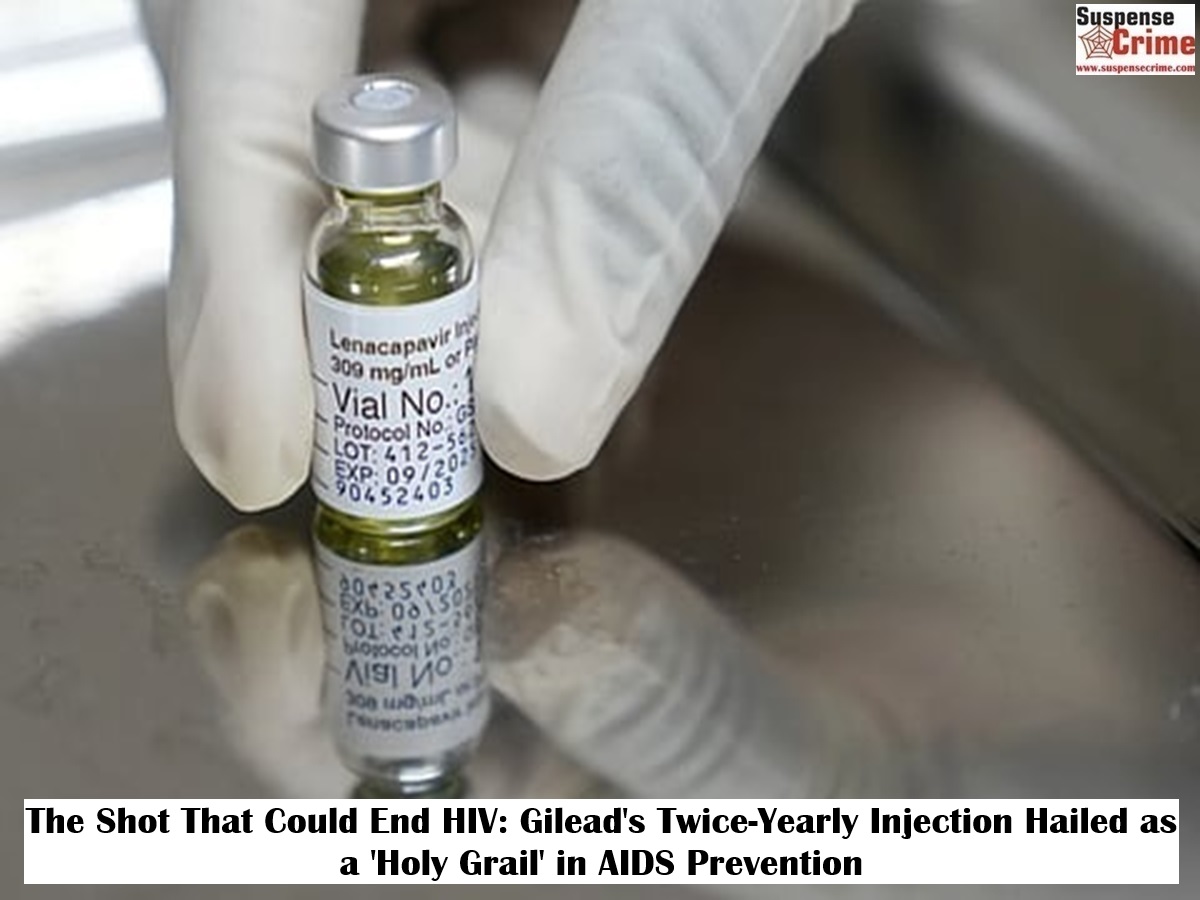
Suspense crime, Digital Desk : The global fight against HIV/AIDS may be on the verge of a revolutionary breakthrough. Pharmaceutical giant Gilead Sciences has announced staggering results from a clinical trial for its long-acting injectable, lenacapavir, showing it was 100% effective in preventing HIV infection in women. This twice-a-year shot, which will be marketed in India under the brand name Yeztugo, is being hailed as a potential game-changer that could transform prevention strategies worldwide.
For years, the primary tool for HIV prevention has been Pre-Exposure Prophylaxis (PrEP), most commonly a daily pill like Truvada. While highly effective, its success hinges on strict daily adherence, a major hurdle for many individuals. A missed dose can compromise protection. Gilead's lenacapavir shatters this barrier. Administered just once every six months, it offers a simple and incredibly effective alternative that could dramatically increase uptake and adherence among high-risk populations.
The "PURPOSE 1" trial, which involved over 5,300 cisgender women and adolescent girls in Africa, yielded a stunning result: zero participants who received the lenacapavir shot contracted HIV. This unprecedented success has sent waves of excitement through the global health community.
For India, which has the third-largest HIV epidemic in the world, the arrival of such a drug could be monumental. The convenience of a twice-yearly injection could be particularly impactful in reaching remote communities and populations where daily medication routines are difficult to maintain.
However, the path to widespread access in India is lined with significant challenges. The two biggest hurdles are regulatory approval and cost.
Regulatory Hurdles: The drug must first be approved by India's top regulatory body, the Central Drugs Standard Control Organisation (CDSCO). While the spectacular trial data will likely expedite this process, it remains a mandatory step.
Affordability: As a new, patented drug, Yeztugo is expected to be expensive. The critical question is whether Gilead will offer a voluntary license to Indian pharmaceutical companies. Such a license would allow generic manufacturers to produce affordable versions of the drug for India and other developing nations, a model that was instrumental in making previous HIV treatments accessible to millions. Without this, the cost could be prohibitive for the vast majority of people who need it most.
While experts are celebrating this scientific milestone, they remain cautiously optimistic. The journey from a successful trial to an accessible, affordable prevention tool on the ground is long. But for the first time in a long time, the world has a glimpse of a future where the spread of HIV could be decisively halted by a simple shot, twice a year.
_1570701464_100x75.jpg)
_1563449287_100x75.jpg)

_1025409548_100x75.jpg)
_1681775372_100x75.jfif)