 Priyanka Tiwari
 Share
Share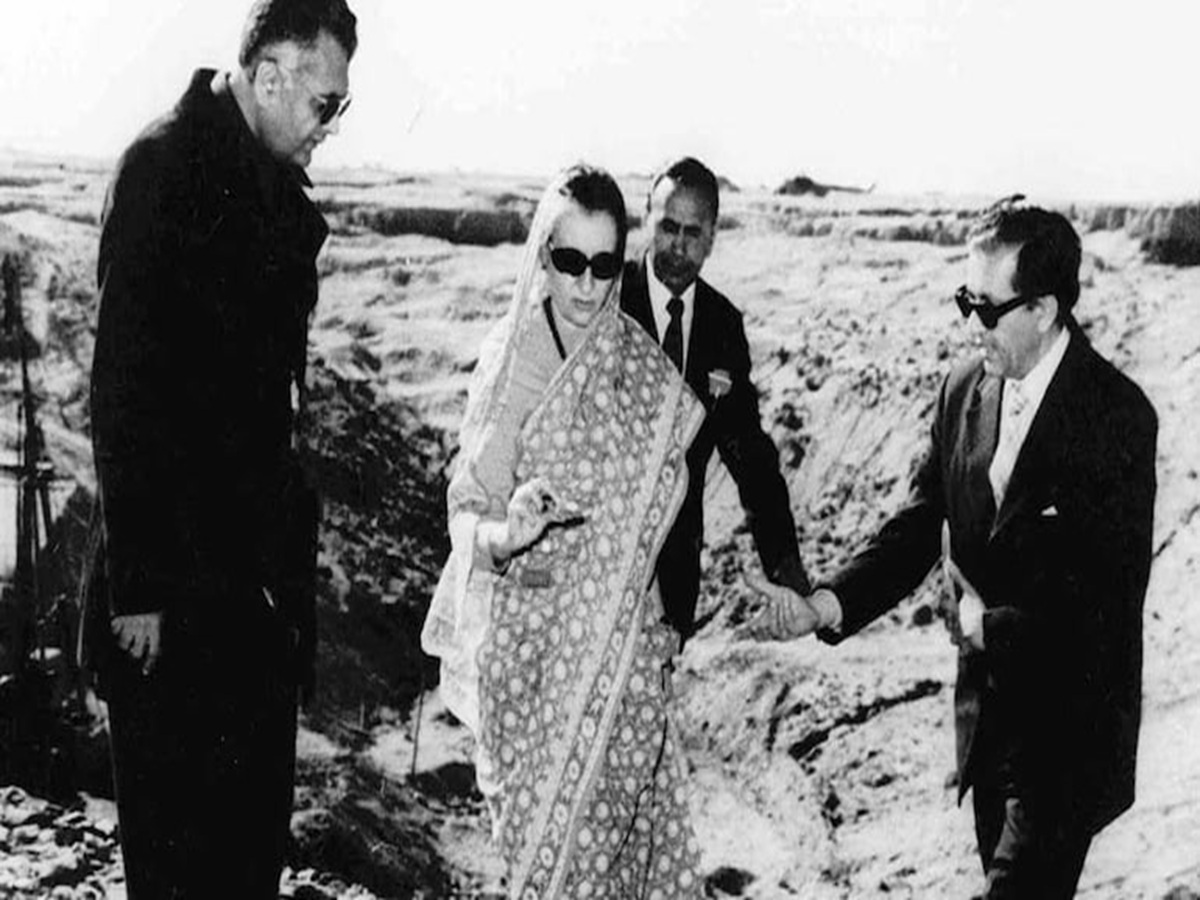
Suspense Crime, Digital Desk : In the tense, Cold War-shadowed landscape of the 1980s, the Indian subcontinent was teetering on a knife's edge, far closer to a devastating conflict than the world knew. A recently declassified CIA document has pulled back the curtain on a secret, audacious plan: India, under Prime Minister Indira Gandhi, was seriously preparing to launch a pre-emptive military strike to destroy Pakistan's nascent nuclear weapons program.
The intelligence, detailed in a 1984 CIA report, reveals that New Delhi was not merely posturing. It was actively developing a concrete plan to take out Pakistan's ultra-sensitive uranium enrichment facility at Kahuta. This wasn't a fantasy; it was a high-stakes military option on the table.
Inspired by Israel, Feared by Washington
The blueprint for this daring operation was heavily inspired by Israel's successful "Operation Opera" in 1981, when Israeli jets flew a daring, long-range mission to bomb and destroy Iraq's Osirak nuclear reactor. Indian military strategists watched closely, believing they could replicate the feat. The plan involved using their top-tier fighter jets—the Jaguar and the newly acquired Mirage 2000—to penetrate Pakistani airspace and deliver a crippling blow to Kahuta, effectively ending Pakistan's nuclear ambitions before they could be realized.
India's motivation was clear and urgent. Pakistan, under the military rule of General Zia-ul-Haq, was making alarming progress on its nuclear bomb, a development India saw as a direct existential threat. The prospect of a nuclear-armed rival on its border was a nightmare scenario for New Delhi's security establishment.
However, the plan never came to fruition, thanks to a frantic mix of international diplomacy, intelligence leaks, and the cold logic of mutually assured destruction.
How the Secret Plan Was Foiled
The CIA got wind of India’s intentions. The United States, then juggling a complex alliance with Pakistan to counter the Soviet invasion of Afghanistan, was thrown into a diplomatic crisis. Washington immediately applied immense pressure on India to stand down.
Simultaneously, the US warned Pakistan of the potential Indian attack. General Zia-ul-Haq’s response was swift and unambiguous. He made it crystal clear through diplomatic channels that if Kahuta was hit, Pakistan would retaliate with full force. The primary target for this vengeance would be India's own sprawling nuclear complex, the Bhabha Atomic Research Centre (BARC) in Trombay.
This created a terrifying standoff. An Indian attack on Kahuta would almost certainly trigger a Pakistani counter-attack on BARC, plunging the two nations into a full-scale war with catastrophic consequences.
The final chapter of this clandestine plan was written in tragedy. In October 1984, Prime Minister Indira Gandhi was assassinated. With her death, the political will and momentum behind the aggressive strike plan dissipated. Her successor, Rajiv Gandhi, pursued a different diplomatic path.
This declassified document is more than a historical curiosity; it's a chilling reminder of how close the subcontinent came to a conflict that could have reshaped its destiny. It reveals a secret chapter of brinkmanship where jets were on standby, targets were drawn, and only a combination of international pressure and the fear of apocalyptic retaliation kept the peace.
Read More: Assam Elections 2026: Akhilesh Yadav Slams Himanta Biswa Sarma Over ‘Beef Statement’ Controversy