Priyanka Tiwari
 Share
Share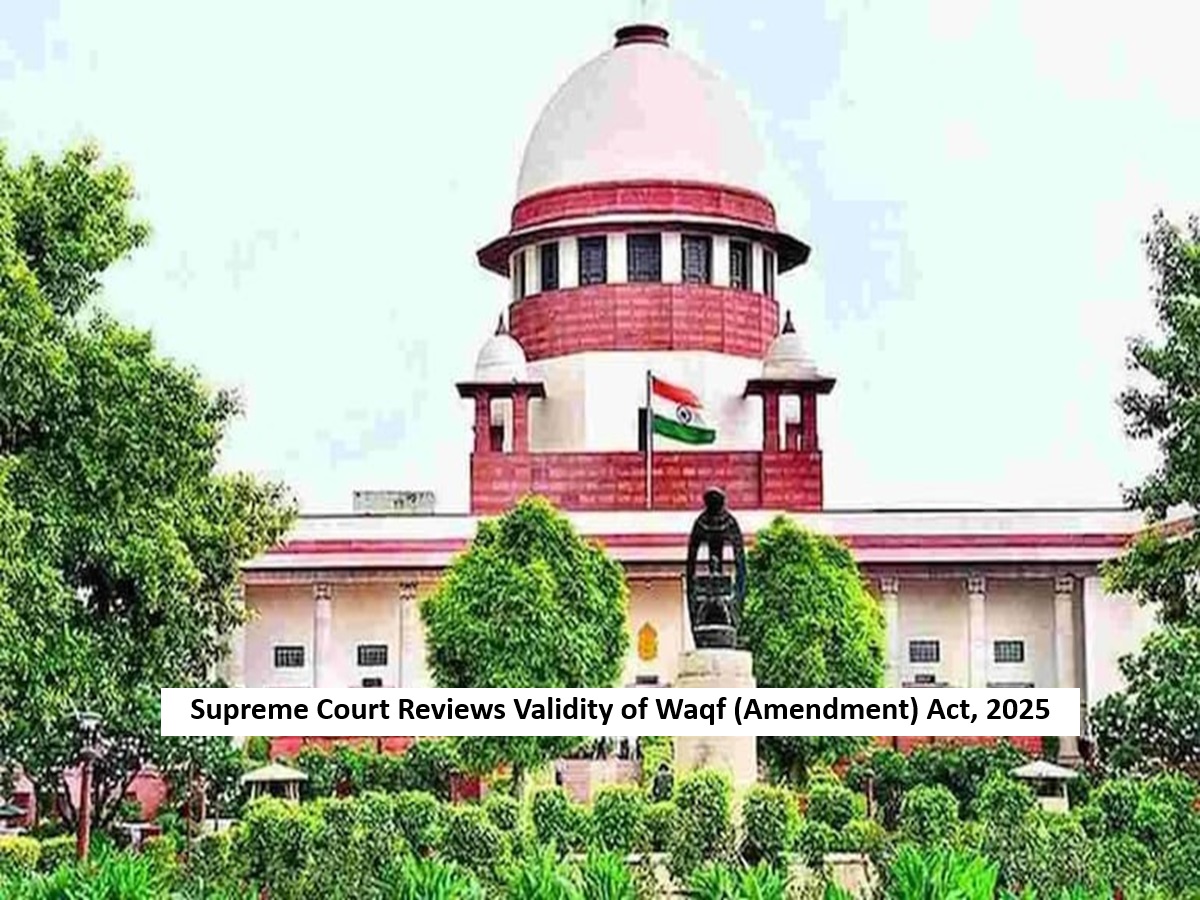
On Thursday afternoon, the Supreme Court will continue hearings on multiple petitions questioning the constitutional soundness of the Waqf (Amendment) Act, 2025. The matter includes critical issues such as the legitimacy of "waqf-by-user", the inclusion of non-Muslims on waqf boards, and the authority of Collectors to alter the classification of disputed waqf land.
During the Wednesday session, Chief Justice of India Sanjiv Khanna expressed that the court is considering a stay on specific sections of the Act due to their potential consequences. He emphasized the exceptional nature of this case, stating that waqf-by-user, if removed without clarity, could lead to serious legal implications.
Interim Relief Under Consideration by the Court
The three-judge bench, including Justices P V Sanjay Kumar and K V Viswanathan, acknowledged that while courts usually refrain from staying new laws during initial hearings, this case might warrant an interim order. The court noted that particular provisions of the amendment could result in far-reaching effects.
The central government and several states requested additional time to submit detailed responses before any interim decision is issued. The court indicated it would consider an interim stay if immediate action was deemed necessary.
Judicial Scrutiny of Inclusion Policies
The court also questioned the central government's stance on allowing non-Hindus in the management of Hindu religious bodies, referencing the new Waqf law's approach. Addressing Solicitor General Tushar Mehta, the bench asked if a similar policy would be applied reciprocally to temple boards.
SG Mehta responded that not more than two non-Muslim individuals would be included in waqf boards, offering to submit this assurance through an affidavit.
Key Changes Introduced by the 2025 Amendment
The Waqf (Amendment) Act, 2025, introduces major changes, including the removal of "waqf-by-user". This concept previously allowed land used for Islamic practices over time to be declared waqf, even in the absence of legal documents.
CJI Khanna acknowledged that while the practice might have been misused, genuine instances of waqf-by-user do exist and should not be ignored. The registration of such properties without formal documentation would now be significantly more difficult.
Legislative Background and Passage of the Law
The Amendment Act received presidential assent on April 5, 2025, from President Droupadi Murmu. It passed in the Rajya Sabha with 128 votes in support and 95 in opposition. In the Lok Sabha, the bill secured 288 affirmative votes against 232 dissenting ones.
Read More: The Bengal Shake-up Is the State Ready for Its First Muslim Chief Minister?
_346285878_100x75.jfif)
_900700012_100x75.jfif)
_941538266_100x75.jfif)