
 Priyanka Tiwari
 Share
Share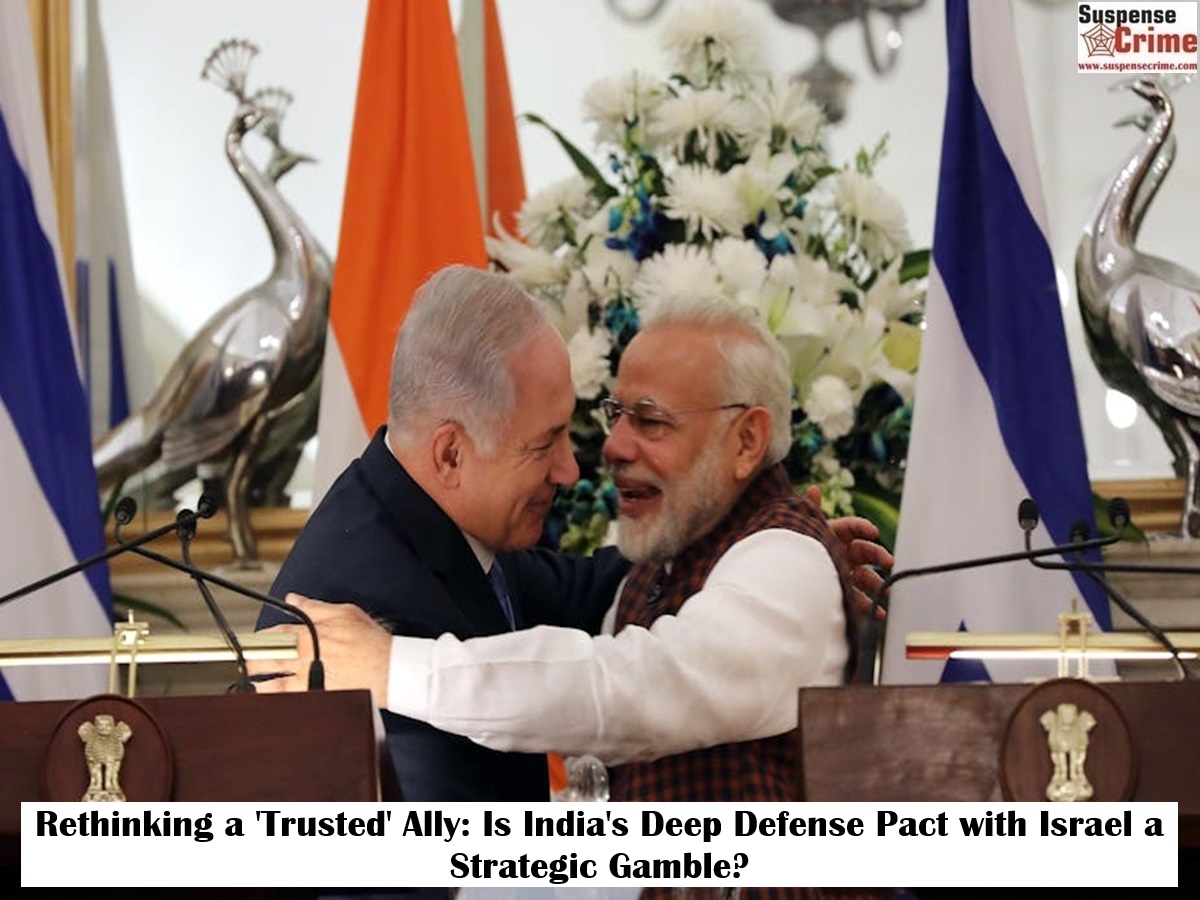
Suspense crime, Digital Desk : For decades, the India-Israel defense relationship has been a cornerstone of New Delhi's national security strategy. Viewed as an "all-weather friend," Israel has consistently supplied India with cutting-edge military technology, especially when other Western nations were hesitant. This has built a deep reservoir of trust.
However, a critical analysis suggests that India may be overestimating the unconditional nature of this partnership, potentially overlooking a crucial third player in the equation: the United States.
The core of the issue is not about Israel's willingness to support India, but its ability to do so independently. Israel is the largest recipient of U.S. military aid and relies heavily on Washington for political and diplomatic cover on the global stage. This deep-seated dependence means that Israel's strategic autonomy has its limits, and those limits are often defined by American interests.
The ongoing conflict in Gaza serves as a stark case study. The world has watched as the U.S. has occasionally applied pressure—both public and private—on Israel regarding its military conduct. This demonstrates that Washington holds significant leverage and is not afraid to use it when its own strategic goals are at stake.
This raises a vital and uncomfortable question for New Delhi: What if, in a future crisis involving India, Washington's interests do not align with New Delhi's? Could the U.S. pressure Israel to halt or delay critical defense supplies to India? Given the dynamics, it would be incredibly difficult for Israel to defy a direct request from its primary benefactor.
India turned to Israel in the 1990s precisely because it was seen as a reliable partner free from the kind of pressure politics that other Western powers engaged in. But as the global order shifts, this assumption deserves a second look.
This is where India's push for Atmanirbhar Bharat (self-reliant India) in defense becomes more than just an economic policy—it's a strategic imperative. The partnership with Israel remains incredibly valuable, providing a bridge to acquire critical technologies and capabilities. However, it should not be the final destination.
The ultimate lesson is one of strategic prudence. While fostering strong alliances is essential, true national security comes from reducing dependencies. For India, this means treating the valuable relationship with Israel as a catalyst for its own growth, while relentlessly pursuing the goal of indigenous defense manufacturing. In geopolitics, the most trusted partner a nation can have is, ultimately, itself.
Read More: US Military Recruitment Crisis Pentagon Rethinks Standards Amid Global Tensions