The Meaning Behind Chhath’s Sacred Kharna Folk Song

As the vibrant and spiritually profound festival of Chhath Puja envelops neighborhoods and riverbanks across northern India and beyond, the air fills with a distinct, soulful acoustic tapestry. Among the resonant chants and devotional melodies, one particular folk song echoes from nearly every household on the second day of the festival: "Maati ke chulha par mai Kharna ke kheer banaye..."
Observed on November 14, 2026, Kharna marks a pivotal milestone in the rigorous four-day Chhath observance. Far more than a mere musical tradition, this beloved folk song encapsulates the profound purity, deep-rooted devotion, and meticulous rituals that define the worship of Chhathi Maiya and Surya Dev (the Sun God).
Decoding the Essence: Why This Folk Song Matters During Kharna
Chhath Puja is widely regarded as one of the most rigorous and ecologically harmonious festivals in Hinduism, emphasizing absolute physical and spiritual cleanliness (pavitrata). The folk song "Maati ke chulha par..." serves as an oral scripture, vividly describing the sacred preparations undertaken by the fasting devotees (vratis).
The lyrics paint a serene picture of the vrati preparing the divine prasad—specifically traditional jaggery (gur) rice pudding (kheer) and wheat rotis—on a brand-new clay stove using dried mango wood as fuel. In ancient Vedic traditions, earth (maati) is revered as the purest manifestation of the primordial elements, untouched by modern impurities. Similarly, mango wood is traditionally consecrated for sacred fire rituals and yajnas.
By detailing these specific elements, the folk song reinforces a core tenet of Chhath Puja: Chhathi Maiya delights not in material extravagance, but in absolute simplicity, unyielding devotion, and uncompromised purity.
The Sacred Ritual of Kharna: The Threshold of a 36-Hour Fast
Kharna, falling on the second day of the festival, acts as a crucial spiritual bridge. Throughout the daylight hours of Kharna, devotees observe a complete day-long fast without a single drop of water (nirjala). The fast is broken only after sunset following the preparation and offering of the sacred prasad.
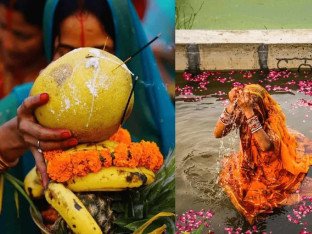
Once the jaggery kheer and ghee-laden rotis are prepared on the newly fired clay stove, they are first offered to Chhathi Maiya and the Sun God with deep reverence. Family members and neighbors gather to partake in this blessed prasad, which is traditionally served on fresh banana leaves.
Consuming the Kharna prasad holds immense theological significance. It is believed to impart divine energy, spiritual fortitude, and physical endurance to the vrati, preparing them for the most challenging leg of the festival: the grueling 36-hour continuous nirjala fast that spans the evening arghya at sunset and concludes only after the morning arghya (Usha Arghya) on the final day of the festival.
The Living Heritage of Chhath Folk Songs
Folk songs like "Maati ke chulha par..." play an irreplaceable role in preserving the cultural heritage of Chhath Puja. Passed down orally from generation to generation across families in Uttar Pradesh, Bihar, Jharkhand, and the diaspora, these melodies bridge the gap between ancient rituals and modern observance.
They provide emotional solace and collective strength to devotees navigating the intense physical demands of the fast. As the sweet aroma of jaggery kheer mingles with the smoke of burning mango wood across neighborhoods, these traditional tunes remind every participant of the values of humility, gratitude, and communal harmony at the heart of Chhath Puja.