










Ramcharitmanas 7 Kandas: Names & Deep Life Lessons in Every Canto
Composed in the 16th century by the saint-poet Goswami Tulsidas in resonant Awadhi verse, the Shri Ramcharitmanas stands far beyond a chronological retelling of Maryada Purushottam Lord Shri Ram's earthly journey—it endures as an everyday manual for human conduct, ethical leadership, family harmony, and spiritual resilience. Divided into seven luminous cantos (Sapta Sopana or seven steps) leading into the sacred lake (Manasa) of Rama's deeds, the epic brings alive timeless archetypes of human duty: the ideal son, devoted brother, steadfast spouse, loyal friend, selfless servant, and just ruler. Whether read during household Akhand Ramayan recitations, Tuesday Sundarkand gatherings, or quiet morning reflection, each of the seven Kandas mirrors a distinct phase of human existence and carries a practical formula for navigating crisis without losing patience or moral integrity. For readers, families, and spiritual seekers across Uttar Pradesh—especially in Lucknow and neighboring centers such as Unnao, Kanpur, Prayagraj, and Varanasi, alongside Ayodhya, the very heartland of Awadhi Ramcharitmanas tradition—revisiting the sequence and inner philosophy of these seven cantos offers clarity for both personal character and daily responsibilities.
Overview of the Seven Kandas of Shri Ramcharitmanas and Their Core Life Formula
| Canto (Kanda) | Sequence | Central Narrative Events | Hidden Life Lesson (Sutra) |
| 1. Balakanda | First Canto | Putrakameshti Yagna, birth of Rama, Lakshmana, Bharata, and Shatrughna, training under Sage Vishwamitra, slaying of Tataka, and Sita's Swayamvar in Janakpur. | Foundation of character through mentorship, discipline, humility, and sacred commitment. |
| 2. Ayodhyakanda | Second Canto | Coronation preparations halted by Manthara's counsel and Kaikeyi's two boons, Rama's 14-year exile with Sita and Lakshmana, and Bharata's Paduka governance. | Upholding truth, sacrifice, and the dignity of family bonds above power or throne. |
| 3. Aranyakanda | Third Canto | Forest life in Panchavati, encounters with sages, the Shurpanakha episode, defeat of Khara-Dushana, and Ravana's abduction of Sita. | Maintaining patience, discernment, and ethical restraint amid sudden adversity. |
| 4. Kishkindhakanda | Fourth Canto | Rama's first meeting with Hanuman, alliance with Sugriva, slaying of Vali, and the organized search for Sita. | True friendship means standing by allies in hardship and fulfilling mutual trust. |
| 5. Sundarkanda | Fifth Canto | Hanuman's leap across the ocean, overcoming Surasa and Lankini, meeting Mother Sita in Ashoka Vatika, and burning Lanka. | Unwavering devotion awakens inner fearlessness to conquer seemingly impossible obstacles. |
| 6. Lankakanda | Sixth Canto | Construction of Ram Setu with floating stones bearing Rama's name, epic war in Lanka, fall of Ravana, and Sita's liberation. | No matter how mighty arrogance and injustice appear, truth and dharma prevail. |
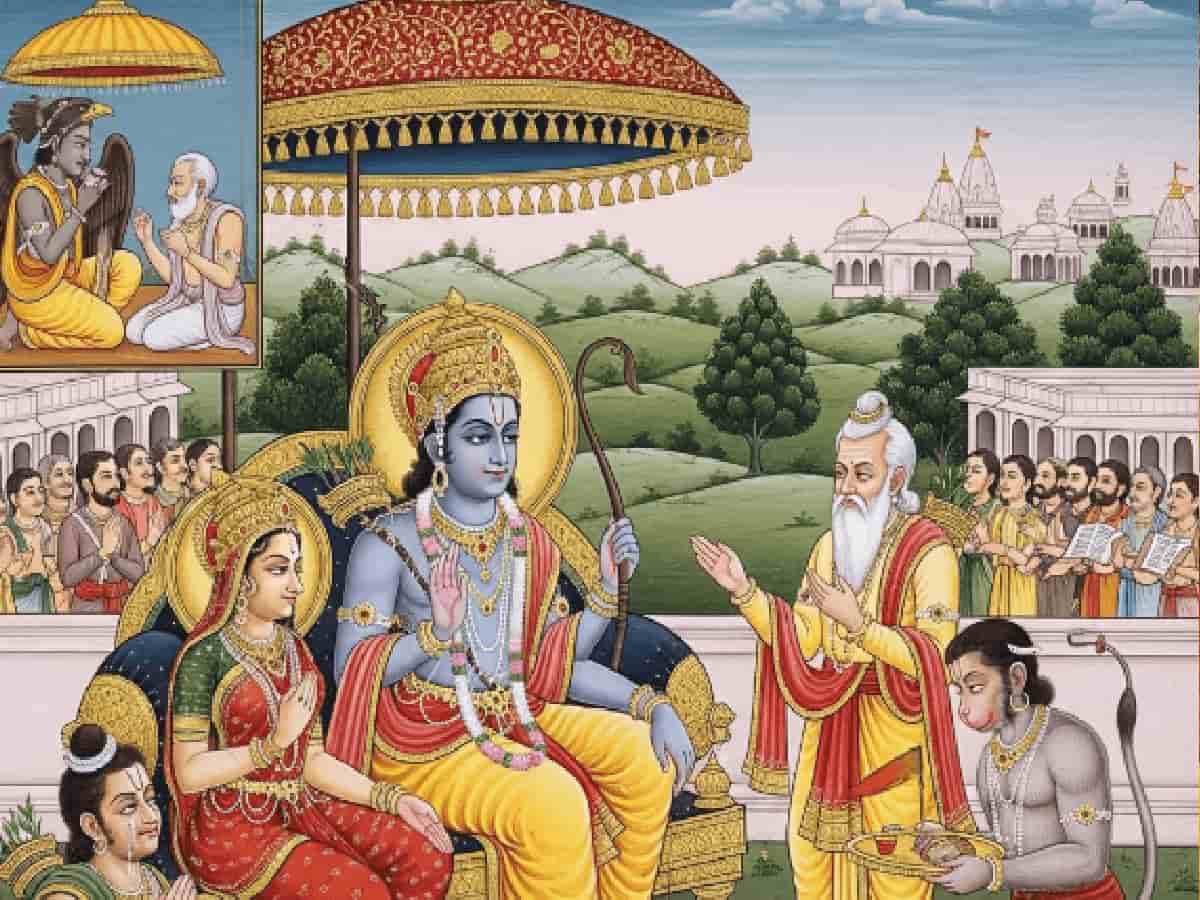
| 7. Uttarakanda | Seventh Canto | Rama's coronation (Rajyabhishek), ideal governance of Ramarajya, Sita's stay at Sage Valmiki's ashram with Lava and Kusha, and Kakabhushundi's discourses. | Lasting fulfillment lies in self-knowledge, selfless service, contentment, and devotion. |
From Foundation to Sacrifice: Balakanda, Ayodhyakanda, and Aranyakanda
The opening trio of cantos traces how noble character is forged and tested when life shifts without warning. Balakanda, the longest canto, begins with King Dasharatha's Putrakameshti Yagna, the divine birth of Rama and his three brothers, Rama's apprenticeship under Maharishi Vishwamitra—where he protects sacred rituals from Tataka and Subahu—and his union with Mother Sita after lifting Lord Shiva's bow in Mithila. Its essence lies in preparation: greatness grows from reverence toward teachers, self-restraint, and purposeful youth. Immediately afterward, Ayodhyakanda turns the palace celebrations of Rama's coronation upside down through Manthara's scheming and Queen Kaikeyi's two boons. Rather than clinging to royal entitlement, Lord Rama embraces a fourteen-year forest exile with calm grace, accompanied by Sita and Lakshmana, while Bharata refuses to usurp the crown and rules as a humble custodian placing Rama's wooden sandals (charan paduka) on the throne. Together, these scenes teach that sacrificing personal comfort to honor one's word and preserve family dignity is the highest form of strength. In Aranyakanda, as the trio journeys deeper into the forest, encounters with sages, the confrontation with Shurpanakha, the battle against Khara and Dushana, and Ravana's deceitful abduction of Sita demonstrate how crisis tests human composure—reminding seekers never to abandon righteousness even when surrounded by treachery.
From Devotion to Awakening: Kishkindhakanda, Sundarkanda, Lankakanda, and Uttarakanda
The latter four cantos shift from endurance to collective resolve, courage, triumph, and inner wisdom. Kishkindhakanda introduces the transformative meeting between Lord Rama and Hanuman, alongside Rama's pact with the exiled monkey-king Sugriva and the defeat of Vali—illustrating that authentic friendship is proven through loyal action in times of crisis rather than fair-weather companionship. Sundarkanda—widely recited independently across Indian homes for peace and courage—celebrates Hanuman's monumental leap across the ocean to Lanka, his humility before obstacles, his comforting message to Mother Sita in Ashoka Vatika, and the burning of Lanka, proving that pure devotion turns ordinary limits into extraordinary fearlessness. Lankakanda then chronicles the construction of the Ram Setu—where stones inscribed with the name of "Rama" floated upon the sea—and the decisive battle culminating in Ravana's defeat, affirming that ego and tyranny ultimately collapse before dharma. Finally, Uttarakanda captures Rama's coronation and the compassionate governance of Ramarajya, alongside the poignant trials of Sita at Maharishi Valmiki's ashram—where twins Lava and Kusha grow up steeped in wisdom—and profound philosophical dialogues on devotion (bhakti) and detachment (vairagya), reminding every reader that true success rests not in status or possessions, but in humility, service, contentment, and inner awakening.






