










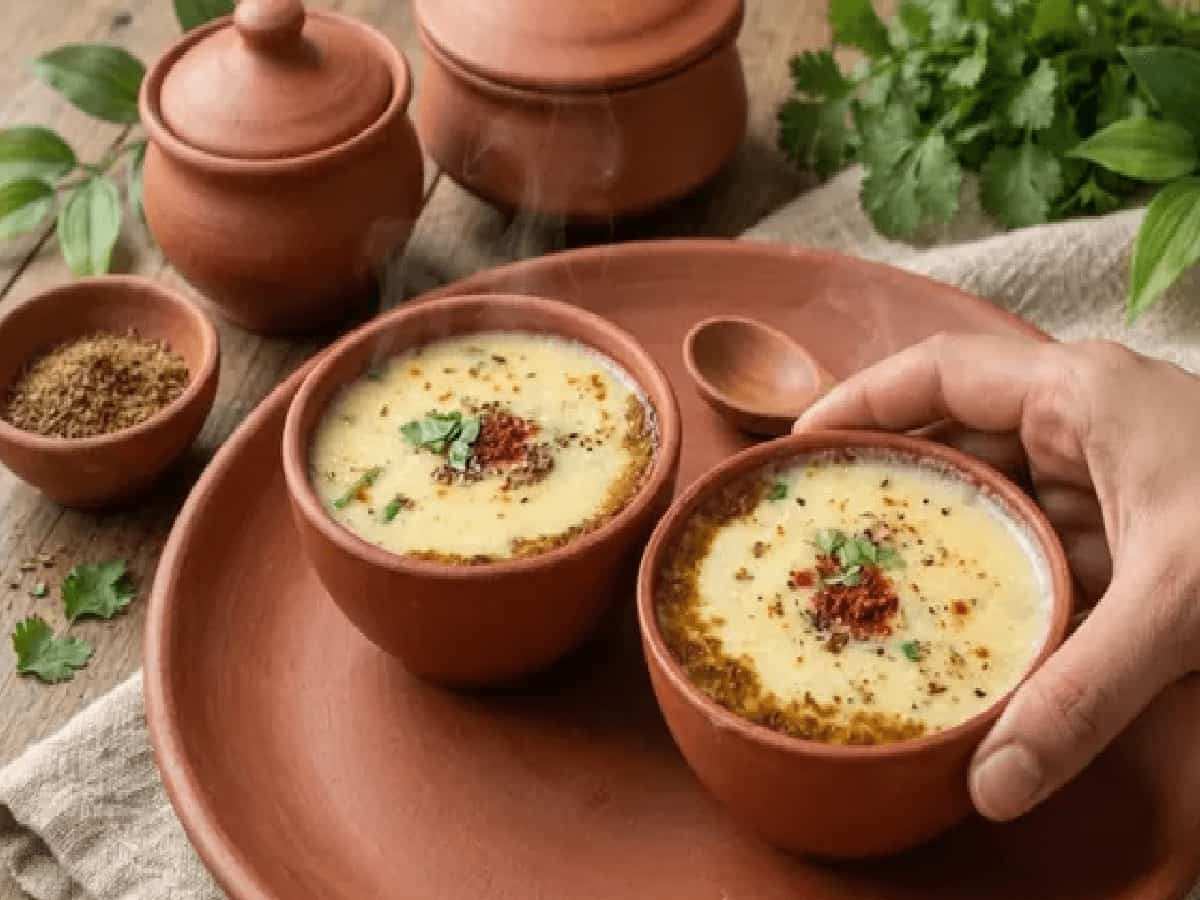
Makki Ki Raab Recipe: Desi Winter Drink Made With Buttermilk & Corn Flour
As late-November chill settles across northern India and evenings call for something comforting, nutritious, and easy on the stomach, traditional regional kitchens offer a time-tested alternative to cream-heavy soups and packaged broths: Makki Ki Raab (also widely known in rural households as Makka Ki Maheri). A cherished winter staple across Rajasthan, Punjab, Haryana, and parts of western Uttar Pradesh, this velvety, savory preparation combines coarse or fine yellow maize flour (makki ka atta) with tangy buttermilk (chaas), simmered slowly and finished with an aromatic ghee, cumin (jeera), and asafoetida (hing) tempering. Falling pleasantly between a warming winter soup and a light porridge, Makki Ki Raab delivers sustained warmth from complex maize carbohydrates while supporting gut health and digestion during colder months when physical activity often dips and heavy winter meals can trigger sluggishness. Unlike elaborate multi-step winter delicacies, it relies on everyday pantry staples and comes together in roughly 15 to 20 minutes on a single stovetop burner. For home cooks, families, and wellness-conscious readers across northern India—including households in Lucknow and neighboring Uttar Pradesh cities such as Unnao, Kanpur, Prayagraj, and Varanasi, where winter mornings and nights bring crisp temperatures and seasonal cravings for wholesome desi comfort food—reviving Makki Ki Raab offers both nostalgic flavor and practical winter nourishment.
Why Makki Ki Raab Is a Winter Favorite for Warmth and Digestion
In traditional Indian seasonal eating (Ritucharya), coarse grains like maize (makki) are prized in winter because they are naturally warming, rich in dietary fiber, B-complex vitamins, iron, and slow-releasing energy. Pairing maize flour with fermented buttermilk balances its richness, making the drink light, soothing on the digestive tract, and deeply satisfying either as an evening starter before dinner or as a light standalone supper when someone is recovering from seasonal fatigue or cold weather.
Ingredients Needed for Authentic Makki Ki Raab
Before lighting the stove, gather the base ingredients and tempering spices so the mixture can be stirred continuously without interruption:
| Preparation Stage | Ingredient | Exact Quantity | Culinary Role |
| Raab Base | Maize / Corn Flour (Makki ka Atta) | 1/2 cup | Provides body, earthy sweetness, and winter warmth (use traditional yellow maize flour rather than refined white cornstarch). |
| Raab Base | Fresh or Slightly Tangy Buttermilk (Chaas) | 3 to 4 cups | Creates the signature tangy, velvety consistency and aids digestion. |
| Raab Base | Water | 1 cup (adjust as needed) | Helps control thickness as the maize flour swells during simmering. |
| Raab Base | Pure Desi Ghee & Salt | 1 tablespoon ghee | Salt to taste | Adds richness and prevents curdling when salt is stirred in near the end. |
| Aromatic Tempering (Tadka) | Cumin Seeds (Jeera) & Asafoetida (Hing) | 1/2 tsp cumin | 1 pinch hing | Enhances aroma and boosts digestive comfort. |
| Tempering & Garnish | Whole Dry Red Chillies & Fresh Coriander | 2 dry red chillies | 2 tbsp chopped coriander | Adds gentle smoky heat and fresh herbal brightness on top. |
Step-by-Step Method to Make Lump-Free Makki Ki Raab at Home
-
Prepare a Smooth Slurry: Take 1/2 cup of maize flour (makki ka atta) in a deep mixing bowl. Pour in 1/2 cup of buttermilk first and whisk thoroughly with a spoon or wire whisk until completely smooth with zero dry lumps.
-
Blend the Remaining Buttermilk: Gradually pour in the remaining 2.5 to 3.5 cups of buttermilk while whisking continuously with your other hand so the batter stays uniform—neither overly watery nor overly thick.
-
Begin Cooking on Medium Flame: Place a heavy-bottomed pan or kadhai over medium heat and warm 1 tablespoon of desi ghee. Once the ghee melts, slowly pour in the maize-buttermilk solution while stirring steadily in one direction.
-
Simmer Until Creamy: Continue stirring for 5 to 7 minutes as the mixture warms and begins to thicken. Add about 1 cup of water to adjust the pouring consistency, then let it simmer gently for another 2 to 3 minutes until it comes to a soft boil and turns smooth and creamy.
-
Season With Salt: Add salt to taste after the raab has come to a boil—adding salt later helps prevent the buttermilk from splitting—and simmer for 2 more minutes.
-
Add the Traditional Tadka and Serve Hot: In a small tempering ladle, heat a little desi ghee, crackle 1/2 teaspoon cumin seeds, add 1 pinch of asafoetida and 2 whole dry red chillies, and pour the sizzling tempering directly over the simmering raab. Garnish with 2 tablespoons of finely chopped fresh coriander leaves and serve piping hot in earthen kulhads or soup bowls.






