Priyanka Tiwari
 Share
Share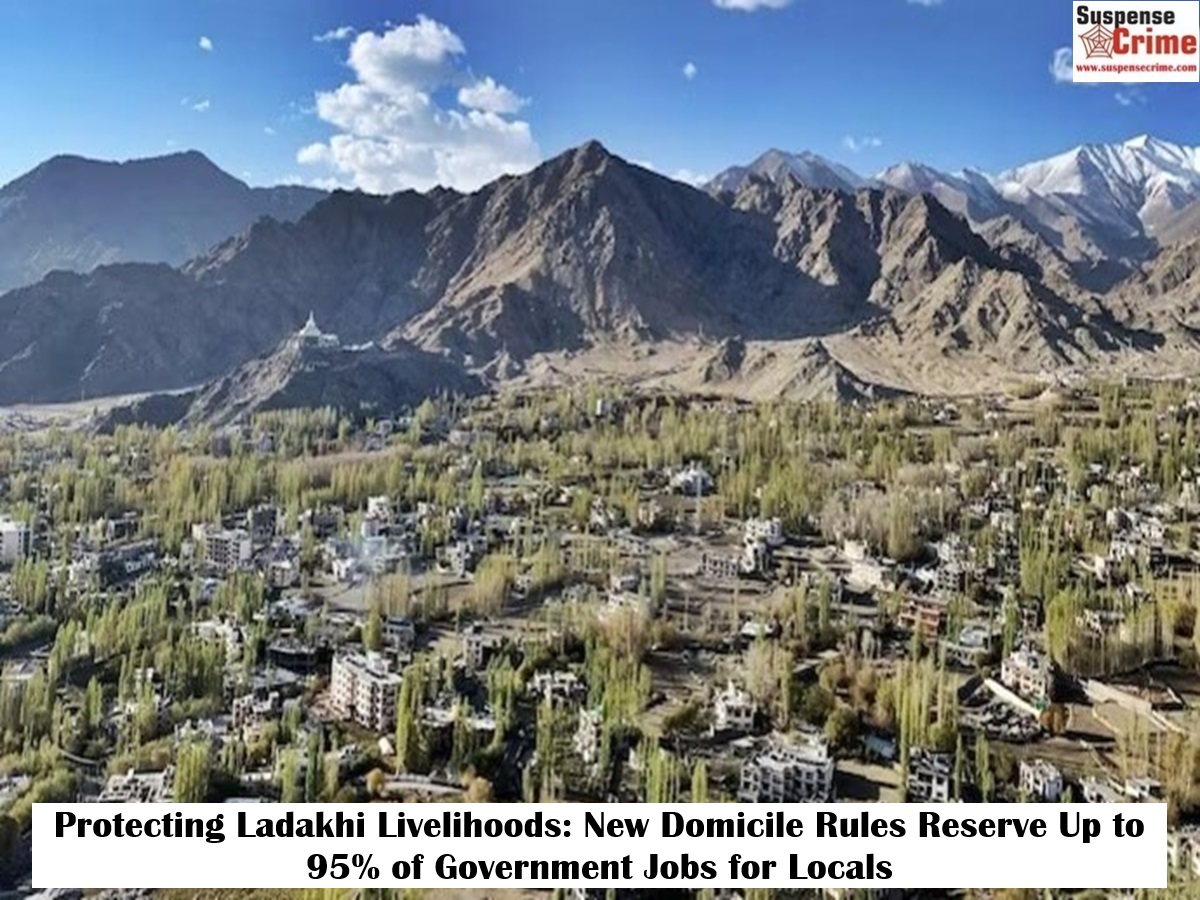
Suspense crime, Digital Desk : The Union Ministry of Home Affairs (MHA) has officially notified new rules for Ladakh, establishing domicile criteria and reserving a significant majority of non-gazetted government jobs for local residents. This move aims to address long-standing concerns within the Union Territory regarding employment opportunities for its indigenous population following the abrogation of Article 370.
Under the "Ladakh Administration (Subordinate Services) Recruitment Rules, 2024," direct recruitment for all non-gazetted posts under the Ladakh administration will now heavily favor locals. The reservation ranges from 80% for certain posts (like constables or equivalent) to a full 95% for posts equivalent to Multi-Tasking Staff (MTS) and similar Level-1 positions. This leaves a smaller percentage open for candidates from outside Ladakh.
A crucial aspect of these rules is the clear definition of a "Resident of Ladakh." To qualify, an individual must have resided in Ladakh for at least 15 years. Alternatively, children of central or state government officials, All India Services officers, public sector undertaking employees, autonomous body personnel, or university staff who have served in Ladakh for a continuous period of ten years can also be considered residents. Those registered as migrants by the Relief and Rehabilitation Commissioner (Migrants) in Ladakh are also included. A "Ladakh Resident Certificate" issued by a competent authority will serve as proof of domicile.
This development comes against the backdrop of persistent demands from Ladakhi socio-political groups, including the Leh Apex Body (LAB) and the Kargil Democratic Alliance (KDA). These groups have been advocating for constitutional safeguards for Ladakh, including protections for land, jobs, and cultural identity, akin to those under the Sixth Schedule of the Constitution or previously under Article 370. While these new job reservation rules are a significant step, they are largely seen as an interim measure while broader discussions on constitutional protections continue.
The rules aim to ensure that the benefits of public employment within Ladakh primarily reach its own people, addressing anxieties about demographic change and loss of local opportunities. They largely formalize practices that were already somewhat in place under the Ladakh Autonomous Hill Development Councils (LAHDCs) but now provide a clear, centrally-notified framework.
Read More: PM Modi and Kharge’s Viral Moment: A Rare Handshake and Laughter at Ambedkar Tribute Event