Priyanka Tiwari
 Share
Share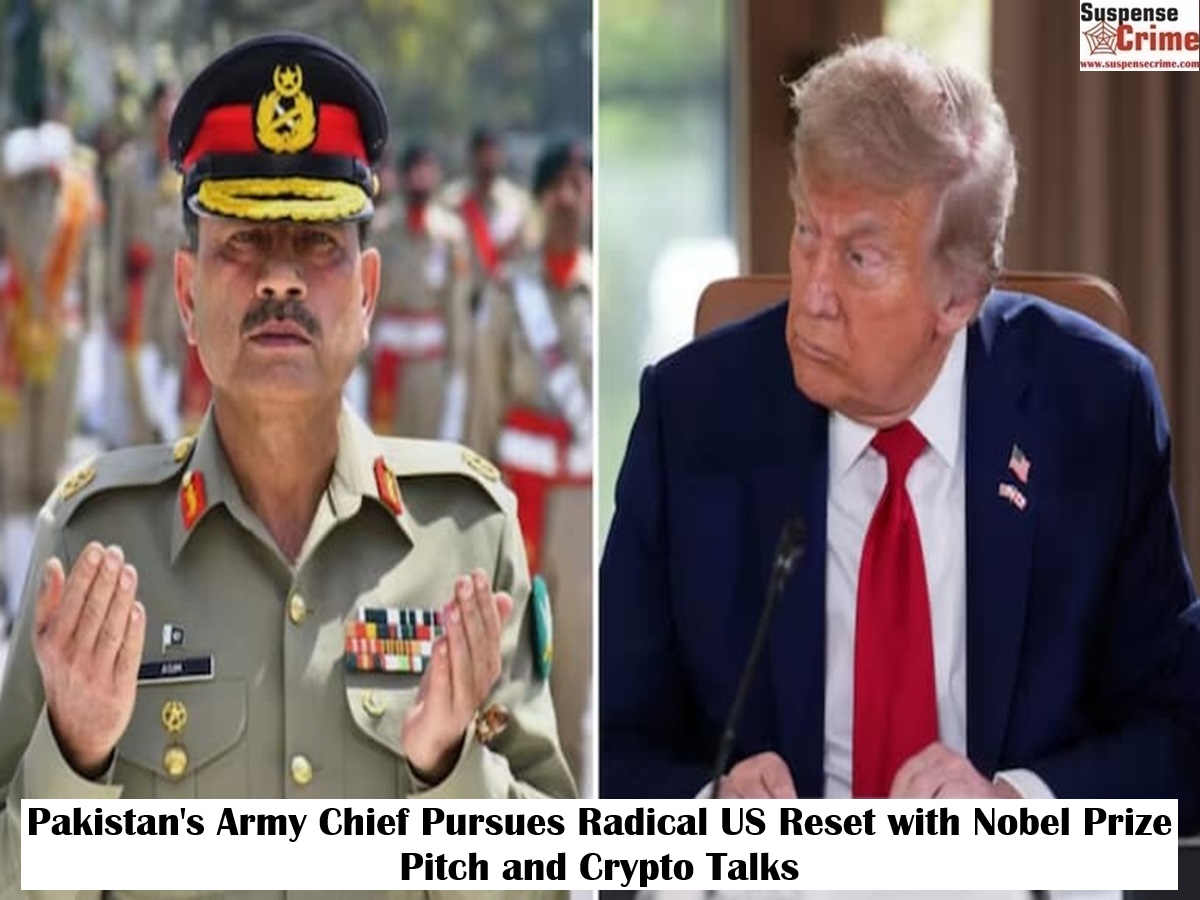
Suspense crime, Digital Desk : Pakistan’s Army Chief, General Asim Munir, recently concluded a visit to the United States that was far more than a typical military-to-military engagement. Behind closed doors, the visit unfolded as a sweeping diplomatic and economic offensive, featuring audacious proposals aimed at completely rebranding Pakistan's image in Washington.
Perhaps the most astonishing element of the outreach was a proposal to jointly nominate General Munir and Indian Prime Minister Narendra Modi for the Nobel Peace Prize. This suggestion was reportedly floated in think tank circles, citing their roles in de-escalating the high-stakes military crisis between the two nations in 2019. The move appears to be a bold attempt to pivot the narrative around Pakistan's security establishment from one of conflict to one of peace-making.
Beyond high-concept peace proposals, the visit had a strong economic and technological focus. Discussions were held about a potential bilateral pact on cryptocurrency, signaling a forward-looking approach to digital finance. The core of the economic pitch, however, was centered on Pakistan's new Special Investment Facilitation Council (SIFC), a hybrid civil-military body designed to fast-track foreign investment by cutting through bureaucratic red tape. General Munir actively courted US business leaders, presenting the SIFC as a secure and efficient gateway for American capital.
This multi-faceted outreach—combining peace overtures, tech diplomacy, and aggressive economic promotion—represents a concerted effort to shift America's perception of Pakistan. The goal is to move beyond the traditional, and often fraught, lens of counter-terrorism and security cooperation towards a more modern and stable partnership based on economic potential. General Munir's mission was not just about securing military aid; it was a comprehensive campaign to reposition Pakistan as a reliable and dynamic partner on the world stage.
Read More: BLA Forms Own Navy? Balochistan Liberation Army Claims First-Ever Naval Strike in Major Escalation