
 Priyanka Tiwari
 Share
Share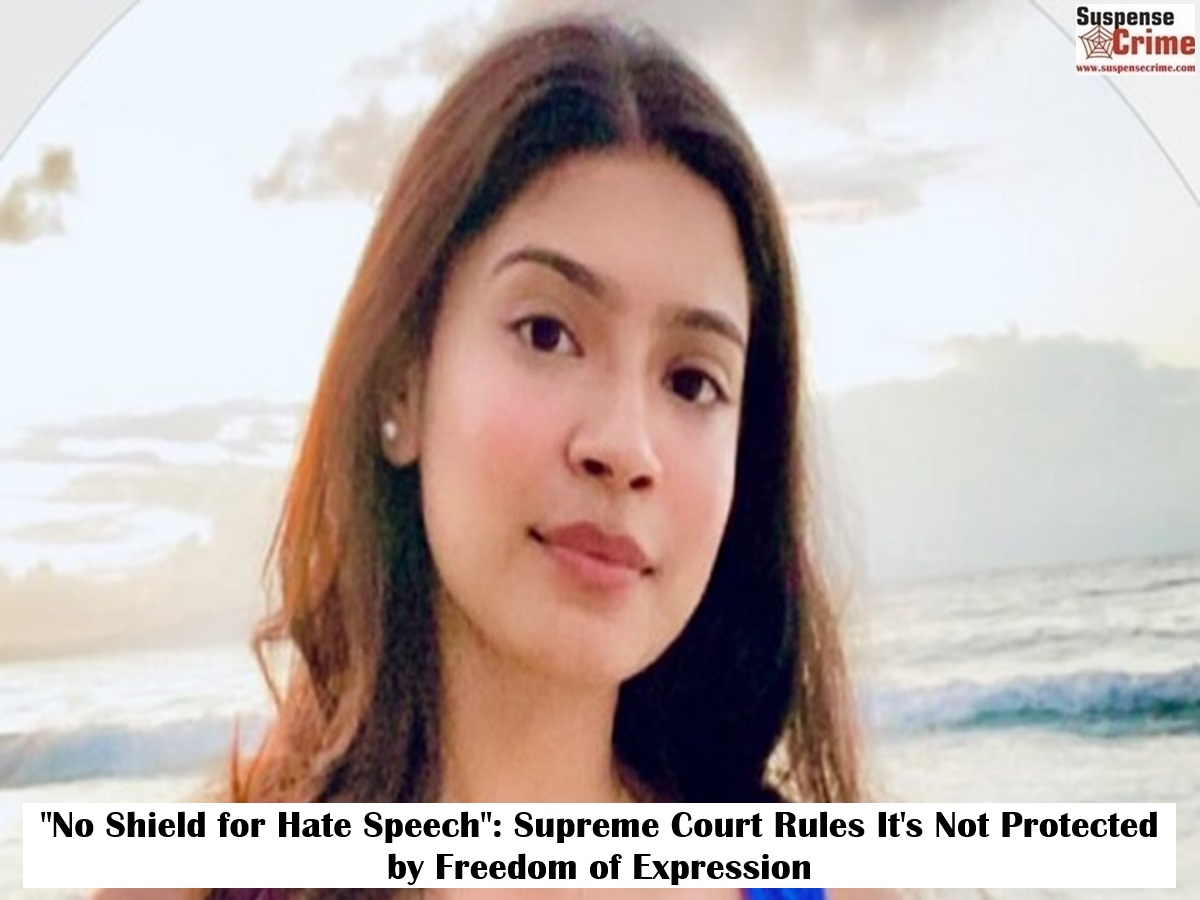
Suspense crime, Digital Desk : New Delhi, India – In a powerful and unambiguous declaration, the Supreme Court of India has ruled that hate speech does not fall under the protective umbrella of the fundamental right to freedom of speech and expression. The court made this crucial observation while refusing to grant protection from arrest to a YouTuber accused of making derogatory remarks against a specific community.
The case involves Sharmistha Panoli, a YouTuber who approached the Supreme Court seeking anticipatory bail after the Kerala High Court denied her request. A criminal case was filed against her under Section 153A of the Indian Penal Code, which deals with promoting enmity between different groups on grounds of religion, race, place of birth, residence, language, etc.
The Supreme Court bench, comprising Justices B V Nagarathna and Augustine George Masih, firmly upheld the lower court's decision. After reviewing a transcript of the alleged hate speech from the YouTube video, the justices found the remarks to be "disparaging."
"This is a misuse of the right," the bench sternly told Panoli's lawyer, making it clear that the constitutional guarantee of free speech is not absolute.
The court articulated its position clearly, stating, "Hate speech is not covered under the umbrella of freedom of speech and expression." This ruling reiterates the legal principle that the right to freedom of expression under Article 19(1)(a) of the Constitution comes with reasonable restrictions, especially when it threatens to disrupt public order and social harmony.
By dismissing her plea, the Supreme Court has sent a strong message to content creators and public speakers across the country about the legal boundaries between expressing an opinion and spreading hatred. The decision underscores the judiciary's stance on holding individuals accountable for speech that aims to incite division and animosity.
Read More: PM Modi’s Spicy Jibe in Bengal, I Ate Jhalmuri, but TMC Felt the Heat