










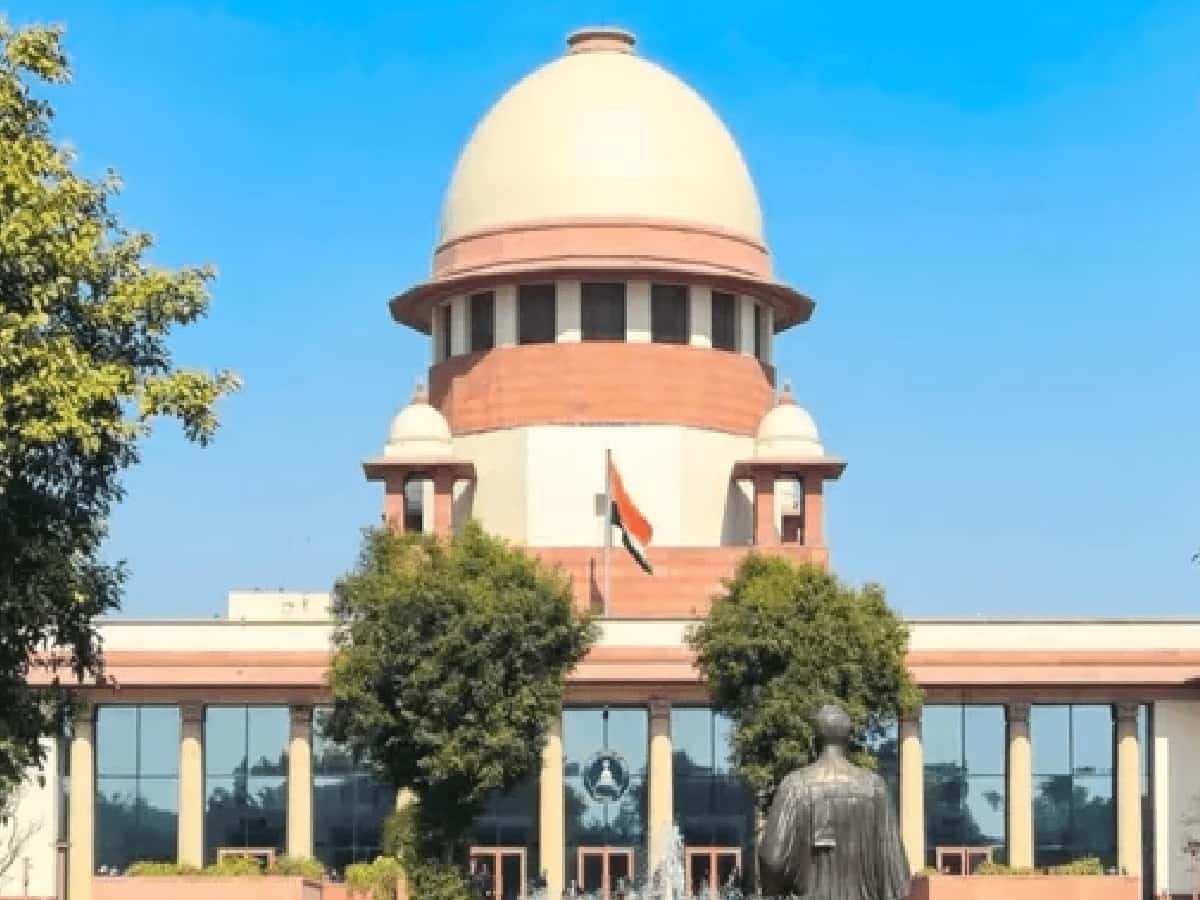
Supreme Court: Children Not Parents' Toys; Custody Kept With Mother
In a significant ruling on family law and child guardianship, the Supreme Court of India has reaffirmed that the welfare of a minor—not competing legal claims between estranged parents—must remain the sole guiding principle in custody disputes, emphasizing that "children are not mere chattels nor are they toys for their parents." Delivering its judgment on Monday, November 23, 2026, a two-judge bench of Justice Vikram Nath and Justice Aparesh Kumar Singh set aside an October 2024 Madras High Court order (which had upheld a Madurai Family Court directive granting custody to the father) and allowed the mother to retain custody of her two teenage sons, now aged 16 and 14, with whom they have lived continuously since May 2014. At the same time, recognizing that children caught in a fractured marriage deserve the love and companionship of both parents for balanced emotional growth, the apex court granted the father structured visitation rights on the second Saturday and Sunday of every month from 10:00 AM to 2:00 PM, alongside vacation visits and an expectation to share future higher-education costs if requested. For families, legal practitioners, and readers across northern India—including residents in Lucknow and neighboring Uttar Pradesh cities such as Unnao, Kanpur, Prayagraj, and Varanasi, where family courts routinely weigh guardianship and visitation arrangements—the judgment underscores how human stability and a child's own voice carry decisive weight in custody adjudication.
Why the Supreme Court Restored Custody to the Mother
Examining the dispute under Section 17 of the Guardians and Wards Act, 1890, the bench noted that courts evaluating guardianship must consider the minor's age, sex, and religion, the character and capacity of the proposed guardian, and—under Section 17(3)—the intelligent preference of children old enough to express one. After interacting directly with the parents and both boys, the judges observed that the teenagers were confident and clear in wishing to stay with their mother and maternal grandparents, and found no reason to uproot them after more than a decade of stable upbringing.
"In such matters, human factors are also relevant for deciding the issues. It is often said that children are not mere chattels nor are they toys for their parents," the bench observed, adding that separating the boys from the mother with whom they had built a deep natural bond since 2014 would run counter to their paramount welfare.
The court also noted that following the couple's marriage in August 2009, the birth of their sons in Madurai in July 2010 and May 2012, their separation in 2014, and their divorce in 2018, the mother had single-handedly raised both children with care while ensuring quality schooling.
Case Timeline and Visitation Framework Ordered by the Apex Court
To balance uninterrupted maternal care with meaningful paternal bonding, the Supreme Court laid out clear directions governing custody, visitation, and educational support:
| Case Aspect / Direction | Details Recorded by the Supreme Court |
| Family & Litigation Timeline | Married in August 2009; two sons born in Madurai in July 2010 and May 2012; separated since May 2014; divorced in 2018; Madurai Family Court and October 2024 Madras High Court orders granting custody to the father set aside on November 23, 2026. |
| Custody & Children's Preference | Both boys (aged 16 and 14) clearly expressed their wish to live with their mother; custody remains with the mother. |
| Monthly & Holiday Visitation | Father permitted to meet the sons on the second Saturday and Sunday of every month between 10:00 AM and 2:00 PM at Gandhi Museum, Madurai, as well as during Pongal and half-yearly vacations with prior notice via phone or WhatsApp, with the mother directed to facilitate visits smoothly. |
| Educational Expenses | Father expected to remain willing to contribute toward the sons' future higher-education expenses if the mother requests assistance. |
Balancing Legal Rules With the Human Reality of Fractured Marriages
Even though the father was not found unfit as a natural guardian, the Supreme Court clarified that custody decisions cannot be reduced to a rigid contest over parental rights. By anchoring its verdict in the emotional security of the two teenagers while protecting regular, conflict-free contact with their father, the ruling reinforces a child-first standard across Indian family jurisprudence.






