PM Modi Slams Past Govts on Tribal Welfare on Janjatiya Gaurav Diwas
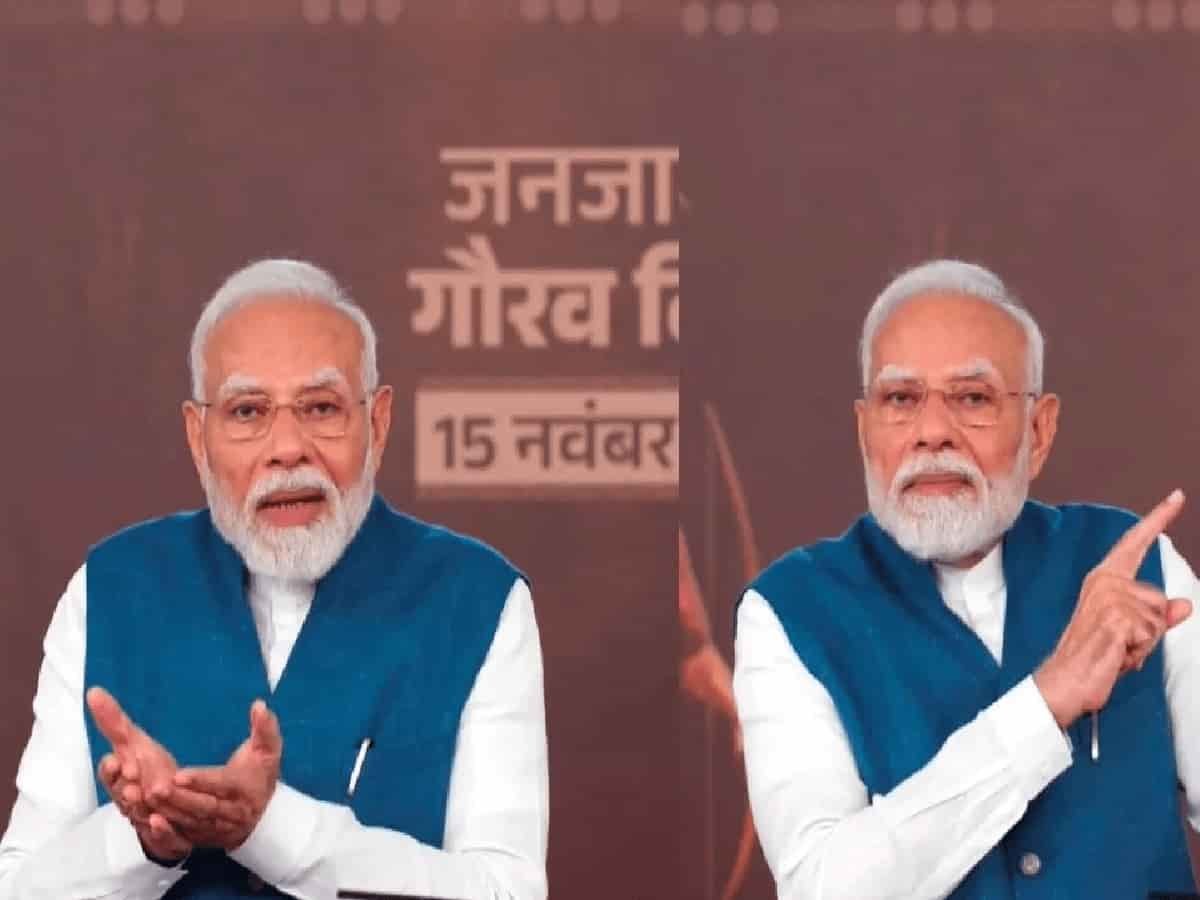
Prime Minister Narendra Modi launched a scathing critique against previous administrations on Sunday, asserting that past leaders neither understood the challenges nor cared about the welfare of India's tribal communities. Speaking during the nationwide celebrations of Janjjatiya Gaurav Diwas—which marks the 151st birth anniversary of legendary tribal freedom fighter Birsa Munda—the Prime Minister emphasized that his administration has fundamentally transformed governance by granting indigenous populations rightful ownership over their resources, expanding quality education, and delivering basic infrastructure to the most remote corners of the country.
The flagship event, hosted in Maharashtra's Gadchiroli district, featured a virtual dialogue where PM Modi interacted directly with grassroots beneficiaries from across India, listening to accounts of how central initiatives have reshaped their daily lives. Against the backdrop of these personal testimonies, the Prime Minister formally inaugurated and laid the foundation stone for 246 development projects valued at approximately ₹3,000 crore, spanning education, healthcare, livelihood support, and cultural preservation.
Ending Colonial Legacy: The Battle for Bamboo Rights
A poignant moment during the interaction unfolded when the Prime Minister spoke with Vajir, a resident of Hathakundi village in Gujarat’s Bharuch district, who had received vocational training under the New Gujarat Pattern Yojana back in 2004 and subsequently benefited from the PM-JANMAN (Pradhan Mantri Janjati Adivasi Nyaya Maha Abhiyan) scheme.
Responding to Vajir's testimony, PM Modi reflected on a lingering colonial-era injustice that suppressed tribal livelihoods for decades: the classification of bamboo as a tree.
"Vajir ji, you are likely aware that the British devised a major ploy by classifying bamboo as a 'tree'; consequently, anyone who cut bamboo would be thrown into jail," the Prime Minister noted. Pointing out that this restrictive legislation should have been abolished immediately after Independence, he criticized past leaders for their apathy. "Regrettably, some individuals in the previous governments neither understood the tribal communities nor cared about them."
Highlighting a decisive policy correction, Modi underscored that his government repealed the outdated law upon coming to power, officially restoring full legal rights over bamboo to tribal citizens and unlocking new economic horizons.
Transforming Lives Through PM-JANMAN and PM SHRI Schools
The transformative impact of targeted social welfare was further highlighted by Krishna Nagorao Teka, a PM-JANMAN beneficiary from Maharashtra’s Yavatmal district. Teka shared how his family previously endured immense hardships during monsoon seasons, battling dampness, pests, and structural decay before receiving sanction for a permanent, weather-resistant home equipped with modern sanitation facilities.
Expressing satisfaction over the reach of the PM-JANMAN Mission, PM Modi reiterated that true development must bridge the gap between modernization and cultural roots, ensuring villages receive urban-grade amenities without losing their indigenous heritage.
The event also featured an interaction with Sabavat Anvesh, a student from Hyderabad, who thanked the Prime Minister for the PM SHRI Schools (Pradhan Mantri Schools for Rising India) initiative. Anvesh credited the modernized educational infrastructure for opening up new pathways toward higher education and professional growth for students from marginalized backgrounds.
₹3,000 Crore Push: Eklavya Schools, Museums, and Multi-Purpose Centres
The ₹3,000 crore development package unveiled during the commemoration represents a massive structural investment in tribal welfare. Of the total 246 projects, 173 were officially inaugurated by the Prime Minister:
Educational Expansion: 38 new Eklavya Model Residential Schools (EMRS) were dedicated to the nation to provide residential secondary education of high standards to tribal children, alongside foundation stones laid for 19 additional schools.
Economic Livelihoods: 100 Multi-Purpose Centres and 12 Tribal Multi-Purpose Marketing Centres (TMMCs) were launched under PM-JANMAN and the Dharti Aaba Janjatiya Gram Utkarsh Abhiyan (DAJGUA) to eliminate middle-men, enhance market access, and boost local producer incomes.
Cultural Preservation: To honor tribal history and secure indigenous heritage for future generations, PM Modi inaugurated major infrastructural landmarks, including the Tribal Research Institute building in Itanagar, Arunachal Pradesh, and the Ropuiliani Tribal Freedom Fighter Museum in Aizawl, Mizoram.
Culmination of Janjatiya Gaurav Pakhwada
Sunday's high-profile event marked the grand culmination of the Janjjatiya Gaurav Pakhwada, a fortnightly nationwide observance running from November 1 to 15 dedicated to honoring tribal contributions to India’s freedom struggle and national identity. Through sustained policy interventions, infrastructural injections, and a stated commitment to dignity and equity, the government's latest initiatives signal an ongoing shift toward empowering India’s tribal heartland.