NCERT: References to Hitler Removed, Congress Partition Narrative Changed After Supreme Court Directive
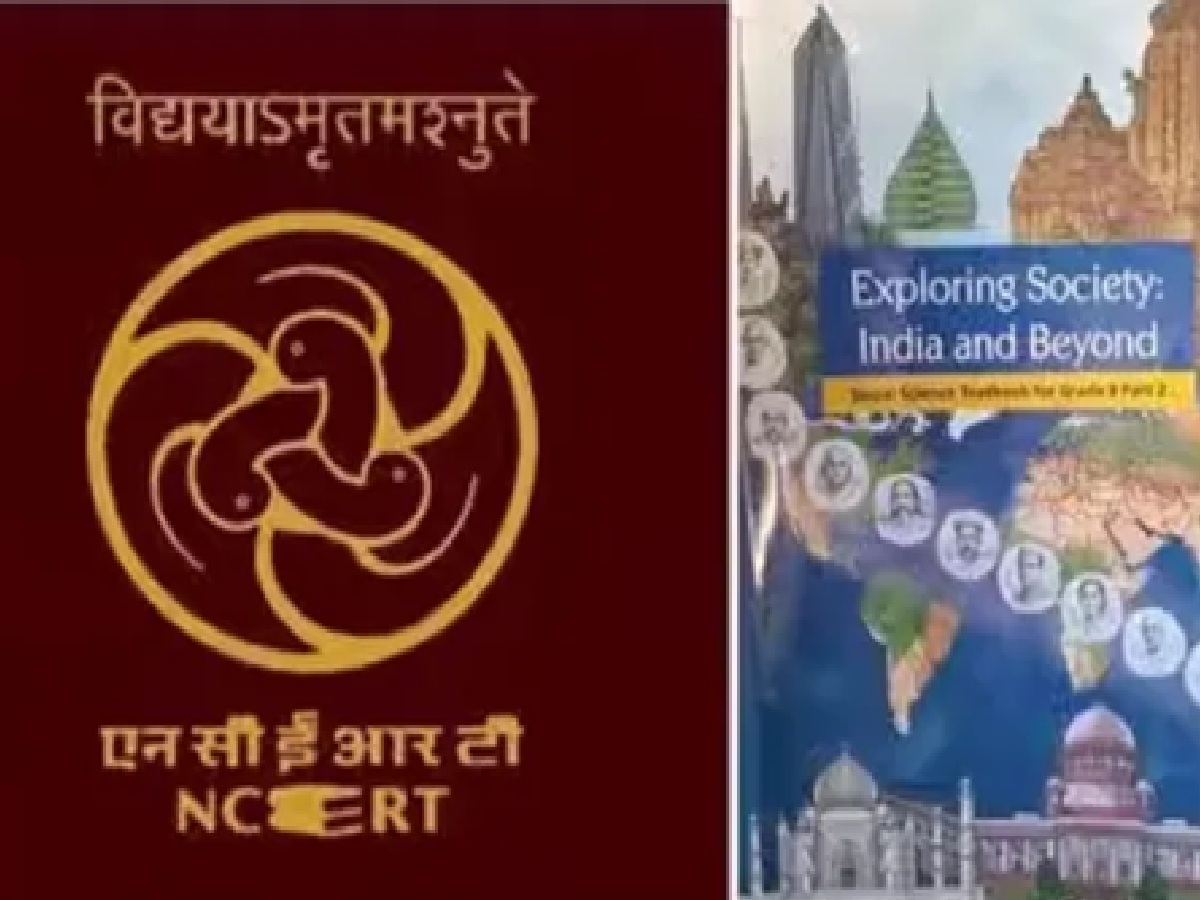
In a sweeping update to India's school curriculum, the National Council of Educational Research and Training (NCERT) has rolled out massive revisions to its Class 8 Social Science textbook. This major text restructuring follows recent strict interventions from the Supreme Court of India, which flagged certain chapters as objectionable. The newly updated digital edition, titled "Exploring Society: India and Beyond," brings structural modifications to sensitive historical and civic chapters. The most notable modifications include a complete redrafting of the section on judicial corruption, an updated analysis of the Indian National Congress's stance during the 1947 Partition, and the complete omission of specific references to Adolf Hitler and Nazi ideology in relation to India's freedom struggle.
Redrafting the Partition History: Debate Over Congress's Final Decision
The updated textbook introduces a significantly altered perspective on how the events leading up to the 1947 Partition are taught to young students. In the older version of the Class 8 book, the text mentioned that while Mahatma Gandhi and a majority of Congress leaders initially stood firmly against the division of the subcontinent, they ultimately accepted it, describing it as the only viable way forward to stop further violence.
The newly revised edition reframes this narrative entirely. It now explicitly states that the Congress party maintained a strong and consistent opposition to Partition, adding that whether accepting the division was truly the only way forward remains a highly debatable historical question. Furthermore, the editorial team has entirely deleted a controversial sentence from the previous edition which claimed that Congress leaders were left completely helpless during the massive communal carnage that broke out across the subcontinent.
Netaji’s World War II Alliances: Hitler and Nazi Ideology References Dropped
Another major geopolitical rewrite can be seen in the chapter covering the Indian National Army (INA) and the global efforts of freedom fighter Netaji Subhas Chandra Bose during World War II. The previous version of the textbook stated that Bose had traveled to Europe to seek direct military support from Adolf Hitler. It further went on to label the German leader as a "dictator" whose "racist Nazi ideology and expansionist goals" ultimately triggered the global war.
In the 2026 edition, all direct references to Adolf Hitler, dictatorships, and Nazi ideology have been entirely removed from this section. Instead, the revised text smoothly shifts the focus, stating that Netaji Subhas Chandra Bose strategically "sought support from anti-British forces" globally to liberate India. This modification aims to focus the curriculum tightly on the geopolitical dynamics of India's independence movement without micro-analyzing European regimes within the same paragraph.
VD Savarkar’s Swaraj Vision Added to the History Curriculum
In tandem with dropping certain international references, NCERT has expanded the national history section by integrating a dedicated mention of Vinayak Damodar Savarkar (VD Savarkar). The new sub-section highlights his early contributions to the ideological framework of the freedom struggle.
The text now informs students that VD Savarkar had articulated a clear demand for 'Swaraj' (self-rule) as early as 1925, during intense national debates regarding the ultimate demand for complete independence from British colonial rule. This addition reflects a broader educational effort to introduce students to diverse ideological perspectives within India's long walk to freedom.
Judiciary Chapter Cleansed Following Supreme Court Legal Interventions
The catalyst for this sudden textbook overhaul was a legal dispute regarding a chapter focused on the Indian legal framework. A few months ago, the Supreme Court of India expressed strong dissatisfaction with a specific chapter on the judiciary that openly discussed structural corruption, massive backlogs of pending cases in local courts, and public complaints against sitting judges.
Deeming the content highly objectionable and potentially damaging to the institutional integrity of the third pillar of democracy, the apex court ordered an immediate recall of all existing physical and digital copies of the textbook. In compliance with the judicial mandate, NCERT has completely sanitized the judiciary chapter, replacing the critical text with a balanced overview of the constitutional role, rights, and powers of the Indian courts, ensuring a standardized and respectful introduction to the legal system for Class 8 students across the country.




_1587178762_351x234.jpg)
_305727748_351x234.jpg)