










India's First Bullet Train: May 2027 Trials, Speed & Route Details
India's long-awaited transition into high-speed rail travel has crossed a decisive engineering threshold, with trial runs for the country's first bullet train set to commence in May 2027 on the 50-kilometer Surat–Bilimora section of the 508-kilometer Mumbai–Ahmedabad High-Speed Rail (MAHSR) corridor. Briefing reporters on Monday, November 23, 2026, Union Railway Minister Ashwini Vaishnaw confirmed that electrification along the elevated Surat–Bilimora stretch is finished—following the energization of 2×25 kV Overhead Equipment (OHE) across both Up and Down lines on November 20—and that signaling installation is slated for completion by January 2027, paving the way for initial trial runs in May and the first commercial passenger service in the last quarter of 2027. Once the full corridor is operational, end-to-end journey time between Mumbai and Ahmedabad is projected to drop to roughly 1 hour and 58 minutes. For commuters, travelers, and infrastructure watchers across northern India—including readers in Lucknow and neighboring Uttar Pradesh cities such as Unnao, Kanpur, Prayagraj, and Varanasi, where rapid rail modernization and future high-speed rail corridors are closely followed—the Surat–Bilimora breakthrough signals that India's high-speed rail era is moving from civil construction into active testing.
Speed, Engineering Standards, and What Makes the B-28 Train Distinct
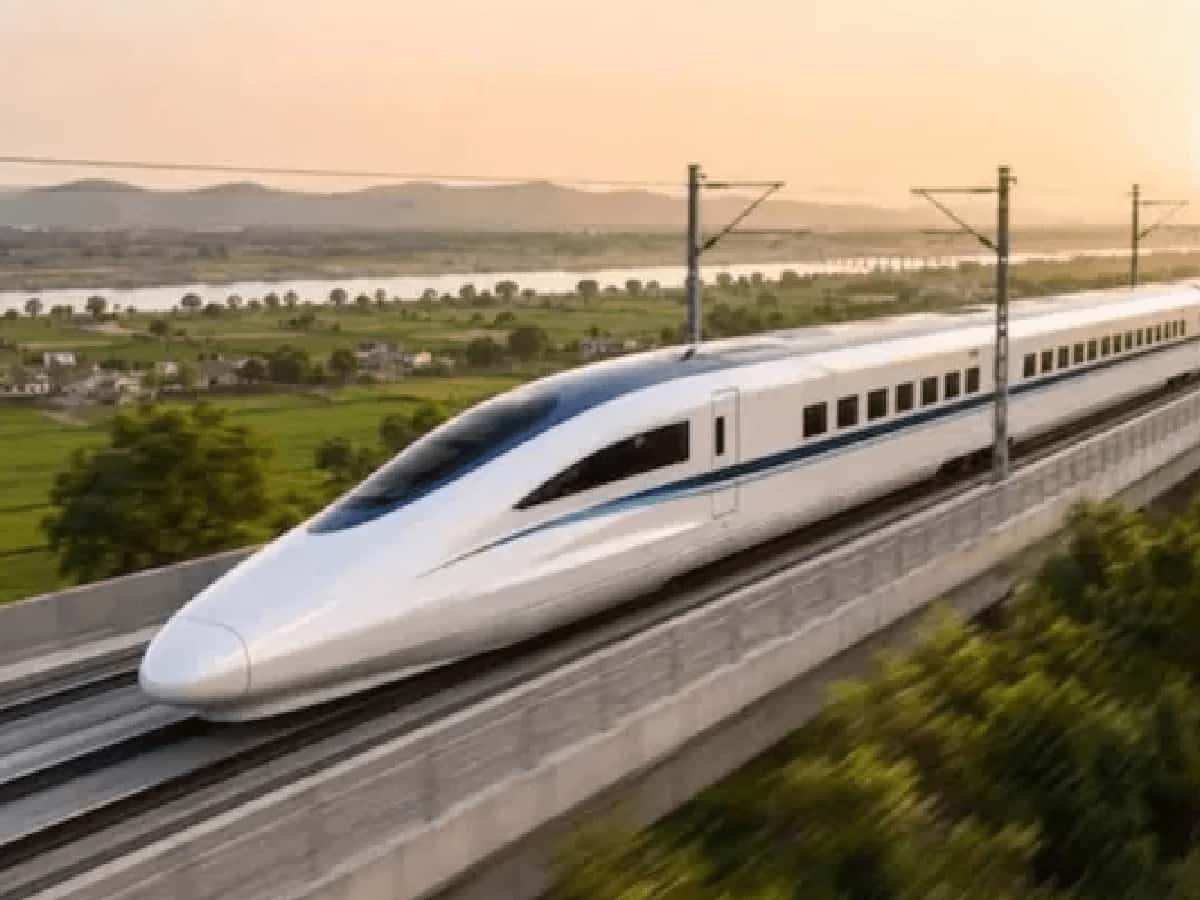
Railways classify corridors operating above 240 kmph as true high-speed lines, requiring specialized track geometry, aerodynamic coach design, and structural rigidity far beyond conventional rail networks. According to Ashwini Vaishnaw, initial trials on the Surat–Bilimora stretch will deploy the indigenously built B-28 bullet train—manufactured by BEML and ICF—which is engineered for a design speed of 280 kmph:
-
Aerodynamic Pressure & Squeeze Testing: At speeds approaching 280 kmph, intense air-pressure waves act on coach bodies and viaduct structures. The B-28 trainset has successfully cleared a rigorous squeeze/pressure endurance test, enduring pressure loads twice the atmospheric pressure anticipated during routine service.
-
Train Configuration & Capacity: Built as an eight-coach formation (roughly 202 meters long, comprising four motor cars and four trailer cars) with capacity for around 557 passengers across seven standard-class coaches (3×2 seating) and one executive-class coach (2×2 seating), two B-28 units can also be coupled into a 16-coach train.
-
Power & Noise Control Infrastructure: The corridor draws power from a 2×25 kV traction system supported by 14 traction substations along the 508-km route (including the completed Bilimora traction substation) monitored via a central control center, while roughly 94,000 noise barriers have been erected along elevated stretches to shield nearby residential neighborhoods from sound.
Phased Route Rollout, Corridor Stations, and Opening Timeline
Rather than waiting for every kilometer between Maharashtra and Gujarat to finish simultaneously, the National High Speed Rail Corporation Limited (NHSRCL) and the Ministry of Railways are commissioning the 508-km corridor in structured phases across its 12 planned stations (Mumbai/BKC, Thane, Virar, Boisar, Vapi, Bilimora, Surat, Bharuch, Vadodara, Anand, Ahmedabad, and Sabarmati):
| Project Phase / Milestone | Target Timeline | Key Operational & Engineering Details |
| Surat–Bilimora OHE & Signaling | Nov 20, 2026 (OHE energised) / Jan 2027 (Signaling) | 50-km elevated section powered via 2×25 kV OHE on both Up and Down tracks. |
| Initial B-28 Trial Runs | May 2027 | Dynamic track, traction, signaling, and safety testing at speeds up to 280 kmph. |
| First Passenger Service & Ahmedabad–Vapi Stretch | Last Quarter of 2027 / End-2027 | Commercial debut following safety clearances, extending across the Ahmedabad–Vapi segment by late 2027. |
| Extension to Thane (Mumbai Side) | 2029 | Rapid civil work in Maharashtra, including India's undersea rail tunnel section, brings service to Thane by 2029. |
Why the Surat–Bilimora Milestone Matters for Indian Rail Travel
With 508 kilometers of civil, electrical, and tunneling works advancing simultaneously across Gujarat and Maharashtra, energizing the Surat–Bilimora overhead lines marks the transition from heavy construction to integrated systems testing. Once operational across phases, the bullet train corridor is expected to reshape intercity business travel between Mumbai, Surat, Vadodara, and Ahmedabad while establishing homegrown high-speed rail engineering standards for future corridors nationwide.






