142 Artifacts Stolen From MP Monuments Linked to Smugglers

India’s rich historical and architectural legacy is facing an ongoing threat from organized international criminal syndicates specializing in the illicit trafficking of cultural property. According to a comprehensive report compiled by the Archaeological Survey of India (ASI), Madhya Pradesh ranks first in the country for the theft of ancient sculptures, temple architecture, metallic artifacts, and historical inscriptions from protected monuments.
Out of 488 total antiquities recorded as stolen from ASI-protected heritage sites nationwide since 1960, a staggering 142 items—accounting for 29.1 percent of the national total—have been pilfered from Madhya Pradesh alone. This outpaces neighboring states such as Rajasthan, which recorded 91 thefts, and Uttar Pradesh, with 86 missing artifacts. While investigators have successfully repatriated several high-profile pieces over the years, a significant portion of Madhya Pradesh's stolen heritage remains missing, buried deep within global art black markets and private overseas collections.
A Trail of Plunder Across MP Districts: From Ancient Temples to Forts
The pilferage spans multiple decades and touches numerous heritage-rich districts across the state. According to ASI data, irreplaceable religious and architectural treasures—including ancient Shivlingas, rare idols of Lord Vishnu, Ganesha, Jain Tirthankaras, Yaksha figures, and intricate temple architectural fragments—have been systematically stripped from historical sites in Guna, Gwalior, Morena, Shivpuri, Bhind, Vidisha, Raisen, Katni, Khandwa, Satna, Damoh, and Barwani.
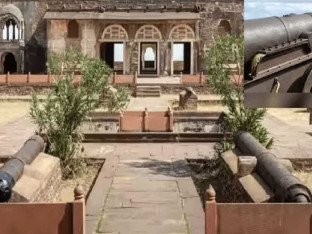
The vulnerability of remote or under-guarded historical structures was underscored by a brazen recent incident in July 2026, when a 400-year-old, 3.5-ton heavy cannon was stolen from the historic Narwar Fort in Shivpuri district. Local police investigations later traced the massive ordnance across the state border into Rajasthan, though the heavy artifact has yet to be physically recovered. Security experts point out that such audacious thefts highlight the logistical sophistication of trafficking gangs who target heavy metal and stone assets under the cover of night.
Global Smuggling Rings: The Case of Subhash Kapoor and the Bharhut Yakshi
The plunder of Madhya Pradesh's heritage is not merely a localized law and order issue; it is inextricably linked to sprawling international smuggling networks operating across North America, Europe, and Asia. One of the most infamous examples involves the 2,200-year-old Bharhut Yakshi statue, which was brazenly stolen from the Katni district in 2006.
The priceless antiquity eventually surfaced on the international art market, commanding an estimated valuation of ₹80 crore. It was ultimately tracked down and seized in 2011 from the New York warehouse of notorious art dealer Subhash Kapoor, a central figure in global antiquity trafficking. Kapoor was subsequently arrested in Germany and extradited, and he is currently serving time in a central jail in Tiruchi, Tamil Nadu.
Other notable repatriations underline the state's deep cultural losses. The ancient statue of a Celestial Dancer, stolen from an MP monument, and a Dancing Ganesha idol—recovered as part of a major repatriation batch returned from the United States—both originated from plundered temple sites in Madhya Pradesh.
Bolstering Heritage Security and Modernizing Documentation
In the wake of mounting international scrutiny and strategic dialogues—including discussions at the BRICS Culture Ministers' meeting held in Bhopal—federal and state archaeological bodies have drastically shifted their focus toward preemptive security, digital inventorying, and cross-border recovery frameworks.
Yaduvir Singh Rawat, Director General of the Archaeological Survey of India, noted that the majority of recorded thefts historical back decades, prompting a massive overhaul of protective protocols. "Most of the thefts are quite old. Security measures have been improved at the monuments and adequate security personnel have been deployed. We are also trying to improve documentation of antiquities to make their recovery easier," Rawat stated.
The comprehensive state-wise breakdown of stolen heritage released by the ASI illustrates the magnitude of the challenge:
Madhya Pradesh: 142 items
Rajasthan: 91 items
Uttar Pradesh: 86 items
Uttarakhand: 33 items
Tamil Nadu: 30 items
Bihar: 22 items
Andhra Pradesh: 18 items
Karnataka: 15 items
Maharashtra: 12 items
Chhattisgarh: 8 items
As digital cataloging, high-resolution laser scanning, and Interpol-backed coordination continue to expand, heritage conservationists hope that India's ongoing efforts will deter future looting and successfully bring home the remaining sculptural masterpieces stolen from the heartland of India.