

 Desk
Desk Share
Share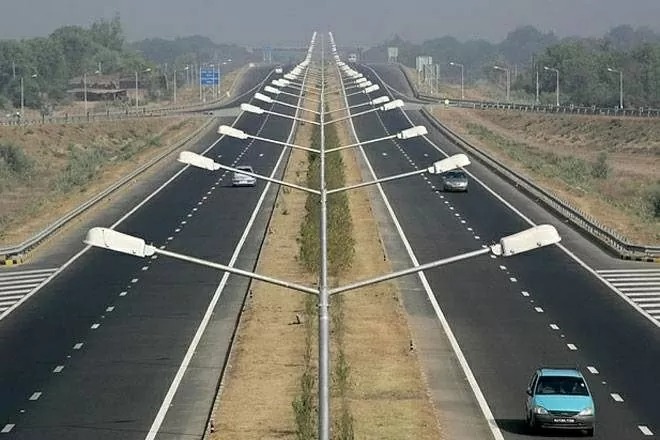
New Delhi. Stretching over 210 kilometers, the new expressway linking Delhi and Dehradun promises a journey that's not only quicker, cutting current travel time from 6.5 hours to 2.5, but also a catalyst for transformative growth across several urban hubs in North India. Constructed with an outlay of ₹13,000 crore, the corridor is a flagship segment of the Bharatmala programme, yet its truest contribution lies less in the distance shortened than in the strategic reorientation of regional development trajectories.
Works are proceeding in four distinct segments. The initial, 32-kilometer elevated section from Delhi to Baghpat will compress travel to a quarter-hour. The following 118-kilometer greenfield corridor, from Baghpat to Saharanpur, will introduce over sixty underpasses and four major interchanges, knitting together previously isolated networks. The third segment, a forty-kilometer six-lane route from the Saharanpur bypass to Ganeshpur, will stimulate both tourist traffic and new residential clusters. The concluding section, 19.5 kilometers from Ganeshpur to Dehradun, is notable for crossing the Rajaji Tiger Reserve and skirting the Shivalik Hills, where the Dat Kali Devi Tunnel emerges as a singular engineering and sightseeing highlight.
New flight corridor between the metro and airport
Complementing the expedited construction of the expressway, the Dehradun metro initiative is advancing swiftly in two distinct phases. A cumulative 73-kilometre corridor is under assembly, comprising the Haridwar-Rishikesh alignment of 32 kilometres and the Nepali Farm-Dehradun span of 41 kilometres. Concurrently, expansion works at Jolly Grant Airport are under way to heighten international linkages, further stimulating the region's economic momentum.
Emerging real estate magnet
Beyond the confines of Delhi-NCR, Dehradun, Rishikesh, and Haridwar are evolving into credible real estate nucleus, transcending their erstwhile identities as religious and tourist circuits. A recent Magicbricks analysis identifies the prevailing Delhi average at ₹ 18,618 per square foot, juxtaposed with Dehradun's ₹ 5,653 per square foot. Interest in second residences has surged by 43 per cent, with an observable transition towards securing primary, year-round dwellings.
Transformative Visions Among Stakeholders
Manit Sethi, director of Exensia Infra, observes that Dehradun has outgrown its historic image as a hill station, repositioning itself as a principal market for real estate. The completion of the expressway has recalibrated the ambitions of both professionals and investors. Exensia has concentrated development in the premium market as well as in the emerging micro-markets situated along the expressway. Harvinder Singh Sikka, principal of Sikka Group, notes that the expressway, the metro line, and the upgraded airport form a cohesive economic corridor, yet he emphasizes the imperative of sustainable development alongside infrastructure expansion. Sakshi Katiyal, of Home and Soul, adds that the expressway signifies more than a transport link; it is a corridor of aspirations, enabling Dehradun to function as a logical extension of Delhi’s metropolitan orbit.
Acceleration of Tourism and Hospitality
Tourism in Uttarakhand is accelerating at an exceptional rate. The state received 7.8 million visitors in 2018; this figure soared to nearly 59.6 million in 2023, comprising 6.1 million domestic and approximately 26,000 international visitors. Government initiatives in eco-tourism, the promotion of homestays, and targeted training programs for the hospitality workforce have energized the sector, and these advances are now manifesting in steady demand for real estate, particularly in experiential lodging and serviced residences.
Tourism is gaining rapid traction in Uttarakhand. Visitor arrivals, having stood at 7.8 million in 2018, surged to 59.6 million in 2023, comprising 61 lakh domestic travellers and 26,000 from abroad. Government-initiated eco-tourism strategies, along with promoted homestay schemes and targeted training curricula, have reinforced the hospitality framework, thereby exerting a discernible upward pressure on the state’s real estate markets.


_132300150_100x75.jpg)
_430488585_100x75.jpg)
_1333714631_100x75.jpg)
_58079313_100x75.jpg)