
 Priyanka Tiwari
 Share
Share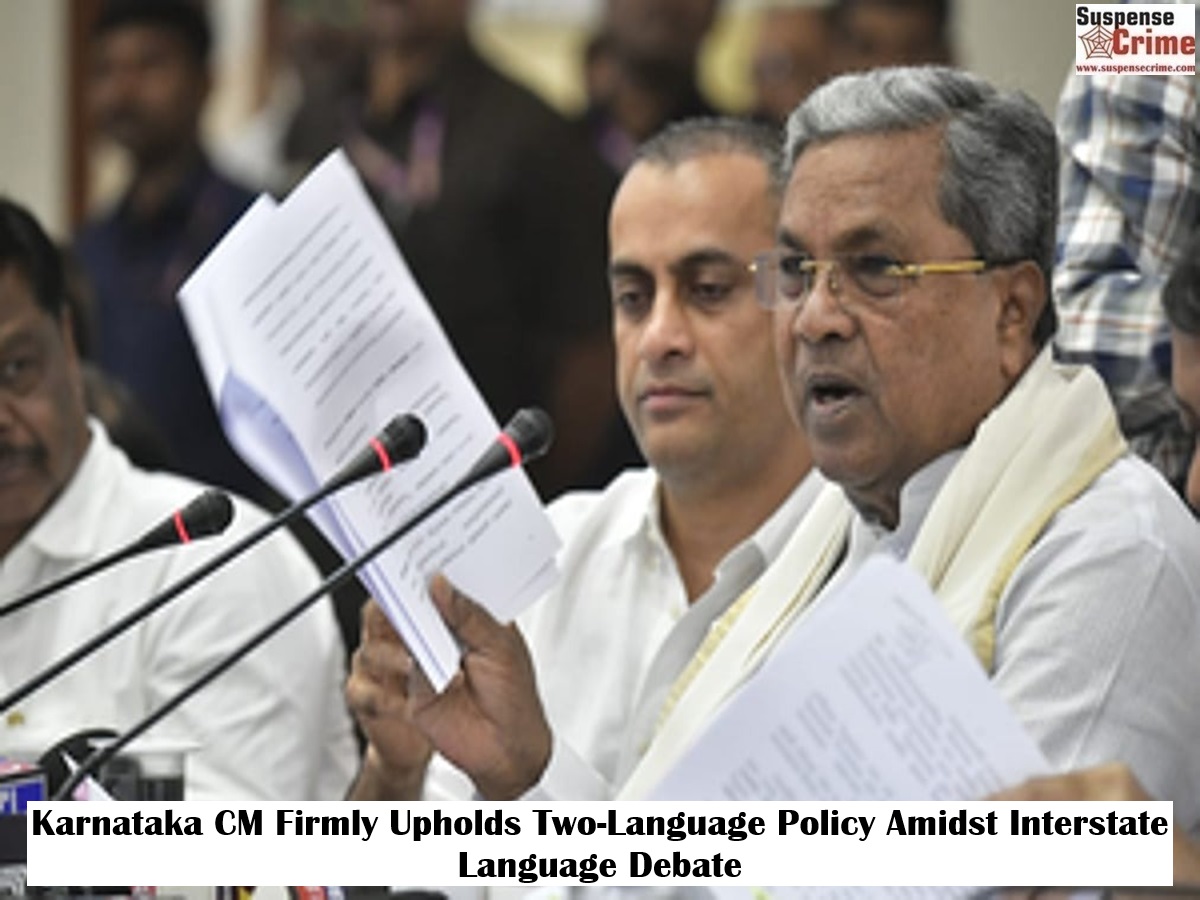
Suspense crime, Digital Desk : Karnataka Chief Minister Siddaramaiah has unequivocally reaffirmed the state's long-standing two-language policy, emphasizing its commitment to protecting Kannada and rejecting any mandatory imposition of a third language, particularly Hindi. This firm stance comes in the wake of recent statements from Maharashtra's Chief Minister Eknath Shinde regarding the teaching of Marathi in schools located in disputed border areas.
CM Siddaramaiah's declaration underscores Karnataka's unyielding position on linguistic policy. The state mandates Kannada as the compulsory first language in schools, with English serving as the second. This framework has been a cornerstone of Karnataka's educational and cultural policy, designed to preserve the primacy of the regional language and safeguard its unique cultural identity. The Chief Minister stated clearly that there would be no deviation from this established system.
The reaffirmation was prompted by comments from Maharashtra CM Eknath Shinde, who reportedly stated that Marathi would be taught in schools within the disputed border region. This statement reignited tensions between the two states, which have a protracted history of border and linguistic disputes. Siddaramaiah reiterated that while Karnataka respects all languages, the state's linguistic policy is non-negotiable and prioritizes Kannada.
Karnataka's two-language policy notably differs from the National Education Policy (NEP) 2020, which advocates a three-language formula. However, states retain autonomy in implementing educational policies. By adhering to its existing framework, Karnataka signals its resolve to resist any perceived attempts at Hindi imposition, aligning with the sentiment of many Kannada proponents who view a mandatory third language as a threat to their linguistic heritage.
This pronouncement by Chief Minister Siddaramaiah sends a clear message about Karnataka's linguistic sovereignty and its commitment to safeguarding the interests of its people and their language. The ongoing dialogue between states on such sensitive issues highlights the complexities of federalism and linguistic diversity within India.