










Kalpana Soren Slams MMDR Act 2026 in Assembly: 'Not a Begged State'
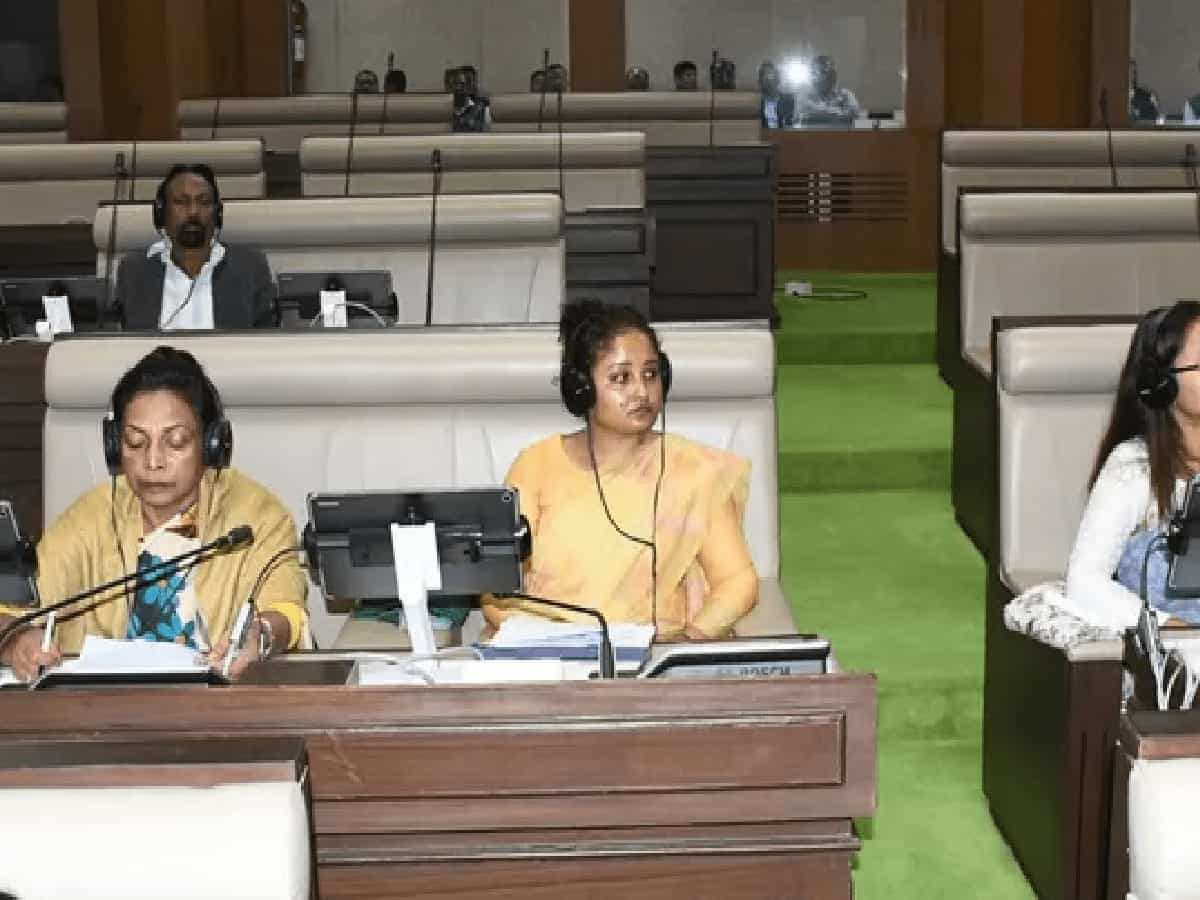
Gandey MLA Kalpana Soren mounted a fierce legislative challenge against the Mines and Minerals (Development and Regulation) Amendment Act, 2026 during a special session of the Jharkhand Legislative Assembly in Ranchi on Thursday, November 26, 2026, calling the law a direct assault on Jharkhand's financial autonomy, the future of its children, and India's federal constitutional structure. Addressing the House alongside a state resolution moved by Chief Minister Hemant Soren demanding the amendment's withdrawal over an estimated ₹13,000 crore annual revenue impact, Kalpana Soren declared that Jharkhand is an integral part of India—not a "colony" to be exploited for raw materials while its people bear ecological and displacement costs. Urging both ruling-party legislators and opposition members to rise above partisan lines and speak with one voice in the Assembly, she framed the dispute around hard-won statehood and fiscal fairness. For political analysts, policy students, and news readers across Uttar Pradesh—including households and observers in Lucknow and neighboring cities such as Unnao, Kanpur, Prayagraj, and Varanasi, where federal–state fiscal debates, resource taxation, and eastern-Indian political developments are closely watched—the Ranchi debate highlights escalating tensions over how mineral wealth and state taxing powers are balanced across India.
How Mineral Cess Funds Welfare Schemes—and What the MMDR Amendment Changes
Following a Supreme Court ruling on state powers to tax mineral-bearing land, the Jharkhand government enacted the Jharkhand Mineral Bearing Land Cess Act, 2024 to levy cess on mineral-bearing land and channel proceeds into development and social welfare. Kalpana Soren and state officials emphasized that revenues tied to this framework support major public initiatives—including social security programs such as Sarvajan Pension, the Maiyaan Samman scheme, and the Abua Housing Scheme—while strengthening rural livelihoods and local infrastructure. By contrast, the MMDR Amendment Act, 2026 introduces a uniform, Centre-regulated framework governing levies on mineral rights and mineral-bearing land under conditions prescribed by the Union government, which the state government argues curtails Jharkhand's fiscal room and threatens roughly ₹13,000 crore in annual revenue (and multi-year losses if unrestricted).
| Policy / Fiscal Dimension | Jharkhand Government & Kalpana Soren's Position | Central Government / Counter-Perspective |
| Mineral Cess & State Revenue | Enacted the Jharkhand Mineral Bearing Land Cess Act, 2024 after the SC verdict; warns the 2026 amendment cuts ~₹13,000 crore in annual revenue and hits welfare schemes. | Centre states the MMDR Amendment Act, 2026 brings uniformity, predictability, and lower input costs for power, steel, and cement while states retain major mining royalties and District Mineral Foundation (DMF) funds. |
| Consultation & Land Impact | Questions why mineral-rich states like Odisha, Chhattisgarh, and West Bengal were not adequately consulted and asks whether coal-company land acquisition, compensation, and rehabilitation are properly audited. | Centre maintains that fragmented state levies disrupt a unified national mineral market and burden households with higher electricity and construction costs. |
| Assembly & Political Exchange | Kalpana Soren urges cross-party unity in the House to protect Jharkhand's rights; CM Hemant Soren moved an Assembly resolution seeking withdrawal. | Leader of the Opposition Babulal Marandi criticized the ruling alliance and opposition MPs for not blocking the bill in Parliament. |
Questions Over Consultation, Coal Land Acquisition, and Rehabilitation
During her speech, Kalpana Soren pressed the Centre on whether other mineral-rich states—including Odisha, Chhattisgarh, and West Bengal—were consulted before Parliament passed the amendment. Pointing out that large expanses of mineral-rich land in Jharkhand have been acquired by central coal companies, she argued that policymakers must examine whether local families have received fair compensation, environmental safeguards, and proper rehabilitation rather than leaving displaced communities behind while extracted minerals fuel growth elsewhere.
Invoking Dishom Guru Shibu Soren and the Struggle for Statehood
Kalpana Soren underscored that Jharkhand was not handed over as alms or charity, but won through decades of sacrifice, struggle, and movement led by Dishom Guru Shibu Soren and countless martyrs. Addressing the Speaker, she asked how long Jharkhand must fight for its constitutional and financial dues and whether the state should depend on central approval to pursue development, calling on legislators across party lines to stand together for Jharkhand's rights as the special session concluded.






