










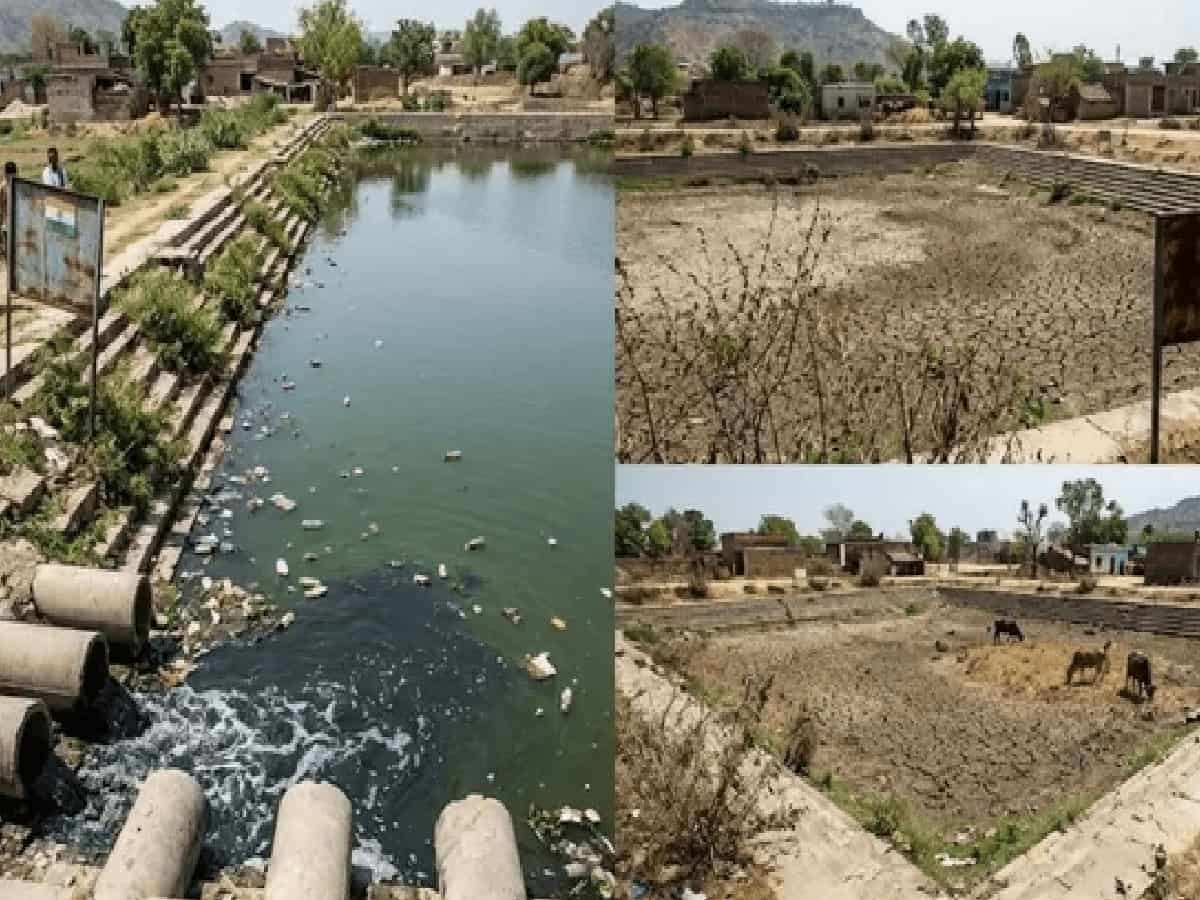
Gaya Amrit Sarovars in Poor State Despite ₹23.94 Lakh Spend
Water bodies created under Mission Amrit Sarovar were meant to anchor rural water conservation, recharge groundwater tables, and build lasting community assets alongside village employment. In Mohanpur block of Bihar's Gaya district, however, two ponds built in 2022 under the Mahatma Gandhi National Rural Employment Guarantee Act (MGNREGA) at a combined expenditure of ₹23,94,531 are falling short of those goals. In Bagula village, wastewater from four drains flows directly into the pond, polluting the water and sending foul odors toward nearby homes whenever breezes blow. In Amhana village, a pond built at a cost of ₹8,83,050 holds rainwater during the monsoon but dries up soon afterward, leaving villagers without usable water during drier months. MNREGA Program Officer Kundan Kumar stated that both projects belong to an earlier phase, that he took note of their condition upon assuming charge, and that renovation and redevelopment work on both water bodies is targeted for completion by June 2027. For rural-development observers, local planners, and readers across Uttar Pradesh—including households and policy followers in Lucknow and neighboring centers such as Unnao, Kanpur, Prayagraj, and Varanasi, where pond rejuvenation, drainage planning, and summer water security are recurring priorities—the Mohanpur case highlights why post-construction maintenance and drainage alignment matter as much as initial excavation.
Expenditure and Work Profile of the Two Mohanpur Sarovars
Built in 2022 with unskilled rural labor and greening works around their banks, the two projects recorded distinct spending and labor-day figures:
| Project / Village | Construction Year | Total Expenditure | Unskilled / Person-Day Figures | Current Condition & Issue |
| Heron / Bagula Amrit Sarovar | 2022 | ₹15,11,481 | 7,050 unskilled work days; 140 human-days | Polluted by dirty water from four drains, causing foul odor in nearby homes. |
| Amhana Amrit Sarovar | 2022 | ₹8,83,050 | 4,200 unskilled work days; 88 human-days | Collects monsoon rain but dries up shortly after rains, limiting summer utility. |
| Combined Total (Both Ponds) | 2022 | ₹23,94,531 | 11,250 unskilled work days; 228 human-days | June 2027 target set by MNREGA PO for redevelopment and corrective work. |
Drain Discharge in Bagula and Rapid Drying in Amhana
According to local accounts—including Mukhiya representative Ramvriksha Prasad Thakur—the Bagula pond initially held clean water and had tree plantation around its perimeter that improved village surroundings. Over time, however, four drains built with government funds were routed to discharge into the pond, turning clean water into a source of pollution and unpleasant smell for residents living downwind. Meanwhile, in Amhana, seasonal runoff gathers during monsoon rains, but rapid water loss afterward prevents the pond from retaining water for irrigation, livestock, or community needs in the dry season.
June 2027 Renovation Target and Lessons for Water Conservation
MNREGA Program Officer Kundan Kumar said officials have taken cognizance of both the drain-contaminated pond and the fast-drying reservoir, committing to complete restoration and redevelopment by June 2027. Ensuring clean inflow channels, diverting untreated wastewater away from conservation ponds, checking embankment retention, and maintaining regular community upkeep will be essential if both sarovars are to deliver durable water security after June 2027.






