Priyanka Tiwari
 Share
Share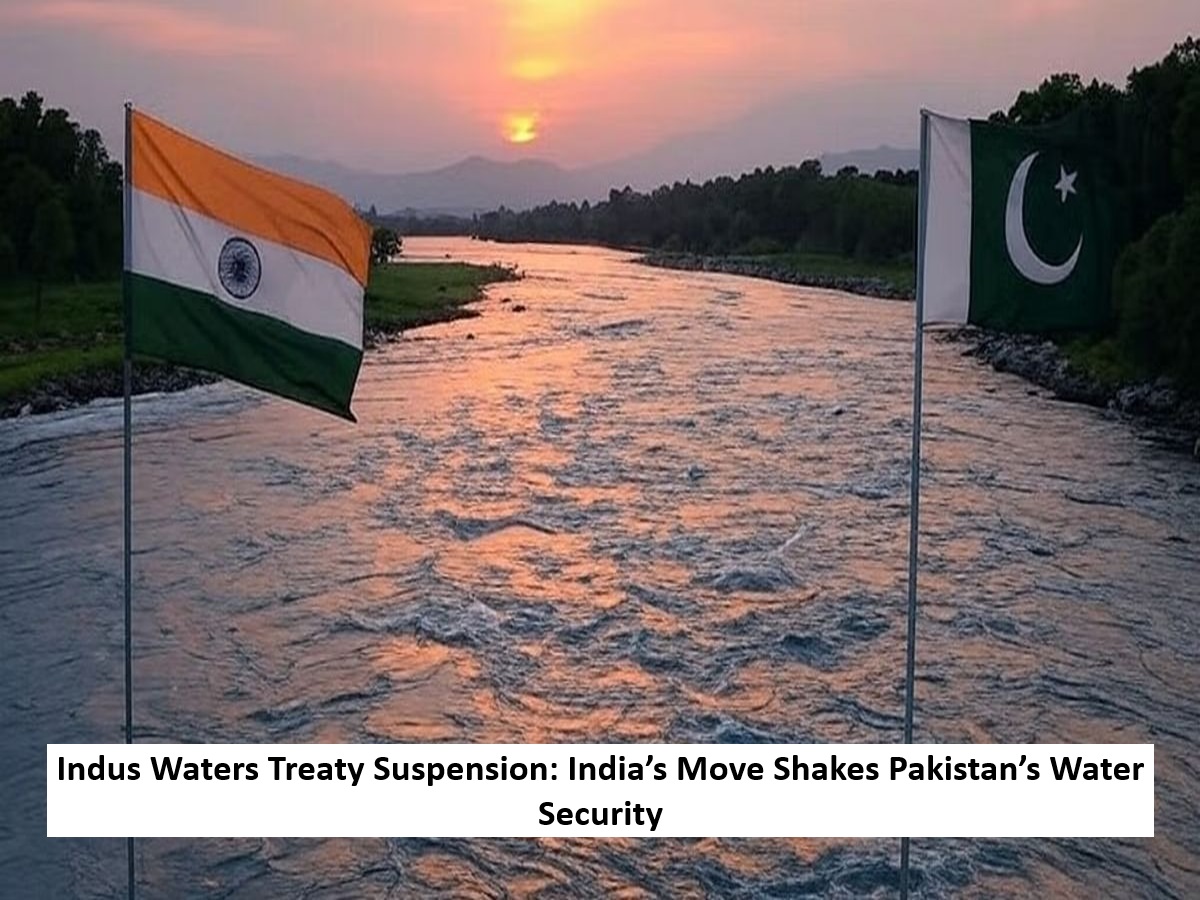
Suspense crime, Digital Desk : Tensions are escalating as New Delhi's decision to suspend the Indus Waters Treaty (IWT) has exacerbated the diplomatic blame game between India and Pakistan. On Thursday, Pakistan's Power Minister Sardar Awais Leghari accused India of engaging in "water warfare," describing the action as “reckless” and “illegal.” He further claimed that Islamabad would zealously defend its water rights on all political and legal platforms globally.
India, in response to Pakistan’s accusations, has not yet claimed or diverted any water from the Treaty’s designated rivers—the Chenab, Jhelum, or Indus—allocated to Pakistan. India’s action of suspension amounts to a strategic pause. While it does not directly impact water flow, it does create important geopolitical opportunities.
Why Pakistan Is Concerned:
India's decision to keep the Treaty in abeyance alters India's actions regarding the treaty in ways that Pakistan cannot foresee or control. This reality has already triggered some concerns. Prime Minister Shehbaz Sharif announced a cancellation of six new canal projects on the Indus River, which were touted by Army Chief General Asim Munir as his pet projects.
For Pakistan, the unpredictability in and of itself is a major concern and is forcing strategic planners to contend with an overwhelming number of potential scenarios, many of which could disadvantage Islamabad's bargaining position regarding water security.
Pakistan's Claims of Treaty Violation: The Legal Debate
“We, in fact, as Pakistanis owe to this particular piece of paper the IWT, 1960 Water Treaty mutual…” Sherry Rahman initiated the 2023 Islamabad summit between India-Pakistan with these remarks claiming India violates the treaty unilaterally. Her counterpart Ishaq Dar, defended the unilateral suspension of the water treaty mutual understanding punctuating the IWT includes misconception of unilateral stoppage which of course is prohibited. These leaders willfully ignore Article XII of the treaty permit unilateral modification but only through negotiations which India tried to invoke in January 2023 and again in August 2024 even offered.
Hence, Pakistan's stance to ignore the Article XII denial, the argument of treaty sanctity shattered hopelessly makes it that much accuses Islamabad of noncompliance.
Not accepting an open call for renegotiation approach suggests encourages breach – however if not broken – political closely maneuvering disregard breach of curtsy eh treaty's intent.
Key points from Article XII:
All parties to a modification proposal on pre-conditions for modification must exchange ratifying documents.
Formally adopting stipulating terminating the existing agreement and encoding a new one in the course of mutual treaty supersession.
May one-sided terminate if provisions of the treaty have already been agreed upon.
At present, there is no change in the ongoing water levels.
The Just Imagine river flow is projected for is for Pakistan commences and stopping shifting on case region becomes spending construction investment new years strategy, funding For Western River the 133 million acre-feet MAF flow commitment is unchallenged fleeing center Basit predicts.
Strategic Moves Expected: Data Sharing and Commission Meetings
In this case, India may immediately freeze:
The annual sessions of the Permanent Indus Commission (PIC).
Figure providing critical information regarding water resources including river discharge partition and reservoir level.
Such activities, which appear to be mere operational maneuvers, stand to cause severe consequences for Pakistan during peak flood periods and prolonged droughts when accurate hydrological telemetry data is needed on a near real-time basis.
Read More: West Bengal Phase 2 Voting Re-Polling Likely as Tape Found on EVM Buttons; EC Issues Strict Warning