
 Priyanka Tiwari
 Share
Share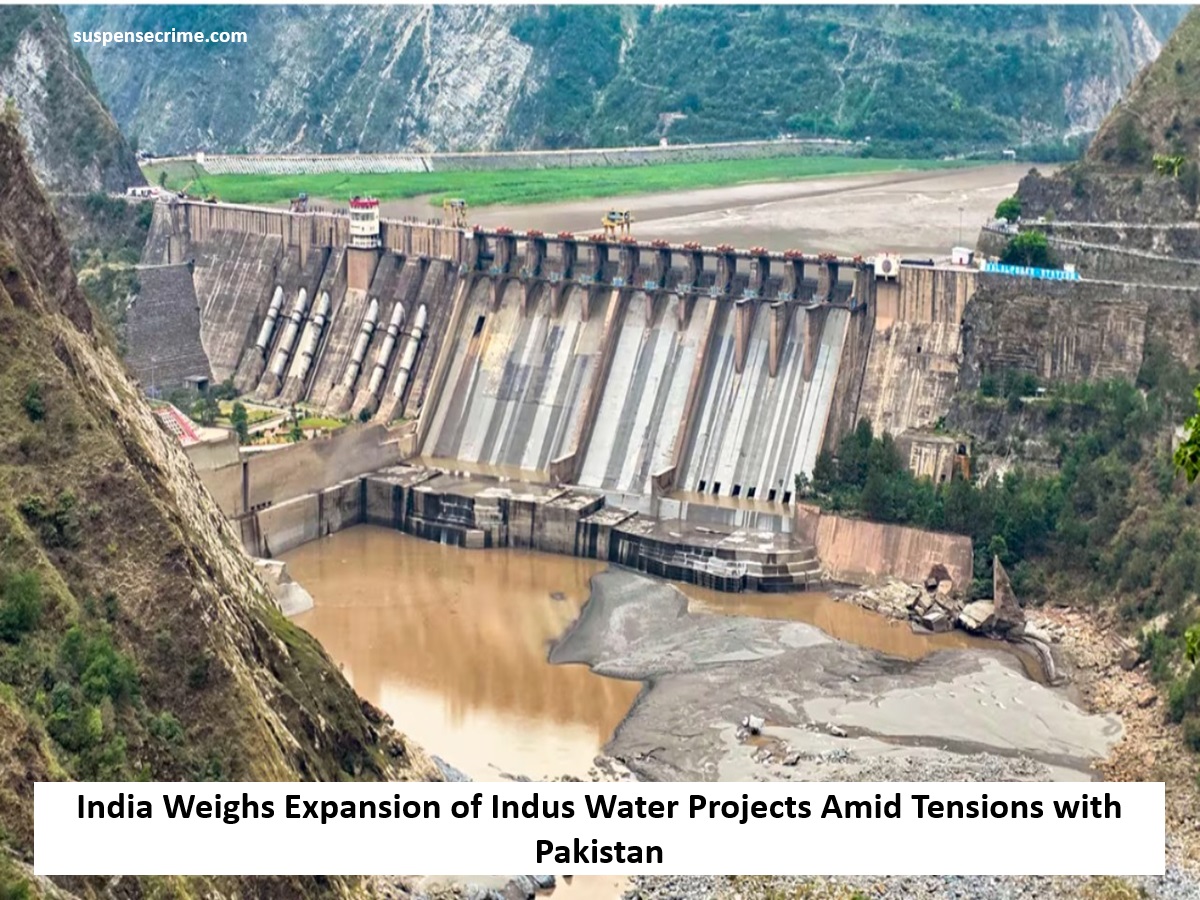
Suspense crime, Digital Desk : India is mulling a major upgrade to the existing dual-use waterworks on rivers with Pakistan in the framework of the Indus Waters Treaty. This comes in the wake of a terrorist strike in Kashmir in April that resulted in the death of 26 civilians, which Indian officials claim was sponsored by Pakistan.
New Delhi went on to halt all of its activities relating to the Indus Waters Treaty of 1960, which governs the use of the Indus river basin between the two neighbors that are nuclear powers. The agreement remains suspended despite a truce reached last week.
Key Projects Under Review Include Ranbir Canal Expansion
One of the major ideas being considered is extending the 19th-century Ranbir canal on the Chenab river from its current length of 60 km to 120 km. This increase has the potential raise water diversion from 40 to 150 cubic metres per second. Chenab is one of the rivers given to Pakistan’s exclusive use under the treaty.
The Indian government is actively studying also the proposal of taking over Indus, Jhelum, and Chenab rivers to channel water into rivers passing through Indian controlled states. These ideas are fleshed out in two internal documents, which are not yet final.
Expansion of Hydropower Projects in Jammu and Kashmir
A list of hydropower projects under Jammu and Kashmir has also been released by India’s power ministry which aims to increase the generation capacity from 3360 megawatts to 12000 MW. This includes around 5 new proposals for dams, four of which sit on the tributaries of Chenab and Jhelum rivers. These proposed dams would, if approved, mark the first significant attempts at water storage within the Indus system inflows.
Though this list was made prior to the April terror incident, sources suggest it is gaining traction with Indian officials.
Pakistan Warns of ‘Act of War’ Over Water Diversion
Islamabad, in an official statement, has termed India’s suspension of the treaty an attempt to divert water without notice calling it an “act of war.” The Indus river system supports about 80% of Pakistan’s agriculture and all of its hydropower generation.
Pakistan confirmed through its Foreign Minister that india has been sent a letter declaring that Pakistan still considers the treaty in effect. Legally, Islamabad is pursuing the matter in the world bank's jurisdiction, The Permanent court of arbitration or the international court of justice.
Geopolitical Dangers and Tactical Consequences
Regionally, India’s engagements may provoke negative reactions, cautions analysts. David Michel from the Center for Strategic and International Studies pointed out that this approach might lead China to use the rivers that begin in Tibet as leverage against India.
Along with the Sino-Indian border conflict in Ladakh, the Indus Wars form a crucial part of the historical narrative of China, India post-1971. Indus Rivers Treaty remains as one of the most surviving international accords on water sharing, even after enduring multiple wars and years of gloomed diplomatic relations. Nevertheless, Delhi’s emphasis now seems more assertive on strategic resources.
Political and Diplomatic Responses
Modi, India’s Prime Minister, in a recent public address said, “water and blood cannot flow together,” signaling his intent to take a tough approach on this matter. On the other side, India’s Water Minister C. R. Paatil confirmed that the ministry’s position is “not a drop of water will exit.”
As per the political analysts, this might indicate an intention from Delhi to shift the balance of engagement and strategically isolate Islamabad focusing on water management unilaterally.
Read More: Why the Silence? Activist Arif Aajakia Slams Global Apathy on Pahalgam Terror Attack Anniversary