

 Priyanka Tiwari
 Share
Share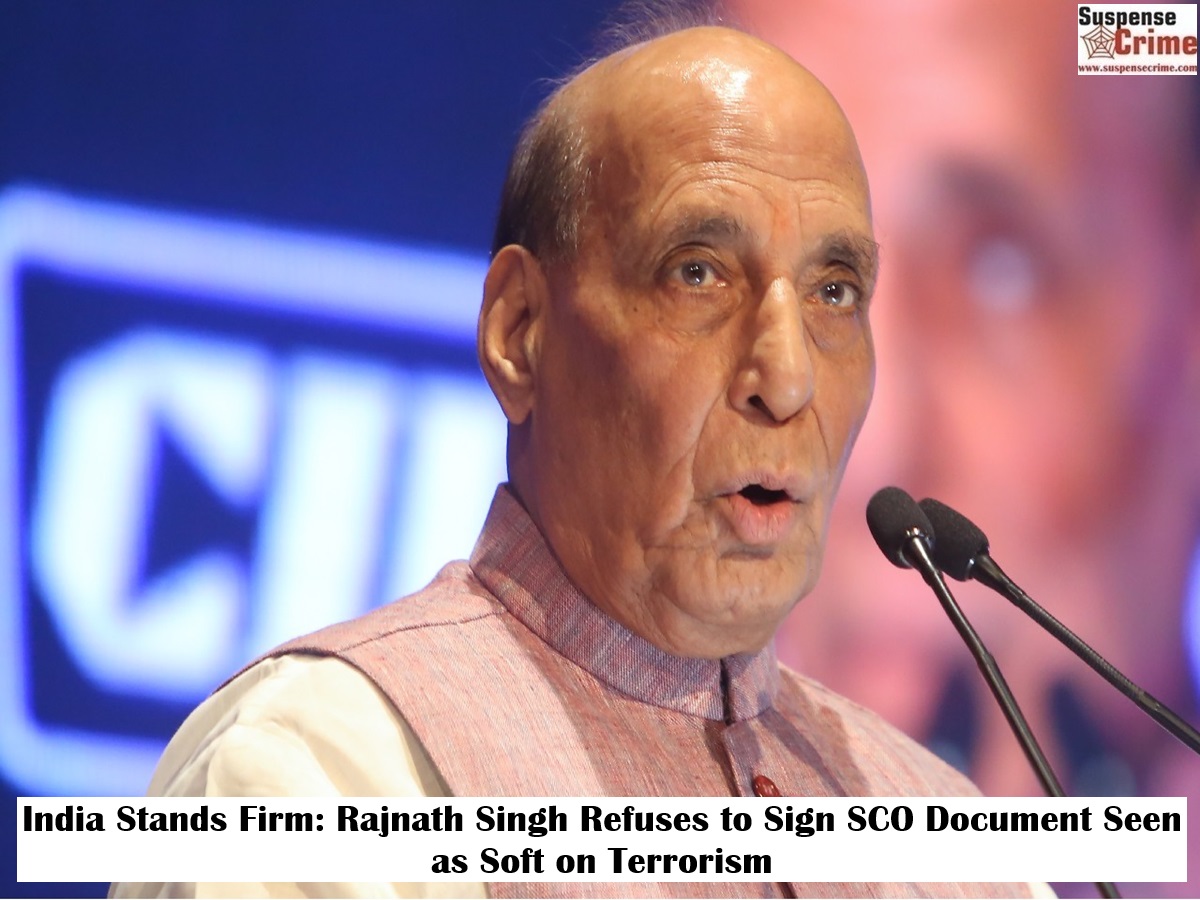
Suspense crime, Digital Desk : In a bold and principled stand, Indian Defence Minister Rajnath Singh has refused to sign a joint protocol at the Shanghai Cooperation Organisation (SCO) meeting after finding that its language diluted the collective stance against terrorism. This decisive move underscores India's unwavering and zero-tolerance policy on the issue.
The incident occurred during a key meeting of the SCO defence ministers in Astana, Kazakhstan. According to sources, the proposed "Astana Protocol" contained wording that India felt was ambiguous and did not adequately address the threat of cross-border terrorism and state-sponsored terror. Specifically, the document was seen as potentially weakening the established global consensus on defining terrorism, a position India has championed for years.
India has long maintained that there can be no distinction between "good" and "bad" terrorists and has consistently pushed for international partners to adopt a unified, unambiguous approach. The language in the proposed SCO document was reportedly seen as a step backward from this clear stance.
By refusing to sign, Rajnath Singh sent a powerful message to the other SCO members—which include China, Russia, and Pakistan—that India will not compromise on its core security principles. It highlights India's commitment to holding all nations accountable for harboring and supporting terrorist groups.
This move reinforces India's independent foreign policy and its willingness to stand alone, if necessary, to protect its national interests and uphold its long-held position on global security threats.
Read More: The Secret Behind Operation Sindoor Why Rajnath Singh Halted the Mission in Just 72 Hours?