Priyanka Tiwari
 Share
Share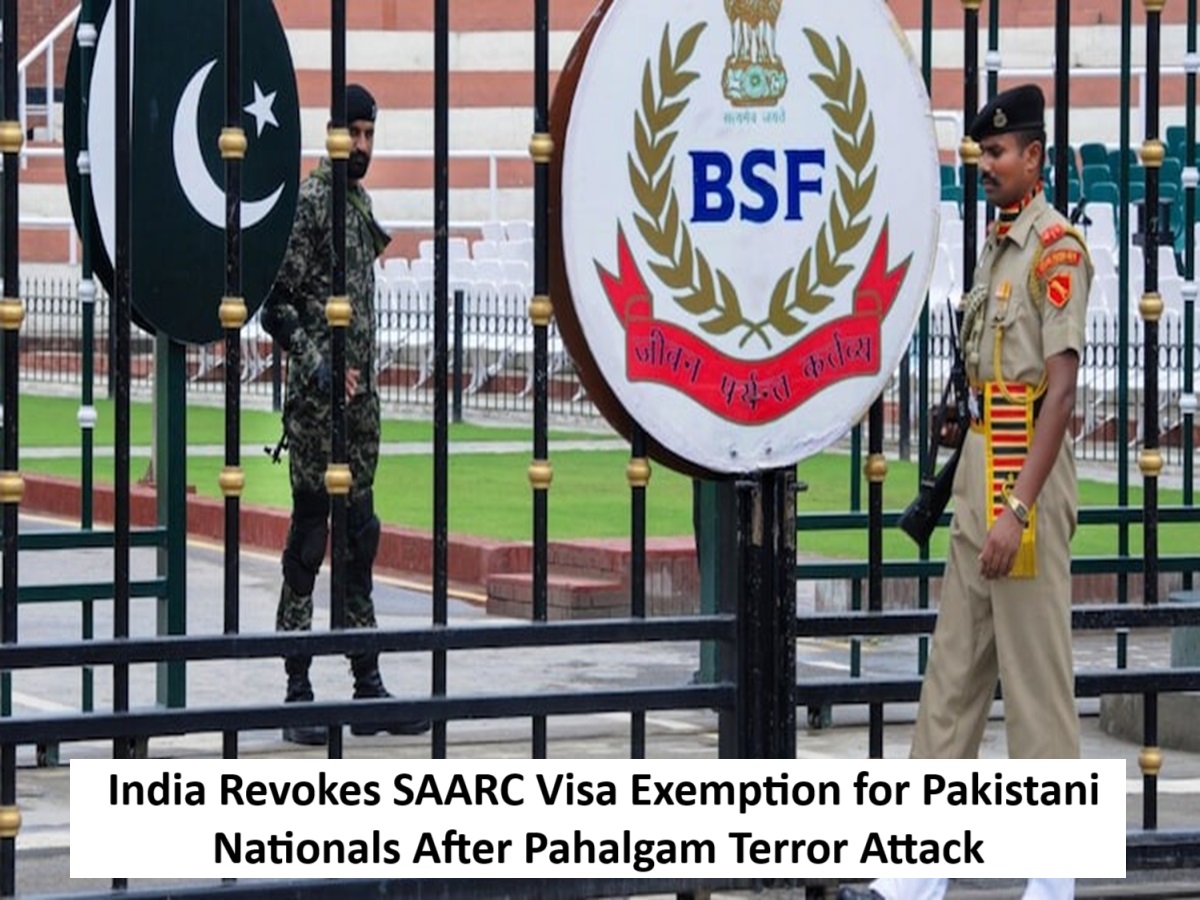
The SAARC Visa Exemption Scheme, which was implemented in 1992, grants certain persons from member countries Afghanistan, Bangladesh, Bhutan, India, Maldives, Nepal, Pakistan, and Sri Lanka the privilege of traveling without a visa in the region. It was designed to improve relationships among the countries by allowing more free movement of people.
The following persons are eligible under the scheme:
Judges of the Supreme Courts.
Members of Parliament
Top business people
Leading journalists
Competitive athletes
Noted academics
Public servants engaged in the SAARC arrangements
Such persons are granted a SAARC Visa Exemption Sticker, which is placed on their passports and permits numerous entries into the SAARC countries for a period of 12 months.
Post-Pahalgam Attack India's Decision
The Indian government, after the Pahalgam terror attack, decided to remove the SAARC Visa Exemption for Pakistani nationals. This was decided during a national security meeting, which was presided over by the Prime Minister. Under the new policies, all Pakistani passport holders in India under this scheme have to exit the country within a specified period of 48 hours.
Why the Policy Shift is Important
This change indicates a move from India's traditional ways of dealing with regional collaboration towards stricter national security measures. After having relied upon trust and diplomatic niceties, prohibitive security risks associated with cross-border terrorism appear to be altering what was hitherto considered a flexible security strategy.
Driving conclusions consist of:
Concerns regarding national security now supersede those relating to movement within the region.
This illustrates India's priority shift towards unilateral approaches, sidestepping multilateral frameworks during times of heightened security concerns.
This signifies the incremental approach India has maintained towards SAARC since bilateral confrontations intensified post 2016.
Current Level of SAARC Relations
Due to the continuos India-Pakistan conflicts, SAARC has had a decline in activity over the last few years. This further cements the two countries' strained relations and casts doubt on the existence of regional platforms that attempt to bring together unfriendly countries.
_891152136_100x75.jpg)
_934999377_100x75.jpg)
_297632329_100x75.jpg)
_1971369341_100x75.jpg)