
 Priyanka Tiwari
 Share
Share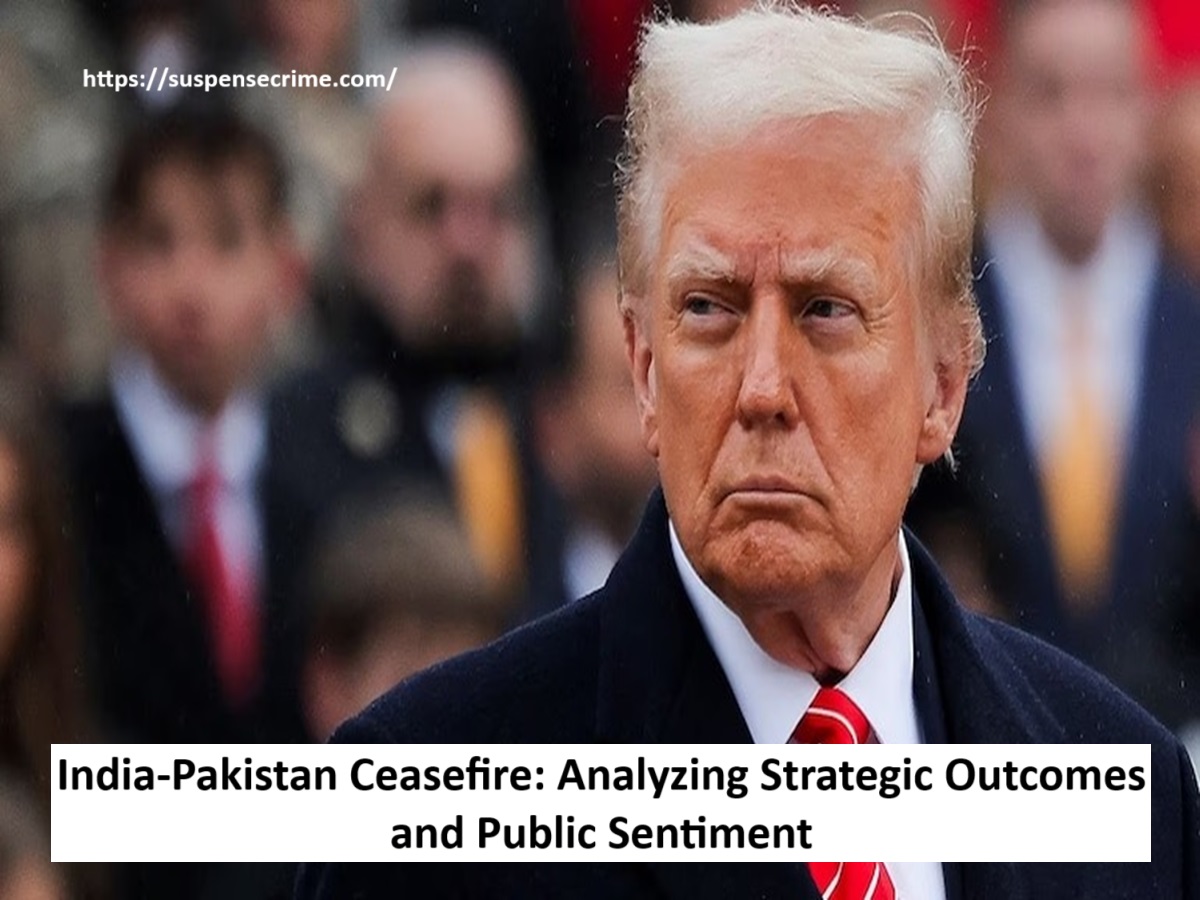
Suspense Crime, Digital Desk : From ordinary Modi supporters to retired military officers and defense commentators, the recent ceasefire between India and Pakistan has provoked further discontent. For some, the military engagement came as a rare opportunity to deliver a decisive blow to Pakistan. Some voices even went so far as to say India ought to have reoccupied parts of territory it claims in Kashmir that are administered by Pakistan.
But was occupation ever a justifiable intention behind Operation Sindoor?
Operation Sindoor: Goals Devined and Accomplished
India had defined objectives that involved dismantling terror-infested infrastructure, ‘defending’ Pakistani sponsorship of terrorism, demanding fresh extraditions off its most-wanted list of Pakistan, among others. A further aim which in itself would have been a significant diplomatic victory, would have been the disruption of Pakistan’s negotiations with the IMF. Even though India accomplished the first two aims, the rest required backing which never came.
In Pakistan's case, there was no operational plan and the counter action seemed in response to Terror agencies. They went back to threatening nuclear weapons which the US did not counter—thereby accepting the bluff.
Now, Foreign Secretary Vikram Misri sought to confirm the Indian narrative, stating the May 7 strikes were retaliatory actions and not designed as a military overture. The global audience interpreted this as restrained aggression, which is a good thing – unless one considers the announcement of a ceasefire.
What happened after May 10 that changed the situation? A Trump post on Truth Social.
The Statement From Trump and Consequences It Had
In a brief Twitter post, Trump put India and Pakistan on the same pedestal, morally, politically, and economically, which undid decades of sophisticated understanding in American foreign policy. This was not an inaptitude on India’s side. It was, however, Trump’s lack of attention to a historical diplomatic narrative.
Indian governments have put years of effort building a case for the Washington split. Diplomacy, economic partnerships, and the Kargil conflict all contributed to that.
Strategic Alignment Of US and India: A Focal Point In History
The nuclear agreement of 2005 between India and the US was a landmark. Trump’s tweet on receiving the parliament said “De-hyphenate” during which Washington was approached by Delhi. With the passage of time, this understanding had developed more.
India’s robust economy came along with the fast growing democratic construct enabling it to be viewed as a primary ally in countering China, whereas, Pakistan started becoming more reliant on Beijing, using international handouts to sponsor groups that were anti-american allies.
Advantage To India’s Position In The Global Map
The revitalization of the QUAD in 2017 with America, Australia, and Japan further solidified India’s strategically central position in the region and globe. As S. Jaishankar, the External Affairs Minister pointed out in 2019, India’s status far outgrows Pakistan’s both in terms of economy and diplomacy.
India also earned global goodwill as they practiced vaccine diplomacy in the Covid 19 pandemic era while Pakistan’s hold on influence waned as a result of US pulling out of Afghanistan.
India must Respond Strategically
Trump and his aides like JD Vance seem completely oblivious to these changes. India, on the other hand, needs to deal with them. A full-fledged campaign to reclaim India's image is imperative.
Drag Modi can convince Trump to take back his words. Regardless, India stands unmovable as a democratic self-sufficient power that exercises measured restraint while Pakistan continues to depend on China.
Diplomatic Channels Are the New Battleground
The critics of the ceasefire still see violence. They claim the fight has simply changed from guns to the negotiating table. The commanders in charge of these missions need civilian backing too, as do the soldiers. A powerful country invests equally in soft and hard power.
Read More: High-Stakes Drama at Sea Pakistani Oil Tanker Shalamar Defies US Blockade in Strait of Hormuz
_891152136_100x75.jpg)
_934999377_100x75.jpg)
_297632329_100x75.jpg)
_1971369341_100x75.jpg)