

 Priyanka Tiwari
 Share
Share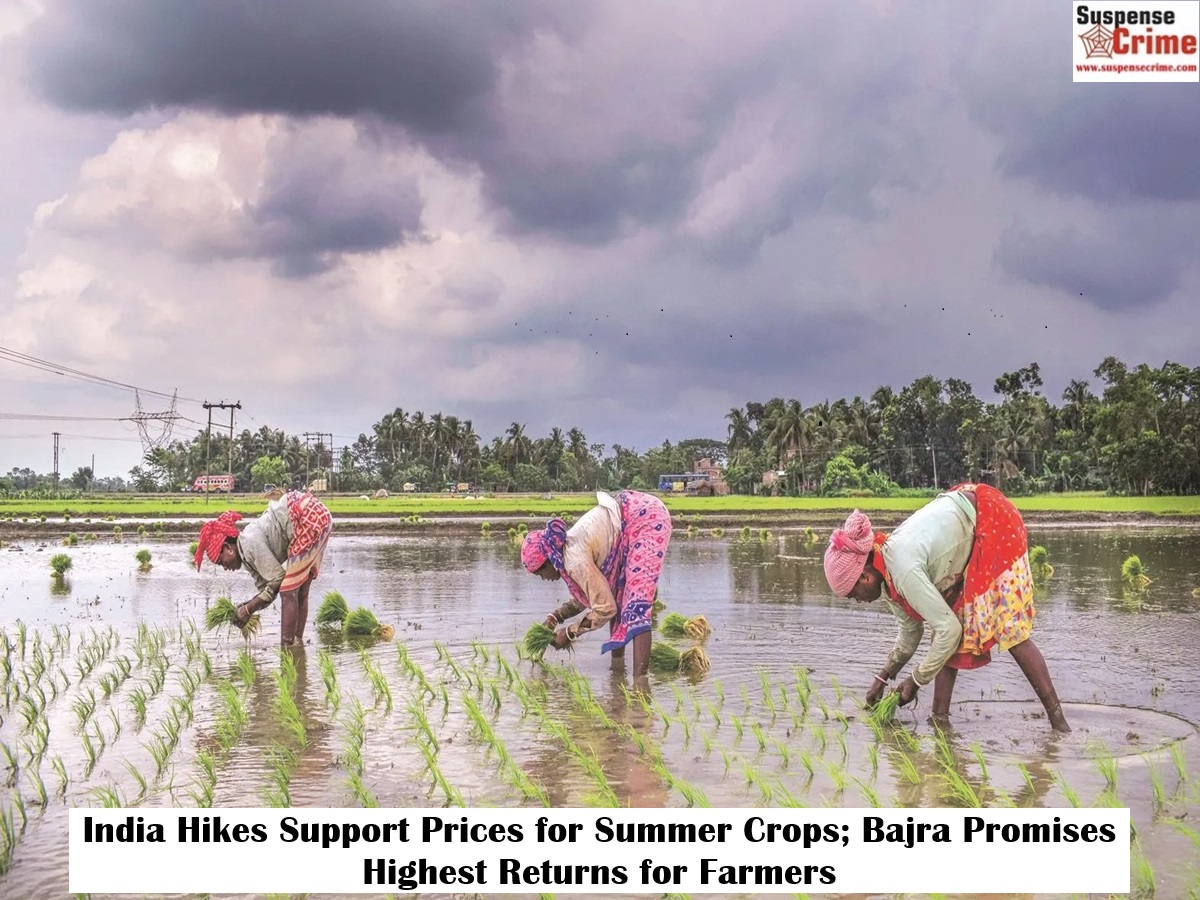
Suspense crime, Digital Desk : The Indian government, led by Prime Minister Narendra Modi, has approved an increase in the Minimum Support Price (MSP) for 14 summer-sown (Kharif) crops for the 2024-25 marketing season. This decision by the Cabinet Committee on Economic Affairs (CCEA) aims to ensure farmers receive profitable prices for their produce and to encourage crop diversification.
The MSP hike is based on the principle of fixing prices at least 1.5 times the all-India weighted average cost of production. This year, Bajra (pearl millet) is set to offer farmers the highest profit margin, with an MSP that is 77% above its production cost. Other crops offering significant returns over cost include Tur (arhar/pigeon pea) at 59%, Urad (black gram) at 52%, and Maize at 50%.
In terms of the absolute increase in MSP per quintal (100 kgs), Nigerseed sees the biggest jump with a hike of Rs 983, followed by Sesamum (til) with Rs 632, and Tur (arhar) with Rs 550.
For Paddy (common grade), a staple crop, the MSP has been raised by Rs 117 to Rs 2,300 per quintal for the upcoming season. The MSP for Grade 'A' paddy will be Rs 2,320 per quintal.
This announcement comes amidst concerns about the progress of the monsoon, which is crucial for Kharif crop output. The government estimates that the increased MSPs will lead to an additional income of approximately Rs 35,000 crore for farmers compared to the previous season. The total financial implication for the government through procurement at these new MSPs is estimated to be around Rs 2 lakh crore.
The MSP has also been increased for other Kharif crops including Jowar (sorghum), Ragi (finger millet), Moong (green gram), Groundnut, Sunflower seed, Soybean, and Cotton (both medium staple and long staple). The government's consistent policy of increasing MSPs aims to provide a safety net for farmers and boost agricultural production.
Read More: Investment Shift Why Indians are Ditching Gold Jewelry for Bars, Coins, and ETFs in 2024?