
 Priyanka Tiwari
 Share
Share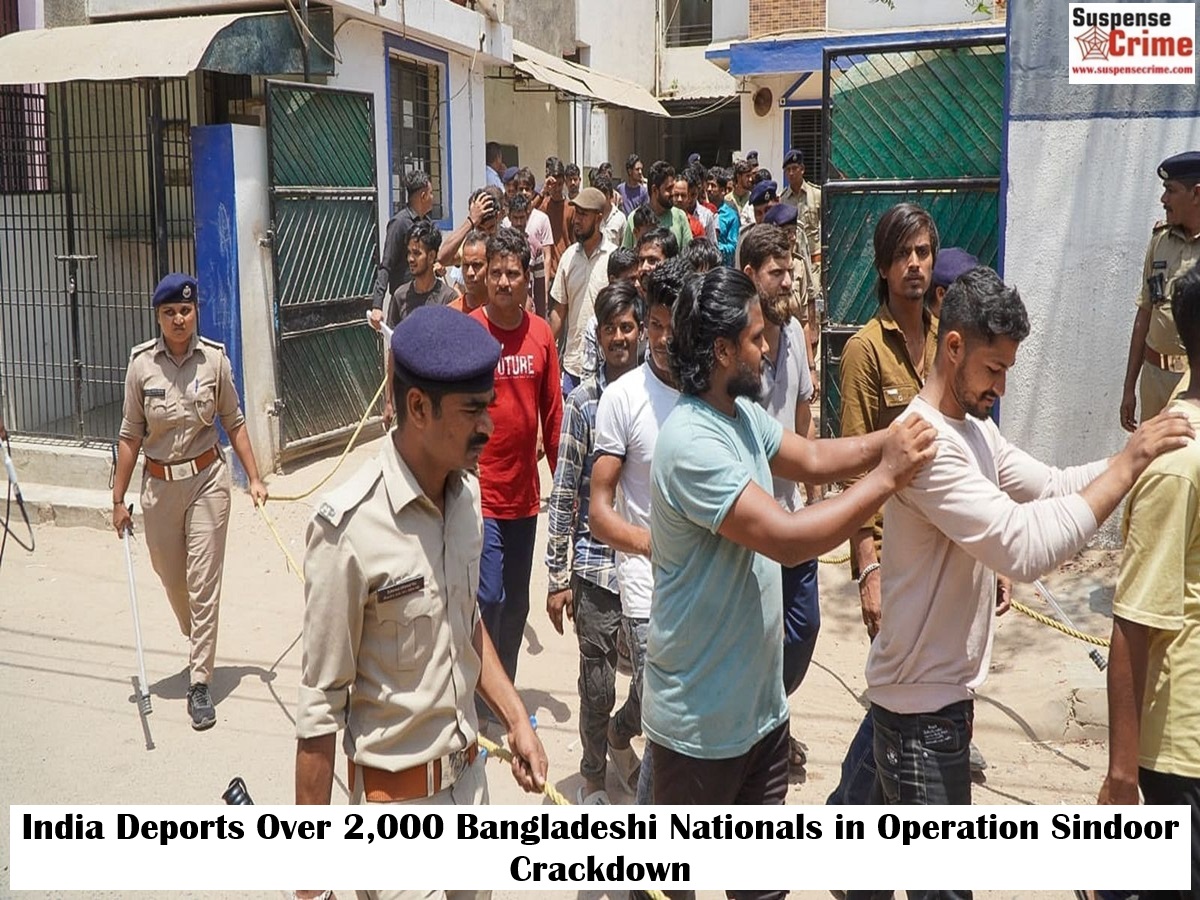
Suspense crime, Digital Desk : As part of Operation Sindoor, over 2,000 undocumented Bangladeshi immigrants have been deported from India's borders after the operation's launch on May 7. This falls under a larger national strategy of verification and deportation. The Indian Express reported that this was being done in collaboration with the Home Affairs Ministry, which state governments and border control forces are now actively allying with.
In addition, almost the same amount of people have surfaced around the India-Bangladesh frontier offering voluntary relinquishment owing to medo sparked by the operation.
Border States and Gujarat Leading the Enforcement
The operation is primarily being followed up in the bordering states of Tripura, Meghalaya and Assam. Gujarat has also emerged as a major contributor with almost fifty percent of the total deportations for Gujarat. Domiciles such as Delhi, Haryana, Maharashtra, and Rajasthan have also taken steps towards the prosecution and integration of undocumented immigrants.
A senior governmental official has verified to The Indian Express that all economically active states are now verifying the documents of immigrants and aiding the initiative. The official noted the attacks in the Pahalgam district in April serve as a clear example to why the enforcement is becoming active in so many areas so fast.
Deportation Logistics and Border Transfers
Many deported individuals are transported to the borders using Indian Air Force jets. Once they reach their destination, they are kept in camps run by the Border Security Force (BSF) and provided with limited food and Bangladeshi currency. The individuals are escorted across the border after a short detention period.
Reasons were given explaining why border states like Tripura and Meghalaya were selected. West Bengal's logistical advantages are offset by its problematic border which runs through villages and homes, complicating enforcement due to cross-border family ties.
Voluntary Returns and Lack of Resistance
Due to the risk of detention, it's estimated that close to 2,000 individuals have approached the checkpoints voluntarily. This trend has been exacerbated by media coverage encouraging people to return home without coercion.
As mandated, most of the individuals deported so far have been recent arrivals and are employed in the service industry. Without legal representation or finances, they tend to prefer deportation over being detained for prolonged periods.
Family Reunification and Minimal Pushback
Many immigrants, once detained, contact their families based in Bangladesh and wait for them to pick them up at the border. Security personnel reported little to no resistance—only those who have been living in India for decades showed actual reluctance.
Border Guards Bangladesh (BGB) have worked alongside Indian agencies from the start to make certain that deportations are executed without conflict.
Concerns Over Longevity
Though the flows of operation for the deportation procedures are systematic in approach, the deportation rates of 10,000 to 20,000 per week, however, could pose diplomatic friction with Bangladesh. As noted by a source from the government, these drives have been conducted under past regimes as well, but there was a return to lax enforcement after some time.
In an attempt to limit repeat crossings, the Indian government is currently looking into implementing border control through biometric profiling and other immigration databases.
Read More: PM Modi and Kharge’s Viral Moment: A Rare Handshake and Laughter at Ambedkar Tribute Event