
 Priyanka Tiwari
 Share
Share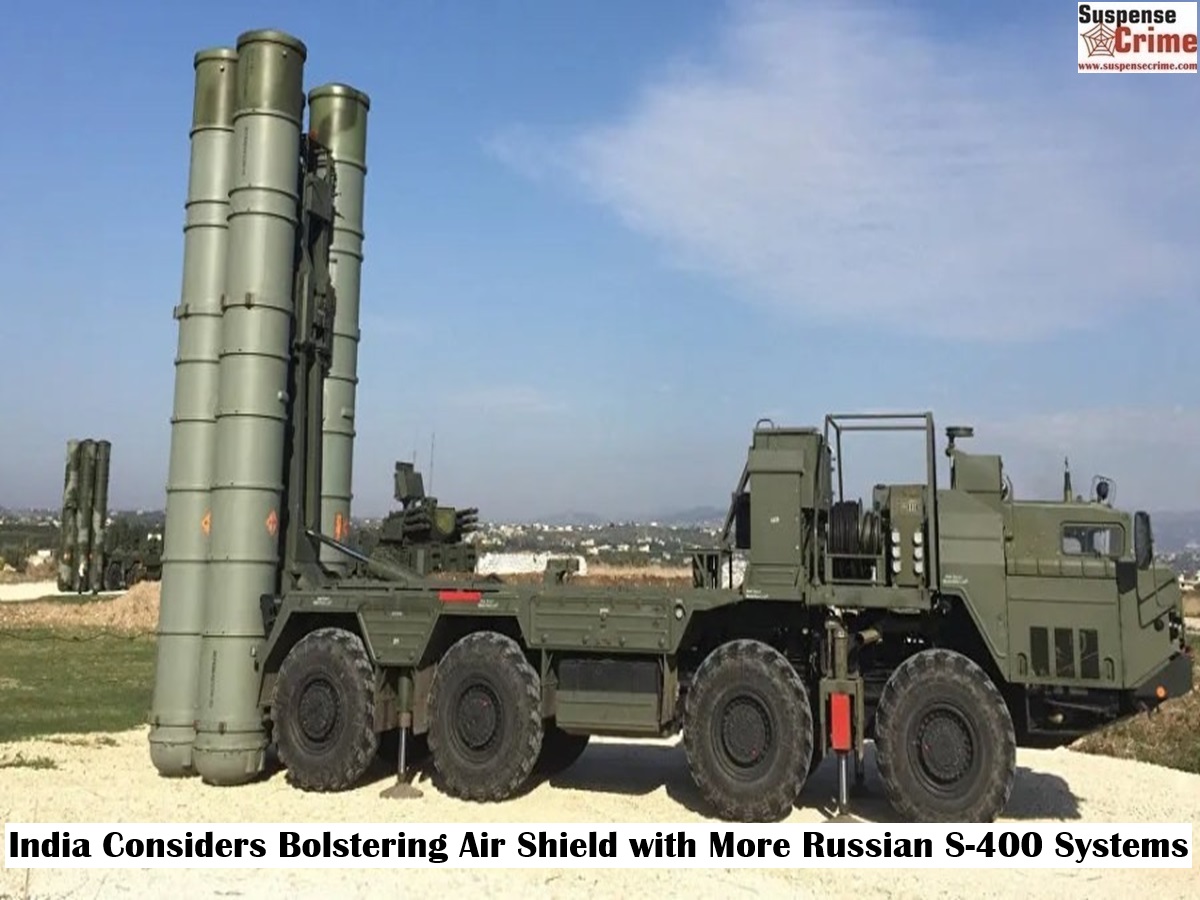
Suspense crime, Digital Desk : India is reportedly exploring the possibility of purchasing additional S-400 "Triumf" air defense missile systems from Russia, a move that would significantly enhance its aerial defense capabilities while navigating a complex geopolitical landscape.
The news, which first surfaced in a report by Russia's TASS news agency citing a source close to the country's defense ministry, suggests that discussions are underway for a new batch of the highly advanced surface-to-air missile (SAM) systems. While there has been no official confirmation from New Delhi or Moscow, the report indicates a continuing commitment to the powerful Russian platform.
This development follows India's landmark $5.43 billion deal signed in 2018 to acquire five squadrons of the S-400. Three of these have already been delivered and are operational, protecting critical airspace along the country's northern and western borders. The final two squadrons are expected to be delivered and installed by 2026.
Why the S-400 is a Game-Changer
The S-400 Triumf is widely regarded as one of the world's most sophisticated long-range air defense systems. It is designed to create a multi-layered, virtually impenetrable shield against a wide array of aerial threats. The system can track and destroy enemy aircraft, stealth fighters, drones, and ballistic and cruise missiles at a range of up to 400 kilometers (nearly 250 miles). Its ability to engage dozens of targets simultaneously makes it a formidable asset for any military.
Navigating Diplomatic Challenges
A potential new deal for the S-400 is not without its challenges, primarily concerning India's relationship with the United States. Washington has previously warned countries against significant military purchases from Russia under its Countering America's Adversaries Through Sanctions Act (CAATSA).
While India secured a crucial waiver from the U.S. for its initial S-400 purchase, a second deal could reopen sensitive diplomatic negotiations. This situation places India at the center of a strategic balancing act, as it continues to deepen its security ties with the U.S. and other Western partners like France and Israel while maintaining its decades-long defense relationship with Russia.
The ongoing conflict in Ukraine has also created practical hurdles, particularly with payment mechanisms due to international sanctions on Russian banks. However, both India and Russia have reportedly been working on alternative payment solutions to ensure their defense cooperation continues uninterrupted.
For India, the consideration of more S-400 systems underscores a strategic priority: building a robust, modern air defense network to safeguard its national security interests in a volatile region. If the deal moves forward, it will not only bolster the Indian Air Force's capabilities but also reaffirm the enduring strength of the India-Russia defense partnership.