Heaven vs Vaikuntha – Here's how they differ and what each represents in Hinduism
Suspense Crime, Digital Desk : In Hindu texts, the afterlife is commonly explained in relation to heaven, hell, and Vaikuntha. After a person's death, the soul is believed to either go to heaven, hell or Vaikuntha depending upon their actions and good or bad deeds.
Most people are well aware of what heaven and hell are and how they differ, but the distinction between heaven and Vaikuntha can be confusing. Though both are described as heaven, heaven and Vaikuntha are not the same. Let's take a look at how heaven and Vaikuntha differ from one another in nature, spiritual status and destination.
Heaven Vs Vaikuntha: The Difference
In Sanatana Dharma, heaven is a place that is reached by good souls to experience the fruits of their righteous deeds and is therefore a temporary state. After exhausting their good Karma and experiencing the joys of this place, the soul is said to be born back on Earth to continue its Karma cycle.
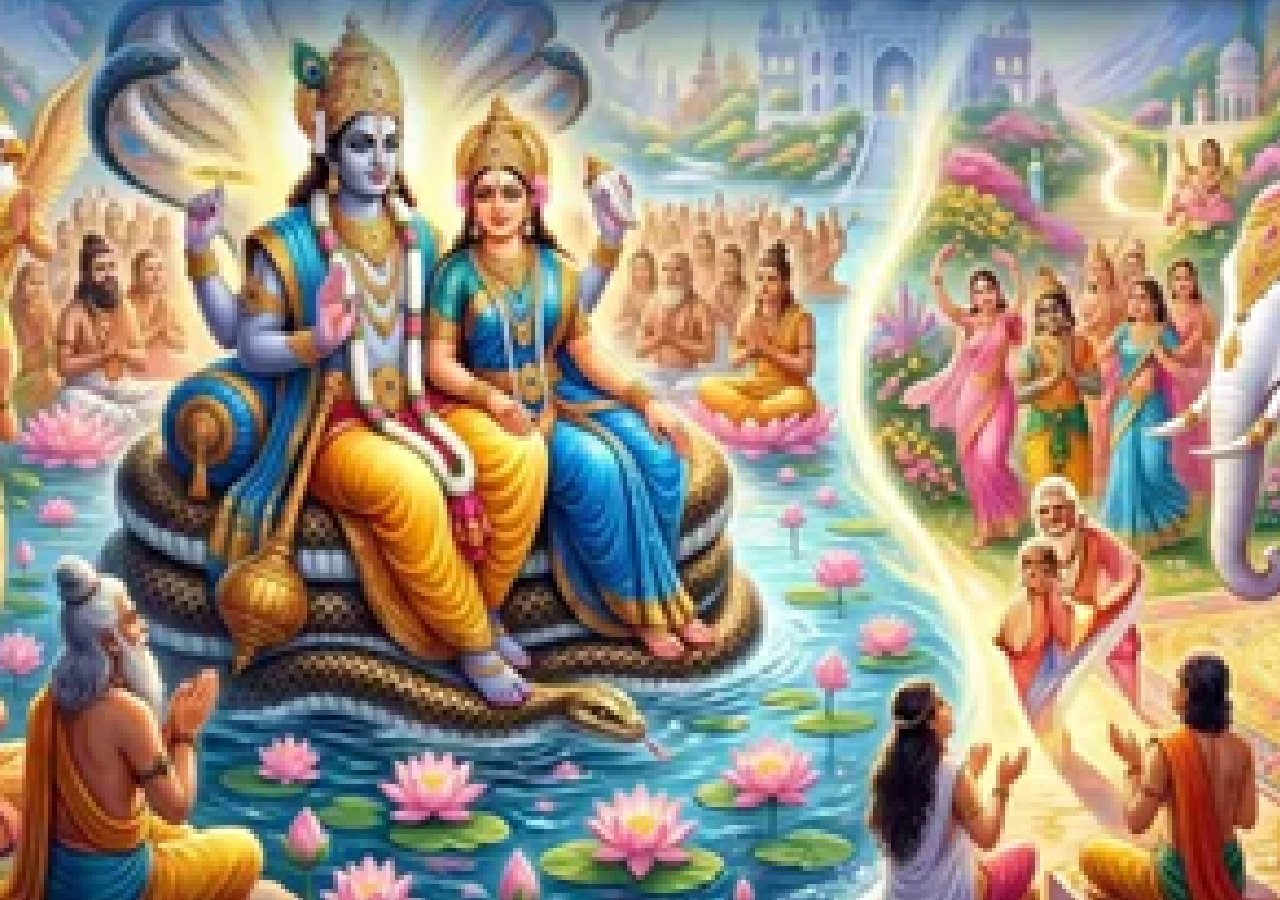
Vaikuntha on the other hand is Lord Vishnu's forever home. It is a spiritual realm and not a material place as opposed to heaven, and reaching this place is equated to attaining salvation and liberation from the birth and death cycle.
What happens at Vaikuntha?
According to the scriptures, Vaikuntha Dham is an abode of ultimate bliss and celestial luminescence, devoid of sorrow or attachment. This place lies beyond all the heavenly realms and above this again lies Kailash Dham (Lord Shiva's personal abode).
Lord Vishnu resides at Vaikuntha along with Goddess Lakshmi, Goddess Sri and Goddess Bhudevi in a palace and is surrounded by countless spiritual beings and divine attendants. It is said to be shining with more splendor than that of a thousand suns and filled with peace, devotion and infinite bliss. Once a soul reaches Vaikuntha, it is said to have gained complete liberation from the cycle of life and death.