
 Priyanka Tiwari
 Share
Share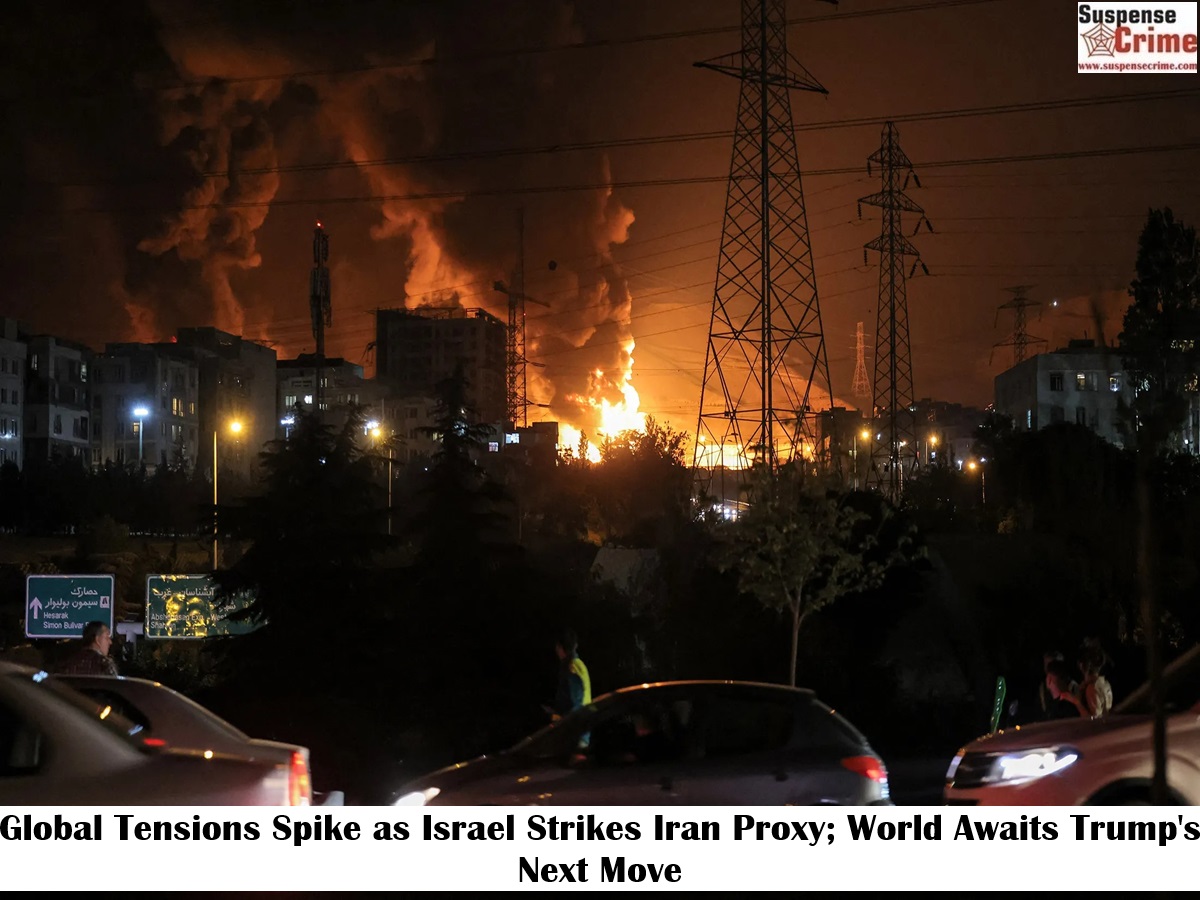
Suspense crime, Digital Desk : The Middle East is teetering on the brink of a wider conflict following a significant Israeli military operation, with the international community nervously watching for the next moves from both the region's powers and the United States. In a major escalation, Israel has reportedly launched a retaliatory strike, with global attention now fixed on the potential for further violence and the profound economic and political fallout.
According to reports, the Israeli strike targeted Syria's T4 airbase, a facility known to be used by Iranian proxy forces. The attack was allegedly carried out using controversial cluster munitions. These weapons, which release smaller submunitions or "bomblets" over a wide area, are banned by over 100 countries due to the high risk they pose to civilians, often long after a conflict ends. This choice of weaponry signals a serious and destructive new phase in the shadow war between Israel and Iran.
Adding a layer of profound uncertainty to the volatile situation is the political landscape in the United States. Former President and current presidential candidate Donald Trump has publicly stated that, if re-elected, he will make a definitive decision on America's role in the escalating conflict within two weeks of taking office. His announcement puts the world on notice that a fundamental shift in U.S. foreign policy could be imminent, leaving allies and adversaries alike guessing about the future of American intervention in the region.
Beyond the battlefield, the conflict is sending shockwaves through the global economy. Nations like India are on high alert, assessing the potential impact on critical trade routes, supply chains, and, most importantly, oil prices. The threat of disruptions in the Red Sea and the Strait of Hormuz could lead to a spike in energy costs and inflation worldwide, affecting everything from shipping to manufacturing.
Meanwhile, the international community is scrambling to de-escalate the crisis. The Group of Seven (G7) major industrialized nations is reportedly considering imposing new, stringent sanctions against Iran to curb its military ambitions and choke off its support for proxy groups like Hezbollah. The aim is to use economic and diplomatic pressure to prevent a full-scale regional war.
As military assets are mobilized and diplomatic channels buzz with activity, the world holds its breath. The combination of direct military retaliation, the use of controversial weapons, looming US policy shifts, and the threat of severe economic disruption has created a dangerously combustible mix.
Read More: High-Stakes Drama at Sea Pakistani Oil Tanker Shalamar Defies US Blockade in Strait of Hormuz
_891152136_100x75.jpg)
_934999377_100x75.jpg)
_297632329_100x75.jpg)
_1971369341_100x75.jpg)