Priyanka Tiwari
 Share
Share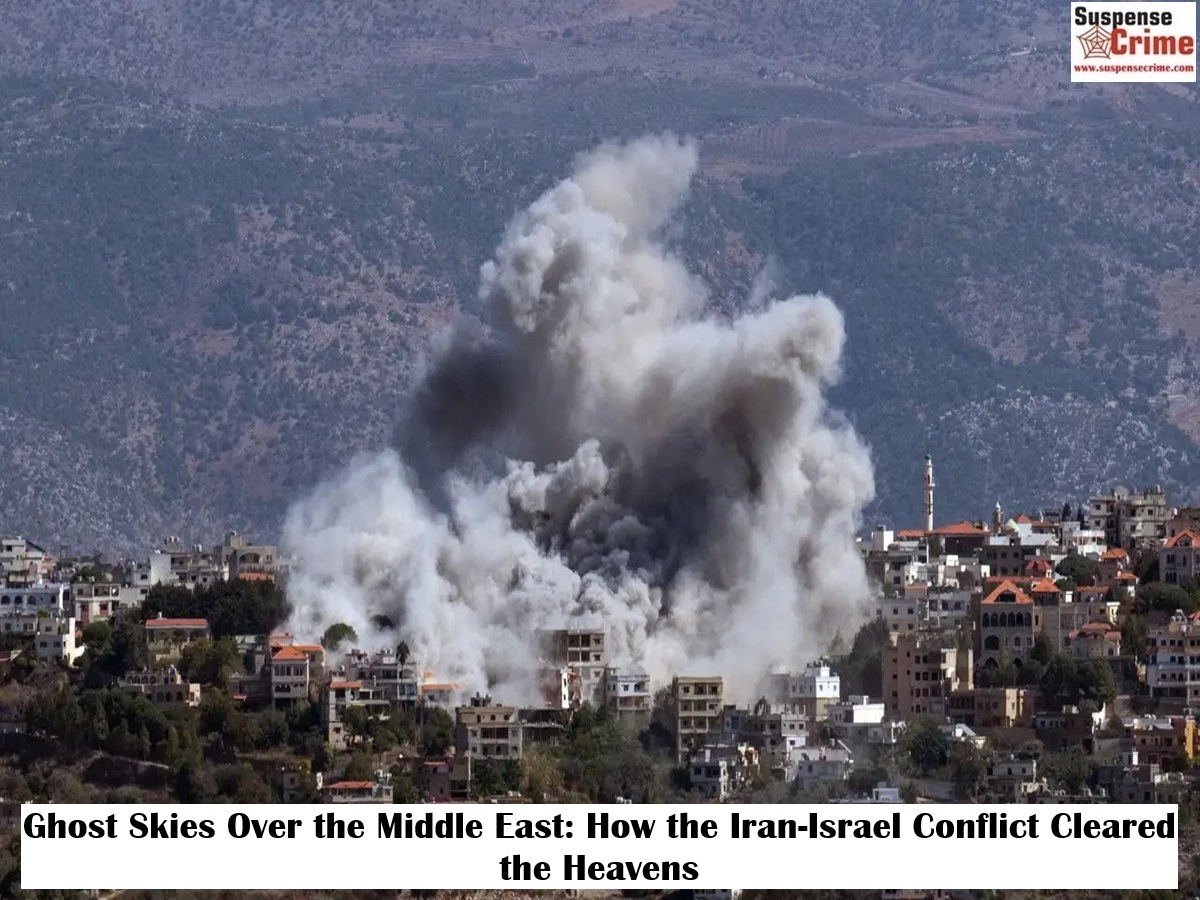
Suspense crime, Digital Desk : It was a picture that spoke a thousand words: a flight tracker map of the Middle East, normally a bustling superhighway of crisscrossing flight paths, suddenly showing a vast, eerie void. Following Iran's unprecedented drone and missile attack on Israel, a critical corridor of the world's airspace went dark, creating a real-time portrait of a region on the brink.
In a swift and coordinated response to the military action, nations at the heart of the conflict—including Israel, Iran, Iraq, Jordan, and Lebanon—closed their airspace to all civilian traffic. It was a necessary safety measure to prevent a catastrophic accident, but it immediately sent shockwaves through the global aviation industry. The skies, a symbol of connection, became a stark representation of division and danger.
For international airlines, this created a massive logistical puzzle. The affected region is a vital crossroads connecting Europe to Asia's booming travel and cargo hubs. With this route suddenly impassable, airlines were forced to scramble. Flights were either canceled outright or sent on long, costly detours around the conflict zone, primarily re-routing south over Egypt and Saudi Arabia.
The consequences are immediate and far-reaching. A rerouted flight from London to Singapore can mean hours of extra flying time. This translates directly into higher fuel consumption—a major cost for airlines—and complex crew scheduling problems. For passengers, it means significant delays and the anxiety of flying around a volatile region. The shutdown created a domino effect, with disruptions on one route cascading across entire airline networks.
While countries like Jordan and Iraq have begun to cautiously reopen their airspace, a tense uncertainty hangs in the air. The situation remains fragile, and airlines are on high alert, knowing that the political and military landscape could change in an instant. For now, the "ghost skies" over the Middle East serve as a powerful reminder of how quickly geopolitical conflict can ground the interconnected modern world.
Read More: High-Stakes Drama at Sea Pakistani Oil Tanker Shalamar Defies US Blockade in Strait of Hormuz
_891152136_100x75.jpg)
_934999377_100x75.jpg)
_297632329_100x75.jpg)
_1971369341_100x75.jpg)