Priyanka Tiwari
 Share
Share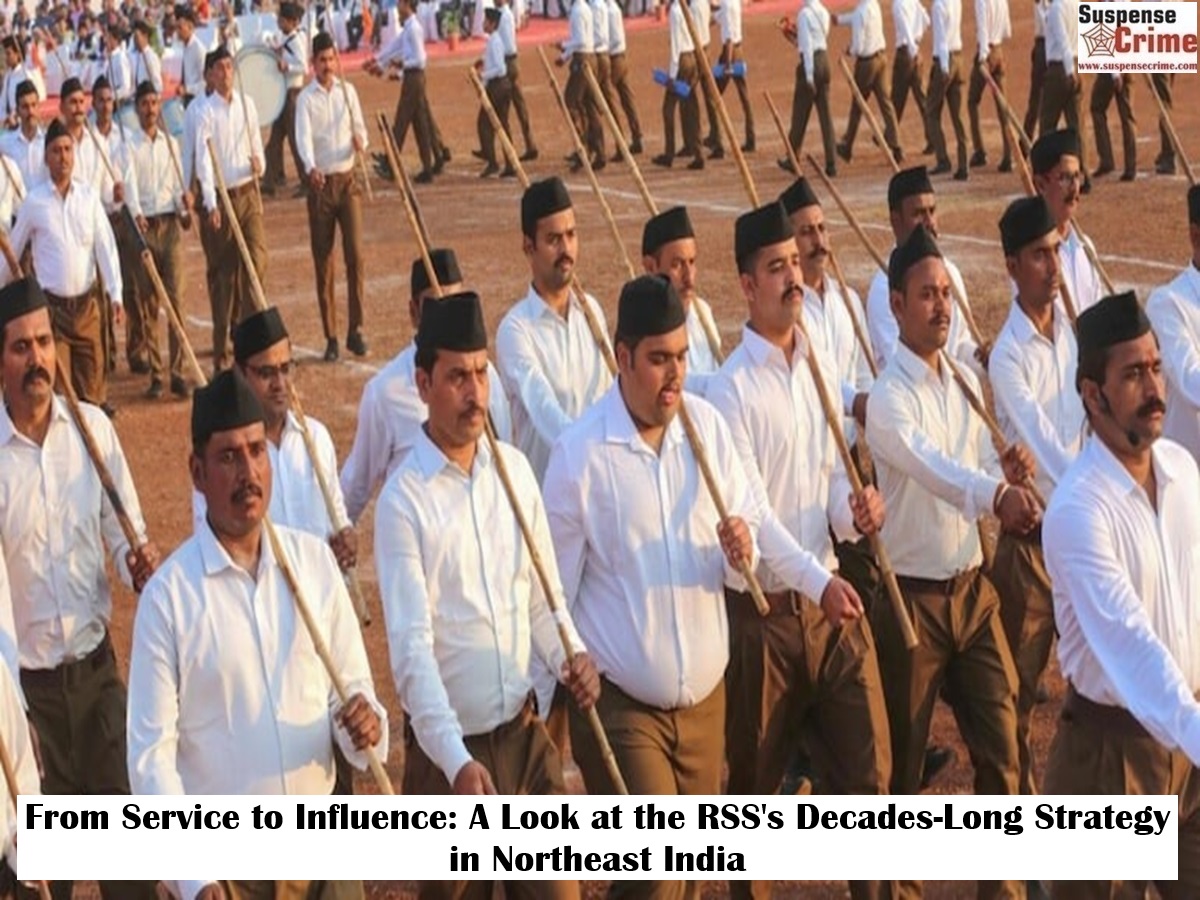
Suspense crime, Digital Desk : For many years, India's Northeast was seen by the rest of the country as a distant and disconnected region, marked by unique cultures, political turmoil, and strong separatist movements. An opinion piece by author Ratan Sharda explores the decades-long, quiet role of a non-political organization in bridging this gap: the Rashtriya Swayamsevak Sangh (RSS).
The article argues that long before the BJP became a political force in the region, the RSS was laying the groundwork for national integration through a strategy focused on social service and cultural connection, not direct politics.
A Mission of Service, Not Politics
According to the author, the RSS began its work in the Northeast as early as the 1950s, a time when insurgency was on the rise. Instead of a political approach, the organization dispatched full-time volunteers, known as pracharaks, to live and work within local communities.
These volunteers focused on what the RSS calls seva (selfless service). They established a network of initiatives aimed at addressing the region's core needs:
Education: Through its affiliate Vidya Bharati, the RSS opened hundreds of schools, providing affordable education in remote areas where government services were often lacking.
Tribal Welfare: The Vanavasi Kalyan Ashram was established to work specifically with tribal communities, focusing on healthcare, skills development, and preserving local traditions while fostering a sense of national identity.
Healthcare: Numerous small clinics and medical camps were set up to provide basic healthcare to underserved populations.
The core idea, the article suggests, was to build trust and demonstrate a commitment to the region's welfare, thereby countering the narrative of alienation from "mainland" India.
Bridging the Cultural Divide
A key part of this strategy was tackling stereotypes on both sides. The RSS student wing, Akhil Bharatiya Vidyarthi Parishad (ABVP), launched a unique program called "Students' Experience in Interstate Living" (SEIL).
This initiative brought thousands of students from the Northeast to live with families in other parts of India. The goal was twofold: to give the students a welcoming experience of the country beyond their home states, and to help families in the "mainland" understand and appreciate the diverse cultures of the Northeast. The author posits that this program was instrumental in creating personal bonds and breaking down long-standing prejudices.
The Long-Term Impact
The article concludes that this patient, decades-long "soft power" approach yielded significant results. It claims the RSS's grassroots work helped weaken separatist sentiments by fostering a sense of belonging to the larger Indian nation.
By focusing on service and cultural integration, the RSS not only changed perceptions about the Northeast but also transformed its own image in the region—from a "Hindi-belt" organization to one seen as genuinely invested in local welfare. This deep-rooted social network, the author argues, eventually created the foundation of trust that enabled the BJP's later political success in the region.
Read More: FTA Warns of Massive Flight Crisis, TMC Alleges BJP’s Death Threat Against Mamata Banerjee