Ramayana Crosses ₹1,200 Cr Worldwide, Beats Animal
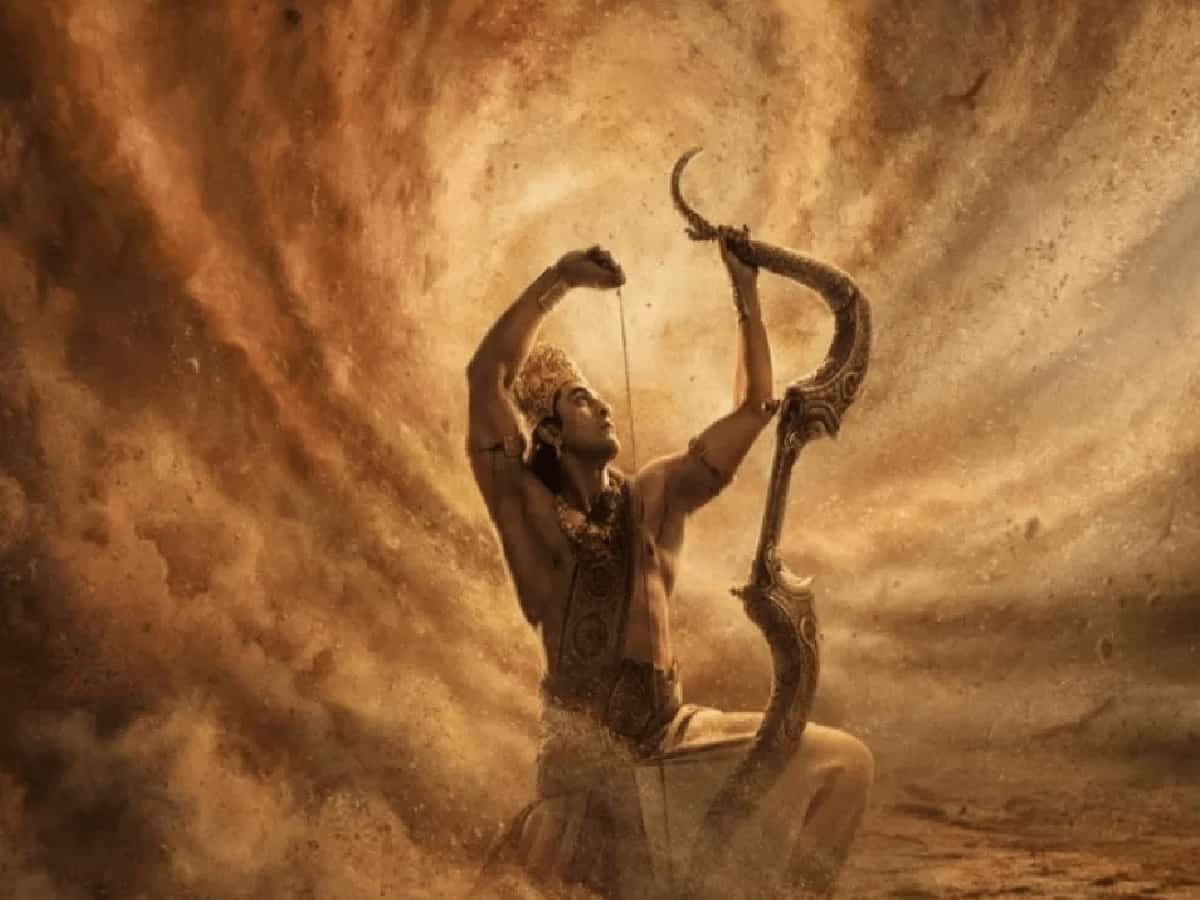
The Indian cinematic landscape is witnessing a historic box office juggernaut. Directed by visionary filmmaker Nitesh Tiwari and grandly envisioned as a two-part epic franchise, Ramayana has shattered records since its theatrical release on November 5. Featuring an iconic ensemble cast with Ranbir Kapoor portraying Lord Rama, Sai Pallavi as Sita, and Yash taking on the formidable role of Ravana, the mythological drama has captured the imagination of audiences worldwide.
After dominating domestic and international screens for ten days, the film has officially crossed the monumental ₹1,200-crore milestone globally, cementing its status as one of the most successful cinematic achievements in Indian film history.
Spectacular Second Saturday Surge and Day 10 Collections
Momentum for Ramayana reached a fever pitch during its second weekend. According to box office tracking data from Sacnilk, the film recorded an astounding India net collection of ₹72.90 crore on its tenth day (its second Saturday). This marked a massive 51.6% jump compared to its earnings on the previous Friday, when it stood at ₹48.10 crore.
With this latest surge, the film's total cumulative India net collection has scaled to an impressive ₹685.60 crore, while its domestic gross collection has touched ₹819.50 crore. Industry analysts attribute this extraordinary second-weekend growth to stellar word-of-mouth, strong family audiences, and massive festive-season enthusiasm across multiple states.
Multilingual Dominance Across India
While the Hindi belt continues to serve as the primary engine driving box office numbers, Ramayana has performed remarkably well across southern and regional markets, highlighting its pan-India appeal.
Hindi Version: Contributed the lion's share of Saturday's collections, bringing in ₹53.75 crore net across a staggering 18,557 screenings with an overall occupancy of 41.9%.
Regional Markets: The Kannada version earned ₹5.40 crore from 893 shows, while both the Malayalam and Tamil versions brought in ₹4.75 crore each. Notably, the Malayalam version recorded the highest single-language occupancy rate at an incredible 83%, followed by Tamil at 62.5% and Kannada at 58.8%. The Telugu version added ₹4.25 crore through 1,584 shows, maintaining a steady 39.1% occupancy.
Staggering Global Reach: Crossing ₹1,200 Crores Worldwide
The theatrical triumph of Ramayana is not restricted to domestic borders. The film has resonated deeply with the global Indian diaspora and international audiences alike, pulling extraordinary numbers overseas.
On its tenth day alone, the film grossed approximately ₹30 crore in international markets, pushing its cumulative overseas gross to a phenomenal ₹408.50 crore. Combined with its Indian gross collection of ₹819.50 crore, the worldwide gross has officially touched ₹1,228 crore. Current statistics indicate that the domestic Indian market accounts for roughly 66.7% of total earnings, with international territories contributing a robust 33.3%.
Outperforming Animal, Jawan, and Bollywood Titans
One of the most remarkable metrics of Ramayana's box office run is how it compares to previous industry heavyweights, including Ranbir Kapoor's own past blockbusters.
Sandeep Reddy Vanga’s action thriller Animal, which set massive box office records upon its release, had earned ₹36 crore net in India on its tenth day. In comparison, Ramayana pulled in ₹72.90 crore on its tenth day, generating more than double the revenue of Animal at the exact same point in its theatrical lifecycle.
Furthermore, Ramayana has steadily surpassed the lifetime domestic net collections of several modern Bollywood milestones. It has officially overtaken Shah Rukh Khan’s Jawan (which finished around ₹643.87 crore net) and Rajkummar Rao's comedy-horror phenomenon Stree 2 (₹625.27 crore net), alongside earlier milestones like Pathaan and Animal.
With minimal drops expected through the remainder of its theatrical run and the second instalment already slated for production in 2027 or 2028, Ramayana has firmly rewritten the playbook for epic storytelling and commercial success in modern Indian cinema.