Lata Mangeshkar’s Cult Song ‘Jane Kyon Log’ Turns 55: Inside the Classic
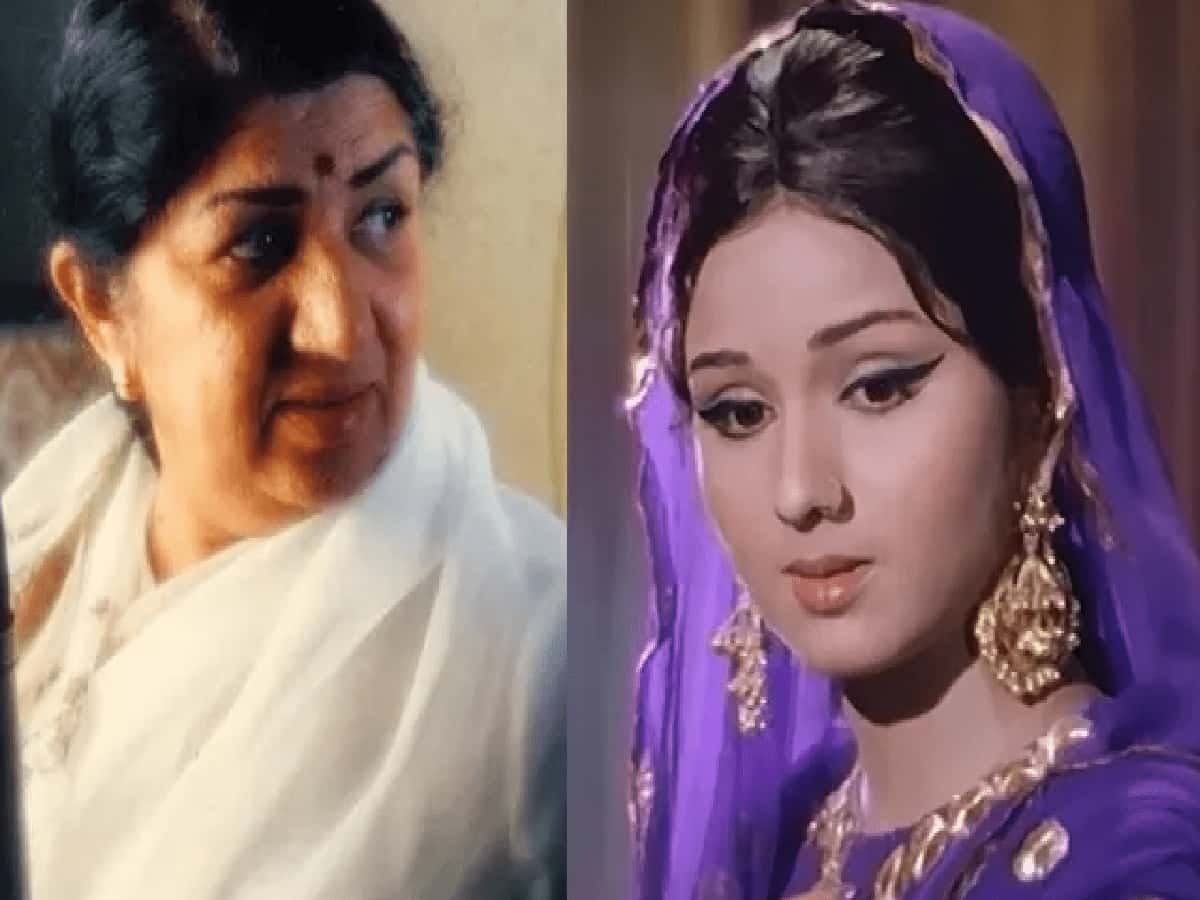
Whenever Lata Mangeshkar, India’s revered Swar Kokila (Nightingale of India), stepped behind a studio microphone, the room fell into reverent silence as she breathed life into every syllable. Across a monumental career spanning over seven decades and thousands of recordings, few compositions showcase her emotional mastery quite like the 8-minute, 33-second masterpiece "Jane Kyon Log Mohabbat Kiya Karte Hain" from director H. S. Rawail’s 1971 musical drama Mehboob Ki Mehndi. Fifty-five years after it first echoed across cinema halls in Mumbai, New Delhi, Lucknow, and Kolkata, this extraordinary solo remains an enduring anthem of heartbreak—celebrated by generations of music lovers for a bold artistic contradiction that set it apart from every conventional sad song of its era.
Picturized on Leena Chandavarkar and superstar Rajesh Khanna, the track captures the quiet devastation of unrequited love and social betrayal. Yet what transforms "Jane Kyon Log Mohabbat Kiya Karte Hain" into an unforgettable piece of Indian film music history is the striking tension between its sorrowful poetry and its unexpectedly lively, rhythmic orchestration.
An Unconventional Musical Contrast Crafted by Laxmikant-Pyarelal
In mainstream Hindi cinema of the early 1970s, songs of heartbreak were almost universally anchored in slow, brooding string arrangements and mournful tempos. Breaking away from that predictable template, legendary composer duo Laxmikant-Pyarelal conceived an audacious musical juxtaposition. While Lata Mangeshkar’s vocals carry the piercing ache of a wounded heart, the underlying rhythm pulses with an airy, almost playful bounce—driven by crisp percussion, lilting melodic interludes, and an infectious groove that mirrors the façade of a festive gathering.
This deliberate contrast heightens the emotional impact rather than diluting it. By wrapping bitter disillusionment inside a deceptively cheerful musical frame, Laxmikant-Pyarelal created a sonic mirror of a protagonist forced to smile and perform before an audience while crumbling inside—a nuance Lata Mangeshkar navigates with effortless vocal control, unhurried phrasing, and crystalline emotion.
Anand Bakshi’s Poetic Brilliance and Leena Chandavarkar’s Screen Presence
Giving words to that inner turmoil was lyricist Anand Bakshi, whose deceptively simple, conversational Urdu-Hindi verses cut straight to the heart. Opening with the timeless, questioning refrain—"Jane kyon log mohabbat kiya karte hain, dil ke badle dard-e-dil liya karte hain" (I wonder why people fall in love, only to receive heartache in exchange for their hearts)—Bakshi’s poetry avoids melodrama in favor of candid philosophical reflection.
On screen, the sequence unfolds inside a crowded mehfil (gathering), where Leena Chandavarkar’s character sings in front of guests to voice the unspoken pain separating her from her beloved. Opposite her, Rajesh Khanna—then at the zenith of his romantic superstardom—delivers a masterclass in restraint, saying nothing throughout the lengthy track while letting his eyes and stillness register every pang of guilt and longing.
Inside the Nawabi Backdrop and Story of ‘Mehboob Ki Mehndi’ (1971)
Produced and directed by H. S. Rawail, Mehboob Ki Mehndi was steeped in the refined tehzeeb (etiquette) and cultural traditions of Muslim aristocratic society. The narrative follows Yusuf (Rajesh Khanna), a wealthy, kind-hearted nobleman who falls deeply in love with Shabana (Leena Chandavarkar), his young nephew’s graceful tutor. Just as the two prepare to wed, a painful secret from Shabana’s past surfaces—revealing that she is the daughter of a courtesan.
Caught between deep personal affection and rigid societal prejudice, the story explores themes of dignity, class barriers, and redemption. Alongside "Jane Kyon Log Mohabbat Kiya Karte Hain," the film’s soundtrack delivered several timeless chartbusters—including Mohammed Rafi’s classic "Yeh Jo Chilman Hai" and the duet "Itna To Yaad Hai Mujhe". Fifty-five years later, Lata Mangeshkar’s hauntingly sweet rendition continues to prove that true musical artistry transcends decades, still speaking directly to anyone who has ever loved and lost.